

Nationally certified school professionals - annual stipends. The act adds nationally certified school psychologists as school professionals eligible for annual stipends awarded by the department of education (department) if the school psychologist meets the requirements set forth in the act. The act clarifies that school counselors, who hold a certification from the national board for certified counselors or from the national board for professional teaching standards, are school professionals who have been eligible for annual stipends awarded by the department since the initial award was distributed during the 2009-10 school year. The act corrects the name of the national board for professional teaching standards by removing the word "principal" from the title. (Note: This summary applies to this bill as enacted.) Read More
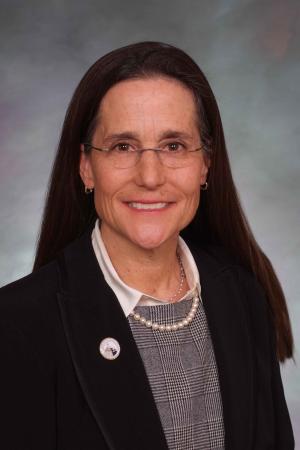
Sponsored bills
Colorado water institute recreation. The Colorado water institute was created in 1981 and automatically repealed in 2017. The act recreates the institute.(Note: This summary applies to this bill as enacted.) Read More
On December 18, 2018, the department of revenue adopted various emergency rules related to sales tax collection, including a new destination sourcing rule that requires retailers to collect sales tax based on where the tangible personal property or service will be delivered instead of based on the taxing jurisdiction in which the retailer is located. The bill specifies that the new destination sourcing rule does not apply to any retailer with physical presence that has generated less than $100,000 in gross revenue from the sale of tangible personal property or services outside of the taxing jurisdiction where the retailer is located. For those particular retailers with physical presence, the sale is sourced to the retailer's location, regardless of whether the tangible personal property or service is delivered outside of the taxing jurisdiction in which the retailer is located. The bill also adds the same exception to the statutory retailer's use tax collection requirement. (Note: This summary applies to this bill as introduced.) Read More
Current law provides that a record may not be denied effect merely because it is electronic. The bill clarifies that this applies to documents needed to obtain a certificate of title and electronic signatures. The bill also clarifies that a written power of attorney is not needed merely because a record, document, or signature is in an electronic form. The department need not implement an electronic system as a result of these changes. (Note: This summary applies to the reengrossed version of this bill as introduced in the second house.) , Read More
Current law allows the state board of health to adopt rules concerning the disposal of naturally occurring radioactive materials (NORM) only after the federal environmental protection agency (EPA) has adopted rules concerning the disposal of NORM. The EPA has not adopted the rules. The bill repeals this prohibition and requires the state board to adopt rules, which must also regulate technologically enhanced NORM (TENORM), by December 31, 2020. Before the rules are adopted, the department of public health and environment is required to: Convene a stakeholder group to discuss the development of rules; and Prepare a report and a detailed summary of the stakeholder process and provide them to the general assembly by December 31, 2019. Until the rules become effective, the handling, transportation, beneficial use, and disposal of TENORM is governed by guidance, including specified letters, issued by the department. (Note: This summary applies to the reengrossed version of this bill as introduced in the second house.) , Read More
Under current law, the number of in-state students enrolled at public institutions of higher education is governed by various percentage limits and requirements. The bill standardizes the calculation for public research institutions in the following ways: Requires the university of northern Colorado (UNC) and the Colorado school of mines (CSM), in addition to the university of Colorado (CU) and Colorado state university (CSU), to admit 100% of academically qualified Colorado first-time freshman students; Reduces the various percentages so that in-state students make up no less than 55% of total enrollments at each campus of CU and at CSU, UNC, and CSM, excluding foreign students and students enrolled solely in online courses; and Increases the cap on foreign students enrolled at CU and CSU to 15% of total student enrollment and includes UNC and CSM in the percentage limit. The department of higher education shall submit an annual report to specified committees of the general assembly demonstrating that the institutions included in the bill have met resident admission and enrollment requirements. The department and the public research institutions shall ensure that necessary data is available for the report. (Note: This summary applies to the reengrossed version of this bill as introduced in the second house.) , Read More
The bill appropriates the following amounts from the Colorado water conservation board (CWCB) construction fund (fund) to the CWCB or the division of water resources in the department of natural resources for the following projects: Continuation of the satellite monitoring system maintenance, $380,000 ( section 1 of the bill); Continuation of the Colorado floodplain map modernization program, $100,000 ( section 2 ); Continuation of the Arkansas river decision support system, $500,000 ( section 3 ); Continuation of the weather modification program, $175,000 ( section 4 ); Continuation of the Colorado Mesonet, $150,000 ( section 5 ); Continuation of the water forecasting partnership project, $800,000 ( section 6 ); Acquisition of lidar data, $200,000 ( section 7 ); Continuation of technical assistance for federal irrigation improvement cost-sharing program, $200,000 ( section 8 ); Continuation of the Chatfield Reservoir channel improvements program, $200,000 ( section 9 ); South Platte river basin groundwater level data collection, analysis, and remediation, $500,000 ( section 10 ); Central Colorado water conservancy district - Chatfield reservoir reallocation project, $511,894.20 ( section 11 ); and Continuation of the watershed restoration program, $2,000,000 ( section 12 ). Section 13 directs the state treasurer to transfer $30,000,000 from the loan guarantee fund to the severance tax perpetual base fund on June 30, 2018. Section 14 authorizes the CWCB to loan up to $17,170,000 from the severance tax perpetual base fund to the Pueblo conservancy district to repair the levees within the City of Pueblo to bring the levees up to federal emergency management agency standards. Section 15 transfers $4 million on June 30, 2018, from the severance tax perpetual base fund to the fund for the Chatfield reservoir reallocation project; section 16 appropriates this money to the board for this purpose. Section 17 increases loan authorizations from the severance tax perpetual base fund for the Chatfield reservoir reallocation project in the following amounts: Centennial water and sanitation district, an increase of $9,046,267 for a total of $53,486,267; Central Colorado water conservancy district, an increase of $1,548,229 for a total of $29,999,929; and Castle Pines north metro district, an increase of $1,319,464 for a total of $7,773,364. Section 18 appropriates $8,000,000 to the department of natural resources from the fund for Republican river matters. The state treasurer will make the following transfers from the fund: Up to $500,000 on July 1, 2018, to the flood and drought response fund ( section 19 ); Up to $2,000,000 on July 1, 2018, to the litigation fund ( section 20 ); $500,000 on July 1, 2018, to the feasibility study small grant fund ( section 21 ); and $2,000,000 on June 30, 2018, to the water supply reserve fund ( section 22 ). Section 23 appropriates $7,000,000 from the fund to the CWCB for continuing implementation of the Colorado water plan as follows: Up to $3,000,000 to facilitate the development of additional storage, artificial recharge into aquifers, and dredging existing reservoirs; Up to $1,000,000 for agricultural projects; Up to $1,000,000 for grant funding to implement long-term strategies for conservation, land use, and drought planning; Up to $500,000 for grants for water education, outreach, and innovation efforts; and Up to $1,500,000 for environmental and recreational projects. Current law: Prohibits the CWCB from using the fund for 'domestic water treatment and distribution systems'; section 24 harmonizes this with other laws by excluding 'water treatment facilities'; Continuously appropriates money in the emergency dam repair cash fund to the CWCB and authorizes the CWCB to transfer up to $50,000 from the fund to the emergency dam repair cash fund; section 25 adds the division of water resources to the continuous appropriation and increases the transfer cap to $500,000; Repeals the natural hazard mapping fund on July 1, 2018; section 26 extends this to July 1, 2019; and Authorizes taxpayers to contribute money to the Colorado healthy rivers fund, the department of revenue to deduct its administrative costs from that fund, and the annual transfer of the remaining balance to the fund; section 27 specifies that the transferred money is continuously appropriated to the CWCB.(Note: This summary applies to the reengrossed version of this bill as introduced in the second house.) , Read More
The bill requires the department of health care policy and financing (department) to create and implement a method for meeting urgent transportation needs within the existing nonemergency medical transportation benefit under the medical assistance program. The method created by the department must provide medical service provider and facility access to approved providers who can meet urgent transportation needs, and include an efficient method for obtaining and paying for the transportation services. The department shall annually report to certain committees of the general assembly on the implementation and effectiveness of the process. The bill includes an appropriation to implement the bill. (Note: This summary applies to the reengrossed version of this bill as introduced in the second house.) , Read More
Currently, a person who is not lawfully present in the United States may obtain a driver's license or identification card if certain requirements are met. One of the requirements is that the person present a taxpayer identification card. The bill allows a person to present a social security number as an alternative to a taxpayer identification card. The bill allows the license or identification card to be reissued or renewed in accordance with the process used for other licenses and identification cards. A person whose license is lost or stolen may obtain a replacement without renewing the license. $108,992 is appropriated to the department of revenue from the licensing services cash fund to implement the bill. (Note: This summary applies to the reengrossed version of this bill as introduced in the second house.) , Read More
Sunset Process - House Business Affairs and Labor Committee. The bill implements the recommendations of the department of regulatory agencies in its sunset review of the board of mortgage loan originators. Sections 1 and 2 ( Recommendation 1 ) of the bill continue the board for 11 years, until September 1, 2029. Section 3 ( Recommendation 2 ) commences the 60-day period within which the board must act on a license application on the date when all information, including supplementary information, necessary to process the application has been received rather than on the date when the application is first received. Section 3 ( Recommendation 3 ) also aligns the educational requirements for initial licensure as an MLO with the educational requirements of the federal 'Secure and Fair Enforcement for Mortgage Licensing Act of 2008' (the 'SAFE Act'). Section 4 ( Recommendation 4 ) aligns the standards for disqualifying prior convictions with the corresponding standards in the SAFE Act and applies those standards to renewal and revocation as well as initial licensure. Section 5 ( Recommendation 5 ) encourages the governor to appoint to one of the 3 seats on the board that is assigned to mortgage loan originators (MLOs) an MLO who is an employee or exclusive agent of, or works as an independent contractor for, a Colorado-based mortgage company.(Note: This summary applies to the reengrossed version of this bill as introduced in the second house.) , Read More