

The bill creates the rural development grant program to be administered by the Colorado office of economic development. The grants are to be awarded to early stage rural businesses that are primary employers in a rural area with the potential to export goods or services outside of the rural area. The businesses must be at the seed stage of capital financing, have raised less than five hundred thousand dollars of third-party capital, and are able to provide nonstate matching funding equal to at least one-third of the grant award. The grants may be used for developing prototypes, proof of business concepts, or proof of business models. The grants are funded from the general fund and are limited to no more than $150,000 per early stage rural business per year.(Note: This summary applies to this bill as introduced.) Read More
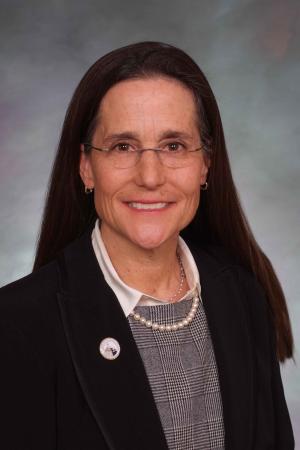
Sponsored bills
The bill exempts from licensure by the director of the division of professions and occupations in the department of regulatory agencies a person who engages only in hair drying services, which services include drying, styling, arranging, curling, hot ironing, or cleansing hair. Portions of the bill make conforming amendments necessary to harmonize the bill with the title 12 recodification bill, House Bill 19-1172. (Note: This summary applies to the reengrossed version of this bill as introduced in the second house.) Read More
Under existing law, each licensed teacher receives a written evaluation, at least 50% of which must be based on student academic growth. Under the bill, 30% of the evaluation must be based on student academic growth and at least 20% on other measures determined by the school district board of education or the board of cooperative services to support student, educator, and system success. The bill creates a working group consisting of the commissioner of education, or his or her designee, several members appointed by the governor who represent teachers, administrators, parents, students, and education policy experts, and 6 legislators appointed by legislative leadership. The working group shall review the implementation of educator performance evaluation systems in Colorado and in other states and countries, identify best practices in performance evaluation, and make recommendations to the general assembly and the state board of education to improve the implementation and use of performance evaluations. The working group must complete its report by November 1, 2019, and submit it to the state board of education and the education committees of the general assembly. The department of education will post the report on the department's website. The working group is repealed, effective July 1, 2020. (Note: This summary applies to this bill as introduced.) Read More
The bill clarifies that the Colorado water conservation board may augment stream flows to preserve or improve the natural environment to a reasonable degree by use of an acquired water right that has been previously quantified and changed to include augmentation use, without a further change of the water right being required. (Note: This summary applies to the reengrossed version of this bill as introduced in the second house.) Read More
Republican river water conservation district - expansion of boundaries - board of directors - composition and meeting schedule. The boundaries of the Republican river water conservation district are currently established by statute as certain counties and portions of counties that are within the Republican river basin. The act expands the boundaries by including the district areas where groundwater pumping depletes the flow of the Republican river as contemplated by applicable United States supreme court case law. The composition of the district's board of directors is adjusted accordingly. Current law requires the Republican river water conservation district board of directors to conduct regular quarterly meetings in January, April, July, and October. The act changes these months to February, May, August, and November. The act requires that each director of the board of directors, at the time of the director's appointment, must be a resident of Colorado; a resident of a county that is, in whole or in part, within the boundaries of the district; and an owner of real property that is within the boundaries of the district from which the director is appointed, as well as within the county or ground water management district from which the director is appointed. (Note: This summary applies to this bill as enacted.) Read More
Farm stands - retail sale of goods permitted - compliance with other applicable laws. The act defines "farm stand" to mean a temporary or permanent structure used for the sale and display of agricultural products resulting from agricultural operations that are conducted on the principal use site on which the farm stand is located. The act permits a farm stand to sell and display agricultural products resulting from agricultural operations not conducted on the principal use site to the extent permitted by the applicable local government. The act permits a farm stand to be located on a parcel of any size. The retail sale of goods to the public by a farm stand must include goods or other agricultural products that are grown or produced on the principal use site on which the farm stand is located or may include agricultural products resulting from agricultural operations that are not conducted on the principal use site to the extent permitted by the applicable local government. The act does not prohibit a local government from requiring the operator of a farm stand to obtain a valid license or permit or to comply with any other applicable laws prior to operating the farm stand, but in no way shall such local permitting, licensing, or other applicable legal requirements deny the use of the site as a farm stand. (Note: This summary applies to this bill as enacted.) Read More
Emergency management - homeland security and all-hazards senior advisory committee - public safety communications subcommittee - continuation under sunset law. The act implements the recommendations of the department of regulatory agencies' sunset review and report on the public safety communications subcommittee by continuing the subcommittee.(Note: This summary applies to this bill as enacted.) Read More
Currently, state law preempts local governments from restricting or mandating containers for any consumer products. The bill allows a local government to set a standard for a retail food establishment's use of ready-to-eat food containers that may be discarded through recycling or composting.(Note: This summary applies to this bill as introduced.) Read More
Water quality - water quality control commission - reclaimed domestic wastewater - point of compliance. In 2018, the general assembly authorized the use of reclaimed domestic wastewater for irrigation of food crops and industrial hemp and for toilet flushing if, at the point of compliance in the water treatment process, the reclaimed domestic wastewater met certain water quality standards. The act authorizes the water quality control commission (commission) to adopt rules requiring a point of compliance for disinfection residual related to the treatment process for reclaimed domestic wastewater used for toilet flushing within a building where the general public can access the plumbing fixtures used to deliver the reclaimed domestic wastewater. If the commission adopts the rules, the rules must establish a point of compliance for disinfection residual at a single location between where reclaimed domestic wastewater is delivered to the occupied premises and before the water is distributed for use in the occupied premises. (Note: This summary applies to this bill as enacted.) Read More
The bill repeals the death penalty in Colorado for offenses charged on or after July 1, 2019, and makes conforming amendments. (Note: This summary applies to this bill as introduced.) Read More