

Maddy summaryThis bill reappoints Kerri L. Hunter as Colorado's State Auditor for a five-year term from July 1, 2026, to June 30, 2031. The reappointment follows a unanimous recommendation from the Legislative Audit Committee, which reviews candidates for the position based on qualifications and experience. Under Colorado law, the General Assembly appoints the State Auditor, and this resolution formally approves Hunter's continued service after her initial term ended in 2026. The measure directly affects the State Auditor's office by extending its leadership while maintaining the existing appointment process.
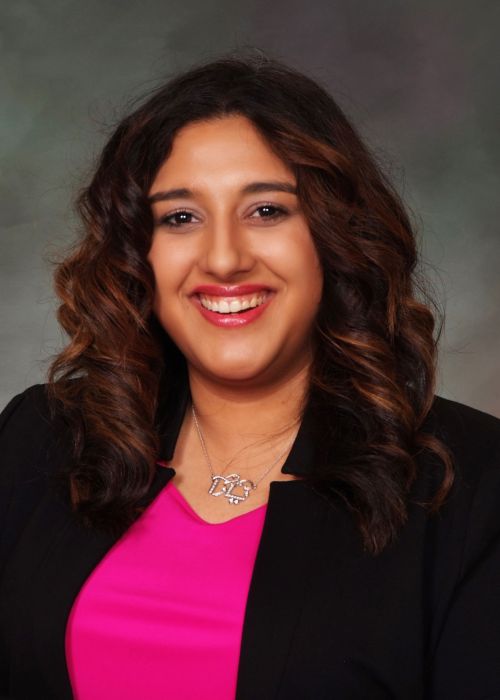
Rep. Yara Zokaie
Sponsored bills
The bill prohibits local and state law enforcement officers from concealing their identity while interacting with the public, with certain exceptions.The bill clarifies state criminal jurisdiction to cover criminal conduct committed by a federal law enforcement officer in the state, even if the officer was acting under color of federal authority. Federal criminal immunity or defense from prosecution does not prohibit state criminal prosecution of a federal law enforcement officer.The bill requires the peace officer standards and training board (P.O.S.T. board) to deny certification to an individual who has previously been employed or who is currently employed by the United States immigration and customs enforcement agency or the United States customs and border protection agency.The bill requires the P.O.S.T. board to prescribe a training for all current and future peace officers regarding immigration law, a peace officer's duty to intervene, excessive force policies, and a peace officer's jurisdictional limit.A peace officer is required to intervene to prevent a federal law enforcement officer from using excessive force.The bill expands the conduct that can constitute the crime of impersonating a peace officer to include a person performing a law enforcement act while concealing the person's identity.(Note: This summary applies to this bill as introduced.)
Maddy summaryThis bill approves specific updates to eligibility lists for two Colorado water funding programs. It adds new drinking water projects (like Delta County's distribution system) and modifies existing entries (such as adding "green infrastructure" to Loveland's project), while deleting completed projects (like Kiowa's). These changes determine which local water districts, municipalities, and property associations can access financial assistance from the Drinking Water Revolving Fund and Water Pollution Control Revolving Fund. The bill does not create new funding rules but formally adopts the Commission's proposed list adjustments.
Maddy summaryThis Senate Joint Resolution expresses Colorado's legislative support for maintaining national public lands under federal stewardship and opposes efforts that would reduce public access or weaken environmental review laws. The resolution specifically targets potential erosion of bedrock federal laws like NEPA and FLPMA, which require public input and balanced resource management. It calls on state and federal officials to defend statutory safeguards that ensure public lands serve broad public benefits rather than narrow special interests. This non-binding resolution does not change any laws but serves as a formal statement of legislative intent and values regarding public land management.
Maddy summarySJR 4 designates September 20-26, 2026, as "Frontotemporal Degeneration (FTD) Awareness Week" in Colorado. This symbolic resolution recognizes FTD - a terminal, incurable neurodegenerative disease affecting speech, behavior, and motor skills - and aims to increase public awareness of the condition. It directly supports Coloradans living with FTD, their families, and advocacy groups like the Association for Frontotemporal Degeneration, which focuses on research and care. The bill has no funding or regulatory provisions, as it is purely a recognition measure.
Maddy summaryThis House Memorial (HM 1001) is a formal tribute passed by the Colorado General Assembly honoring former State Representative Dan Williams, who died in October 2025. It recognizes his 1984-1992 service in the Colorado House, his leadership as chair of key committees (including Agriculture and Transportation), and his lifelong advocacy for Colorado ranching and farming communities. The resolution expresses the legislature's condolences to his family and sends copies of the memorial to his partner and children. It has no policy impact, as it is purely a commemorative gesture with no new laws or funding.
Maddy summarySJR 14 is a symbolic resolution declaring February 28, 2026, as "Rare Disease Day" in Colorado. It recognizes over 500,000 Coloradans living with rare diseases - conditions affecting fewer than 200,000 people - and highlights challenges like limited treatments and high costs. The resolution encourages public awareness through events (like lighting Denver's City and County Building) and acknowledges the resilience of affected individuals. It does not create new laws, funding, or services, but formally supports the rare disease community through recognition.
Maddy summaryHJR 1019 designates February 20, 2026, as Caregiving Youth Day in Colorado, with an official observance on February 27, 2026. The resolution recognizes children and adolescents under 18 who provide care for family members with health needs (such as chronic illness, disability, or aging-related care) and encourages schools, healthcare providers, and community organizations to identify these young caregivers and offer appropriate support. It does not create new laws or funding but aims to increase awareness of this underserved population.
Maddy summarySJR 13 is a symbolic resolution recognizing February 26, 2026, as "Youth Mental Health Action Day" in Colorado. It does not create new laws or allocate funding but formally honors pediatric health-care providers working to support youth mental health. The resolution cites Colorado's high rates of youth mental health challenges (including suicide being a leading cause of death for children under 18) and emphasizes collaboration with providers, agencies, and communities. It commits the General Assembly to "promoting child and youth well-being" through existing mental health system efforts. This is a non-binding recognition, not a policy change.
In 2025, the general assembly enacted House Bill 25-1090, which requires clear and conspicuous disclosures regarding the maximum total price charged for goods, services, and property. The bill adds a requirement that a person selling goods for delivery must disclose, at the point of sale, a comparison of the total price for the delivered goods and the total price for the goods available for purchase on site at a store.The bill also prohibits a person from charging unreasonably excessive prices to a captive consumer and defines "captive consumer" as a consumer who is at a location at which a seller of ancillary goods or services does not have competitors regarding the ancillary goods or services being sold. A person that charges unreasonably excessive prices to a captive consumer engages in an unfair or deceptive trade practice in violation of the "Colorado Consumer Protection Act".(Note: This summary applies to this bill as introduced.)