

Under current law, persons licensed to practice medicine in Colorado may form professional service corporations for the practice of medicine. The articles of incorporation for these corporations must reflect and comply with certain requirements, including the requirement that all shareholders of the corporation be individuals who are licensed by the Colorado medical board to practice medicine and who own their shares in their own right (ownership requirement). A licensed physician assistant may be a shareholder, but one or more physician assistants may not own a majority of the corporation. Section 1 of the bill specifies that one or more physician assistants licensed by the Colorado medical board may own a majority of a corporation organized solely for the purpose of providing medical-aesthetic services.The bill codifies a new exception to the ownership requirement. Section 2 establishes that, if a corporation is organized solely for the purpose of providing medical-aesthetic services, the following individuals may be a shareholder of that corporation, if the individual holds an active license issued by their profession's respective licensing body in Colorado:An esthetician;A cosmetologist;A practical nurse;A registered nurse;An advanced practice registered nurse; orA physician assistant.Current statute defines "medical-aesthetic services" as therapeutic procedures used in aesthetics. This definition applies to the corporations recognized in the exception to the ownership requirement codified by the bill.(Note: This summary applies to this bill as introduced.)
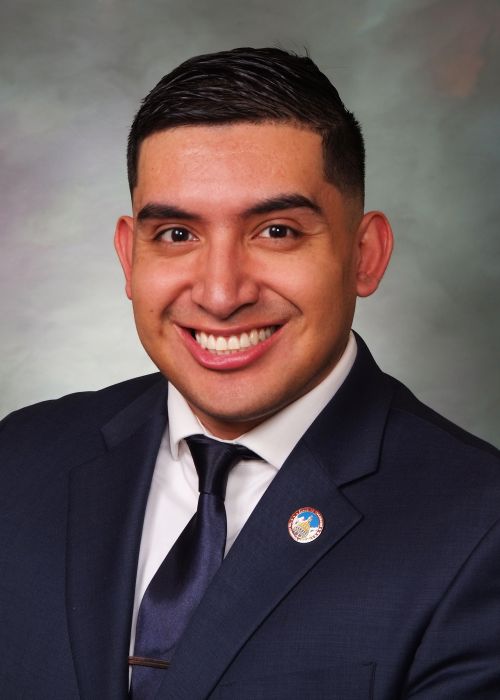
Rep. Ryan Gonzalez
Sponsored bills
The act allows a board of county commissioners and the governing body of a municipality to sell and dispose of property owned by the county or municipality, as applicable, to provide for affordable housing and allows a municipality to enter into a long-term rental or lease agreement for the development of affordable housing. The act allows for the approval of a mutijurisdictional housing authority at a biennial local election instead of only during a general election or an election held on the first Tuesday in November of an odd-numbered year. The ballot question about establishing the authority may be combined with a question about a tax, impact fee, multiple-fiscal year debt, or other financial obligation. The act allows a board of county commissioners to use ad valorem tax revenue for housing authorities, housing programs, and workforce housing. The act entitles an entity subject to income tax to which a middle-income housing tax credit is transferred by a governmental entity or quasi-governmental entity to claim the credit without owning an interest in a qualified project. The sale and use of construction materials by contractors is exempt from taxation if the materials are used by the state in its governmental capacity only. The act provides that 'governmental capacity' includes the construction of workforce housing projects undertaken by counties.(Note: This summary applies to this bill as enacted.)
Previously, money in the diseased livestock indemnity fund could be used only to pay indemnity to a livestock owner whose herd had been sold for slaughter or destroyed because the herd was exposed to or diagnosed with an infectious or contagious disease. The act expands the permissible uses of the money in the diseased livestock indemnity fund by allowing the commissioner of agriculture to authorize using the money to prepare for and respond to certain emerging threats to livestock health. The act renames the fund the 'livestock health preparedness, response, and diseased livestock indemnity fund' to reflect the expanded scope of the permissible uses of money in the fund.(Note: This summary applies to this bill as enacted.)
The act modifies the Colorado agricultural future loan program (program) to permit certain eligible entities to receive funding from the program. An eligible entity is defined as an entity that is certified by the division of conservation (division) or an entity that:Is a district that has authority to conduct water activities, an irrigation district, or a ditch and reservoir company; andHas a letter of support from an entity certified by the division. The act directs the commissioner of agriculture to adopt rules that prioritize awarding loans to eligible entities that seek to acquire and conserve agriculturally productive land and to transfer ownership of that land to an eligible farmer or rancher who qualifies for a loan from the program.(Note: This summary applies to this bill as enacted.)
Maddy summaryThis bill reappoints Kerri L. Hunter as Colorado's State Auditor for a five-year term from July 1, 2026, to June 30, 2031. The reappointment follows a unanimous recommendation from the Legislative Audit Committee, which reviews candidates for the position based on qualifications and experience. Under Colorado law, the General Assembly appoints the State Auditor, and this resolution formally approves Hunter's continued service after her initial term ended in 2026. The measure directly affects the State Auditor's office by extending its leadership while maintaining the existing appointment process.
Maddy summaryThis bill approves specific updates to eligibility lists for two Colorado water funding programs. It adds new drinking water projects (like Delta County's distribution system) and modifies existing entries (such as adding "green infrastructure" to Loveland's project), while deleting completed projects (like Kiowa's). These changes determine which local water districts, municipalities, and property associations can access financial assistance from the Drinking Water Revolving Fund and Water Pollution Control Revolving Fund. The bill does not create new funding rules but formally adopts the Commission's proposed list adjustments.
The 2025 general appropriations act is amended to balance and make adjustments to the total amount appropriated to the department of a natural resources. The general fund, cash funds, reappropriated funds, and federal funds portions of the appropriation are decreased.(Note: This summary applies to this bill as enacted.)
The 2025 general appropriations act is amended to balance and make adjustments to the total amount appropriated to the department of military and veterans affairs. The general fund and cash funds portions of the appropriation are increased and the federal funds portion is decreased.(Note: This summary applies to this bill as enacted.)
The 2025 general appropriations act is amended to balance and make adjustments to the total amount appropriated to the department of public safety. The general fund, cash funds, and reappropriated funds portions of the appropriation are increased and the federal funds portions is decreased.(Note: This summary applies to this bill as enacted.)
Maddy summaryThis House Resolution honors Bob Holder, a wildlife manager from Colorado who has dedicated 50 years to protecting wildlife resources in southern Colorado. The measure formally recognizes his contributions to conservation efforts, including his work with black bear education, wildlife enforcement, and habitat preservation through land acquisitions and conservation easements. The resolution expresses gratitude for his service and directs that a copy be sent to Holder as a token of appreciation upon his retirement.