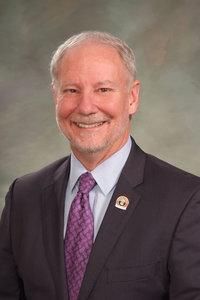
Photo of Dave Young
D Colorado House · District 50

Rep. Dave Young

Compare
Total votes
0
all sessions
Attendance
-
of floor votes
With party
0%
of cast votes
Bipartisan score
0%
crosses aisle rarely
Sponsored
48
bills & resolutions
Committees
0
assignments
48 bills and resolutions

Sponsored bills

Total
48
Primary
48
Co-sponsor
0
This page
48
matching current filters
Primary HB 17-1355
Signed into law · Colorado House · Lead sponsor
County Block Grant Money To Child Care Quality Programs

Current law provides that money allocated to a county through a county block grant for the child care assistance program may be used for the provision of child care services. The bill expands allowable uses of such money to the provision of child care improvement activities as identified in the federal 'Child Care and Development Block Grant Act of 2014', as amended. (Note: This summary applies to the reengrossed version of this bill as introduced in the second house.)


Signed into law Jun 5, 2017 0 co-sponsors
Primary HB 17-1343
Signed into law · Colorado House · Lead sponsor
Implement Conflict-free Case Management

Joint Budget Committee. The bill implements conflict-free case management for persons with intellectual and developmental disabilities who are enrolled in home- and community-based services under Colorado's medicaid program. The definition of conflict-free case management is included in the bill and reflects the policy that case management services are provided to a person with intellectual and developmental disabilities who is enrolled in home- and community-based services by an agency that is not also providing the same person services and supports unless a federal exemption is approved. The bill defines and creates case management agencies that will provide case management services, and contains provisions for the department of health care policy and financing's (department) oversight of case management agencies. The state medical services board (state board) shall promulgate rules upon the enactment of the bill for the certification and decertification of case management agencies, as well as rules that ensure that a person with intellectual and developmental disabilities enrolled in home- and community-based services has access to case management services and that there is a process for a person to select the case management agency of his or her choice. A case management agency shall develop an individualized plan for these persons. Designated community-centered boards shall continue to develop individualized plans for a child with disabilities from birth to age 2 and for persons eligible for other programs. The bill makes conforming amendments in existing statutes to add references to case management agencies, where relevant. The bill contains time frames for the implementation of conflict-free case management in Colorado. Initially, the department shall determine the options for community-centered boards to become compliant with conflict-free case management when serving persons with intellectual and developmental disabilities who are enrolled in home- and community-based services. Conflicted community-centered boards are required to develop a business continuity plan to transition to providing either case management services or services and supports to these persons. The bill includes a date by which all persons receiving home- and community-based services will be served through a system of conflict-free case management. The bill authorizes the department to seek a federal exemption from conflict-free case management in geographic areas within the state where the only willing and qualified entity to provide case management services is also the only willing and qualified entity to provide home- and community-based services in that geographic area. The bill contains procedures and time frames for rural community-centered boards, as defined in the bill, to request that the department seek the federal exemption. The bill includes provisions relating to the denial of a federal exemption and requires state board rules for when a federal exemption is pending and for when there are multiple agencies operating in the same geographic area. The bill authorizes and prioritizes the use of money in the intellectual and developmental disabilities services cash fund (cash fund) for systems changes related to the implementation of conflict-free case management and repeals the cash fund in 2022. (Note: This summary applies to the reengrossed version of this bill as introduced in the second house.)
Signed into law Jun 5, 2017 0 co-sponsors
Primary SB 17-264
Signed into law · Colorado Senate · Lead sponsor
Funding For Behavioral Mental Health Disorder Services

Joint Budget Committee. The bill clarifies that the authorized purposes for which the marijuana tax cash fund may be used include behavioral services. The bill also repeals the offender mental health services fund, which no longer has a revenue source, and directs the remaining money in the fund to be transferred to the general fund. (Note: This summary applies to the reengrossed version of this bill as introduced in the second house.)

Signed into law Jun 5, 2017 0 co-sponsors
Primary HB 17-1045
Signed into law · Colorado House · Lead sponsor
Extend Home Care Allowance Grant Program

The bill modifies the repeal date of the home care allowance grant program (program). The program will repeal when the revisor of statutes receives notice that there is a consumer-directed service delivery option available for homemaker, personal care, and medical support services for individuals who are receiving home-based and community-based services pursuant to the supported living services waiver. The bill requires the executive director of the department of human services and the executive director of the department of health care policy and financing to notify the revisor of statutes when the triggering event occurs. (Note: This summary applies to the reengrossed version of this bill as introduced in the second house.)

Signed into law Jun 5, 2017 0 co-sponsors
Primary HB 17-1087
Signed into law · Colorado House · Lead sponsor
Office Of Public Guardianship Pilot Program

The bill creates the office of public guardianship (office) within the judicial department to provide legal guardianship services to indigent and incapacitated adults who: Have no responsible family members or friends who are available and appropriate to serve as a guardian; Lack adequate resources to compensate a private guardian and pay the costs and fees associated with an appointment proceeding; and Are not subject to a petition for appointment of guardian filed by a county adult protective services unit or otherwise authorized by law. The office is established as a pilot program, to be evaluated and then continued, discontinued, or expanded at the discretion of the general assembly in 2021. On or before January 1, 2021, the director of the office shall submit a report to the judiciary committees of the senate and the house of representatives. The report, at a minimum, must: Quantify, to the extent possible, Colorado's unmet need for public guardianship services for indigent and incapacitated adults; Quantify, to the extent possible, the average annual cost of providing guardianship services to indigent and incapacitated adults; Quantify, to the extent possible, the net cost or benefit, if any, to the state that may result from the provision of guardianship services to each indigent and incapacitated adult in each judicial district of the state; Assess whether an independent statewide office of public guardianship is preferable and feasible; Analyze costs and off-setting savings to the state from the delivery of public guardianship services; and Provide uniform and consistent data elements regarding service delivery in an aggregate format that does not include any personal identifying information of any person. The bill creates the public guardianship commission (commission) within the judicial department and charges the commission with appointing a director of the office. The director serves at the pleasure of the commission. The bill creates the office of public guardianship cash fund (fund) in the state treasury. The fund consists of any money that the office receives from gifts, grants, or donations as well as any other money appropriated to the fund by the general assembly. The bill requires the director of the office to develop rules to implement the pilot program. The bill delays the creation of the pilot program and the appointment of the director of the pilot program until the fund receives at least $1,700,000 in gifts, grants, and donations. The office and the fund are repealed, effective June 30, 2021. (Note: This summary applies to the reengrossed version of this bill as introduced in the second house.)

Signed into law Jun 5, 2017 0 co-sponsors
Primary HB 17-1359
Signed into law · Colorado House · Lead sponsor
CDE Colorado Department of Education Positions Exempt From State Personnel System

Current statutory law provides the state board of education (board) with the discretion to exempt some positions in the department of education (department) from the state personnel system if the positions are determined by the board to be director, consultant, supervisor, or instructor positions. The bill authorizes the board to delegate the authority to make these determinations to the commissioner of education. The bill specifies that any employee holding a position determined by the board or by the commissioner of education, as the board's designee, to be a director, a consultant, a supervisor, or an instructor position on or before September 1, 2017, remains exempt from the state personnel system so long as the employee continues to hold that position. The board or the commissioner of education, as the board's designee, is required to determine which positions in the department meet the criteria to be exempt from the state personnel system; except that the board may not determine that a position is exempt while it is held by an employee in the state personnel system. On or before December 31 of each year, the commissioner of education is required to submit a report to the state personnel director listing all positions in the department that are exempt, pursuant to the board's statutory authority, from the state personnel system. (Note: This summary applies to the reengrossed version of this bill as introduced in the second house.)

Signed into law Jun 2, 2017 0 co-sponsors
Primary SB 17-295
Signed into law · Colorado Senate · Lead sponsor
Revise Medicaid Fraud Reporting

Joint Budget Committee. The bill updates the department of health care policy and financing's (state department) annual reporting on efforts to detect and prosecute medicaid client fraud and the attorney general's annual reporting on medicaid provider fraud. The bill requires the state department to annually submit a single, comprehensive report on client and provider fraud in the medicaid program, including information received annually from the attorney general. The bill adds the joint budget committee to the legislative committees receiving the report and requires that the report include additional cost and savings information. (Note: This summary applies to the reengrossed version of this bill as introduced in the second house.)

Signed into law Jun 2, 2017 0 co-sponsors
Primary HB 17-1353
Signed into law · Colorado House · Lead sponsor
Implement Medicaid Delivery & Payment Initiatives

Joint Budget Committee. The bill authorizes the department of heath care policy and financing (department) to continue its implementation of the medicaid care delivery system, referred to as the accountable care collaborative (ACC). The bill defines the goals of the ACC and the department's implementation of the ACC, including, in part, establishing primary care medical homes for medicaid clients, providing regional coordination and accountability, and integrating physical and behavioral health care delivery. The medical services board is required to promulgate rules implementing the ACC. The bill requires the department to submit an annual report concerning the implementation of the ACC to the joint budget committee and to the health care committees of the house of representatives and of the senate that oversee the medicaid program. Among other information listed in the bill, the report must include information on the number of medicaid clients participating in the ACC, performance results, and fiscal impacts of the ACC. The bill authorizes the department of health care policy and financing (department) to implement performance-based payments for medicaid providers. Prior to implementing performance-based payments, the department shall report to the joint budget committee concerning the performance-based payments, including whether the payments require a budget request, the amount of the payments compared to total reimbursements for the affected service, and a description of the stakeholder process and the department's response to stakeholder feedback. After implementation of performance-based payments, the department shall report to the joint budget committee and the health care committees of the house of representatives and the senate that oversee the medicaid program concerning the design of the performance-based payments, the stakeholder engagement process with respect to the payments, and other information regarding the implementation of the performance-based payments described in the bill. (Note: This summary applies to the reengrossed version of this bill as introduced in the second house.)

Signed into law May 23, 2017 0 co-sponsors
Primary HB 17-1280
Signed into law · Colorado House · Lead sponsor
Disability Trusts 21st Century Cures Act Language

The bill conforms Colorado statutory language relating to the creation of a disability trust to conform to the language established in the federal '21st Century Cures Act'. Specifically, it clarifies that the individual who is the beneficiary of a disability trust can also be the person who establishes such trust. (Note: This summary applies to the reengrossed version of this bill as introduced in the second house.)

Signed into law May 23, 2017 0 co-sponsors
Primary SB 17-288
Passed · Colorado Senate · Lead sponsor
Decouple GA Compensation From Judges' Compensation

Members of the general assembly currently receive an annual salary of $30,000. For terms commencing on or after 2019, current law provides that the salary will be an amount equal to 25% of the total annual salary paid to the judges of the county court in a Class B county. For terms commencing on or after 2019 but prior to 2025, the bill establishes the salary for members of the general assembly at 25% of the amount of the total annual salary paid to judges of the county court in a Class B county as established in the 2016 long bill. (The 2016 long bill established the judges' salary at $152,466. Twenty-five percent of this amount would be $38,116.) Starting in 2025, the director of research of the legislative council would adjust this salary amount for inflation from 2019 through 2025, and then adjust the amount again every 2 years thereafter. (Note: This summary applies to the reengrossed version of this bill as introduced in the second house.)

Passed May 8, 2017 0 co-sponsors
Showing 31 to 40 of 48 bills
Previous 1 3 4 5 Next