

Passed May 5, 2017
0 co-sponsors
Total votes
2,697
all sessions
Attendance
96%
121 missed
Near the chamber average
With party
99%
of cast votes
Higher than 75% of chamber peers
Bipartisan score
0%
crosses aisle rarely
Lower than 79% of chamber peers
Sponsored
26
bills & resolutions
Near the chamber average
Committees
0
assignments
26 bills and resolutions
Sponsored bills
Total
26
Primary
26
Co-sponsor
0
This page
26
matching current filters
Colorado Food Systems Advisory Council
The bill repeals the interagency farm-to-school coordination task force (task force) and ends the terms of current members of the Colorado food systems advisory council (council). The bill provides for the appointment of new members to the council. The council's duties are to: Collaborate and coordinate with producers, relevant state and federal agencies, and consumers regarding linking Colorado producers, particularly specialty crop producers, with food and nutrition assistance programs; Collaborate with relevant state and federal agencies and other entities regarding the study, development, and recommendation of policies and methods to best implement the farm-to-school program; Collaborate with producers, relevant government agencies, educational institutions, nongovernmental organizations, and consumers regarding support for the recommendations in the Colorado blueprint for food and agriculture, and ensure that the blueprint, or its successor, is updated as needed; Conduct research regarding national best practices regarding food and nutrition assistance, direct and intermediated market development, and farm-to-school programs as well as other priorities determined by the council; Collaborate with, serve as a resource to, and receive input from local and regional food policy councils in the state; Explore methods of collecting and assessing statewide data relating to council activities and report the relevant information and data regarding council activities as required by current law; and Collaborate with the department of agriculture in leveraging existing domestic marketing programs that benefit Colorado agriculture. The bill extends the repeal of the council from September 1, 2018, to September 1, 2022. (Note: This summary applies to the reengrossed version of this bill as introduced in the second house.)
Passed May 4, 2017
0 co-sponsors
New Transportation Infrastructure Funding Revenue
Section 17 of the bill requires a ballot question to be submitted to the voters of the state at the November 2017 statewide election that seeks approval for the state to temporarily impose additional state sales and use taxes for 20 years beginning January 1, 2018, and to issue up to a specified amount of transportation revenue anticipation notes (TRANs) for the purpose of funding specified state transportation projects. If the voters approve the temporary additional sales and use taxes and the issuance of TRANs, the new sales and use tax revenue and TRANs proceeds generated are allocated, pursuant to sections 7, 14, 15, 16, and 19, solely for transportation funding purposes as follows: $375 million of the new sales and use tax revenue annually and all TRANs proceeds to the state highway fund for use by the department of transportation (CDOT) to repay the TRANs and to fund qualified federal aid transportation projects, including multimodal capital projects, that are designated for tier 1 funding as ten-year development program projects on CDOT's 2017 development program project list until all of the projects are fully funded, for tier 2 funding for such projects thereafter, and for maintenance, including rapid response maintenance, of state highways; and Of the remaining new sales and use tax revenue: 70% to counties and municipalities in equal total amounts; and 30% to a multimodal transportation options fund created in section 22. If the voters approve the ballot question: Sections 5 and 8 respectively impose additional state sales and use taxes at a rate of 0.62% and exempt the sale, storage, use, and consumption of aviation fuels from the additional taxes. Section 9 ensures that revenue generated by the new taxes that is attributable to sales of marijuana and marijuana products is used for transportation purposes by exempting such revenue from the existing requirement that state sales and use tax revenue attributable to such sales by credited to the marijuana tax cash fund. Section 17 requires the transportation commission to covenant that amounts it allocates on an annual basis to pay TRANs shall be paid: First, from $50 million of any legally available money under its control other than the new sales and use tax revenue; next, from the new sales and use tax revenue; and last, if necessary, from any other legally available money under its control any amount needed for payment of the TRANs until the TRANs are fully repaid; The new sales and use tax revenue allocations to counties and municipalities are further allocated, pursuant to sections 15 and 16, to each county and municipality in accordance with certain existing statutory formulas used to allocate highway users tax fund (HUTF) money to each county and municipality; Section 10 repeals an existing late vehicle registration fee. Section 12 requires CDOT to evaluate options for more flexible use of high-occupancy vehicle and high-occupancy toll lanes and to report to the transportation legislation review committee (TLRC) regarding the evaluation no later than August 1, 2018. Section 14 repeals the existing statutory requirement that at least 10% of the sales and use tax net revenue and other general fund revenue that may be transferred or appropriated to the HUTF and subsequently credited to the state highway fund must be expended for transit purposes or transit-related capital improvements and limits the use of new state sales and use tax revenue for toll highways; Section 22 creates a transportation options account and a pedestrian and active transportation account in the fund and requires the transportation commission to designate the percentages of fund revenue to be credited to each account subject to the limitations that for any given fiscal year no more than 75% of the revenue may be credited to the transportation options account and at least 25% of the revenue must be credited to the pedestrian and active transportation account; Section 22 also creates a multimodal transportation options committee of gubernatorial and legislative appointees representing transit agencies, transportation planning organizations, and local governments and the executive director of CDOT or the executive director's designee as a type 1 agency within CDOT for the purpose of allocating the money in the transportation options account of the fund for transportation options projects throughout the state. Under the supervision and guidance of the committee, section 11 requires the transit and rail division of CDOT to solicit, receive, and evaluate proposed transportation options projects and propose funding for interregional transportation options projects. Any transportation options project receiving funding from either account of the fund must also be funded by at least an equal total amount of local government, regional transportation authority, or transit agency funding; except that small local governments and transit agencies may provide 20% matching money. Section 22 also requires CDOT to allocate the money in the pedestrian and active transportation account of the fund for projects for transportation infrastructure that is designed for users of nonmotorized mobility-enhancing equipment and persons with disabilities who use motorized wheelchairs, scooters, or functionally similar assistive technology; Section 3 eliminates transfers of general fund revenue to the HUTF that are scheduled under current law to be made for state fiscal years 2017-18, 2018-19, and 2019-20; Section 21 reduces the state road safety surcharges imposed on motor vehicles weighing 10,000 pounds or less are reduced for the same period during which the rates of the state sales and use taxes are increased. The resulting reduction in state fee revenue is taken entirely from the share of such fee revenue that is kept by the state so that county and municipal allocations of such revenue are not reduced. Section 18 requires CDOT to annually report to the joint budget committee, legislative audit committee, house transportation and energy committee, and senate transportation committee regarding its use of TRANs proceeds and to post the reports and certain user-friendly project-specific information on its website; and Section 20 creates a transportation revenue anticipation notes citizen oversight committee is created to provide oversight of the expenditure by the department of the proceeds of additional TRANs. The committee must annually report to the TLRC regarding its activities and findings.(Note: This summary applies to the reengrossed version of this bill as introduced in the second house.)
Passed Apr 25, 2017
0 co-sponsors
Modern Technology Education In Public Schools
Under current law, the state board of education (state board) must, by July 1, 2018, review and revise, as necessary, the state academic standards. The bill directs the state board, in the course of revising the academic standards, to incorporate into the standards for each subject skills relating to the use of information and communications technologies to find, evaluate, create, and communicate information. The bill directs the department of education (department) to create a publicly available resource bank of materials pertaining to computer science programs, including sample standards, samples of curricula, and materials for professional educator development. The department must work with experts in creating and compiling the information. The resource bank is to be available by July 1, 2018. Each school district, charter school, and board of cooperative services may choose whether to provide computer science courses and whether to use the materials in the resource bank. (Note: This summary applies to the reengrossed version of this bill as introduced in the second house.)
Signed into law Apr 24, 2017
0 co-sponsors
Passed Mar 14, 2017
0 co-sponsors
Passed Jan 20, 2017
0 co-sponsors
Ask Maddy
·
AI policy assistant
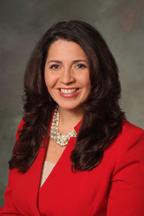
Ask Maddy about Crisanta Duran
Scope: colorado
Hi! I can help you understand Crisanta Duran's legislative record. What would you like to know?
Try one of these
i
Maddy answers using official bill text and legislative records. Always verify before sharing.
Sources cited inline