

The act requires a volunteer lobbyist to register and file a registration statement attesting they are not being compensated. The act exempts volunteer lobbyists from registration fees. The act provides that the judicial department may designate one individual for the judicial department and one individual for each independent agency in the judicial department who may lobby on behalf of the judicial department or an independent agency in the judicial department (judicial lobbyist). A person designated by a principal executive department to be responsible for lobbying a state official or employee on behalf of the department (legislative liaison), a judicial lobbyist, or an individual who lobbies on behalf of the offices of the governor or lieutenant governor as a member of the governor's cabinet or as a personal staff employee in the offices of the governor or the lieutenant governor (governor's lobbyist) must register with the secretary of state annually. In addition to annually registering with the secretary of state, a legislative liaison, judicial lobbyist, or a governor's lobbyist must file a monthly disclosure statement with the secretary of state (disclosure statement). The act provides that a legislative liaison, judicial lobbyist, or a governor's lobbyist must indicate on the disclosure statement the bill number of any legislation for which they have lobbied or will lobby a covered official and their position regarding the legislation. The legislative liaison, judicial lobbyist, or a governor's lobbyist must update their position on the disclosure statement within 72 hours of a change in position. The act prohibits a statewide elected official or member of the general assembly from being a legislative liaison or governor's lobbyist for a period of 2 years following vacation of office. $91,000 is appropriated from the department of state cash fund to the department of state.(Note: This summary applies to this bill as enacted.)
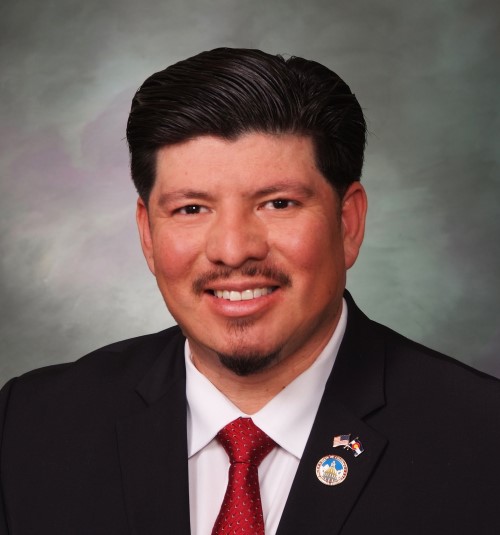
Rep. Carlos Barron
Sponsored bills
If certain conditions are met, the act requires health benefit plans that provide hospital, surgical, or medical expense insurance to provide reimbursement for health-care services provided by a pharmacist that are within the pharmacist's scope of practice without entering into a collaborative pharmacy practice agreement. Similarly, under the medical assistance program (medicaid), the act authorizes reimbursement for services that are within a pharmacist's scope of practice and not duplicative of other pharmacist services or programs reimbursed by medicaid. Further, solely on the basis of the type of license or certification, a health benefit plan or health insurance company (carrier) shall not discriminate against a pharmacist who is acting within the scope of the pharmacist's license or certification under state law, with respect to participation, referral, reimbursement of covered services, or indemnification, or prohibit a pharmacist from membership in a provider network; except that, in selecting pharmacist providers, the act does not:Prohibit a health benefit plan or carrier from including providers in its provider network only to the extent necessary to meet the needs of the plan or from limiting referrals or establishing quality control measures;Require a health benefit plan or carrier to contract with any provider willing to abide by the terms and conditions for participation established by the health benefit plan or carrier; orRequire coverage for any health-care service that is not otherwise covered. The act makes changes to the definitions in the pharmacy practice statutes to include a definition for 'final product verification'. For drug, device, or product orders that are not for controlled substances, final product verification may be delegated by a supervising pharmacist to a certified pharmacy technician or pharmacy intern. A pharmacy or other outlet shall have a continuous quality assessment system in place to periodically verify the accuracy of the final drug, device, or product and must create a plan for final product verification, including how pharmacists' hours will be maintained to provide direct patient care. The state board of pharmacy is required to adopt rules relating to final product verification no later than December 31, 2026. Under current law, a pharmacist may administer certain tests to patients who are 12 years old or older for certain conditions and prescribe drugs to treat the tested conditions. The act adds to the definition of the 'practice of pharmacy' independent prescriptive authority for drugs that are not controlled substances, drug categories, or devices that are prescribed to patients who are 5 years old or older but under 12 years old for conditions that do not require a new diagnosis, that are minor and self-limiting, or that have a test that guides diagnosis and are not medications that may only be prescribed pursuant to a certified education program and a limited distribution network. If a pharmacist tests or treats any patient who is under 18 years old, the act requires a pharmacist to notify the patient's primary care provider consistent with health-care privacy laws or, if the patient does not have or disclose a primary care provider, refer the patient to a primary care provider for further care.(Note: This summary applies to this bill as enacted.)
The act appropriates the following amounts for the 2026-27 state fiscal year from the Colorado water conservation board (CWCB) construction fund to the CWCB or the division of water resources in the department of natural resources for the following projects:Continuation of the satellite monitoring system, $380,000 (section 1 of the act);Continuation of the floodplain map modernization program, $500,000 (section 2);Continuation of the weather modification permitting program, $500,000 (section 3);Continuation of the Colorado Mesonet project, $200,000 (section 5);Continuation of the water forecasting partnership project, $2,500,000 (section 6);Continuation of Colorado decision support system operation and maintenance, $750,000 (section 7);Support for water plan agency actions, $1,350,000 (section 9);Continuation of the Colorado watershed restoration and flood mitigation projects, $5,000,000 (section 10); andContinuation of the upper Colorado river commission planning, $750,000 (section 11). Section 4 directs the state treasurer to transfer up to $6,000,000 from the CWCB construction fund to the CWCB litigation fund on or before July 1, 2026. Section 8 restores the fish and wildlife resources fund balance by transferring $2,000,000 from the CWCB construction fund to the fish and wildlife resources fund. Section 12 authorizes the CWCB to make a loan in an amount of $151,500,000 from the severance tax perpetual base fund to the city of Fort Collins to support the Halligan water supply project. Section 13 authorizes the CWCB to make a loan in an amount of $20,166,670 from the severance tax perpetual base fund to the Lower Latham Reservoir Company for the Jurgens reservoir construction project. Section 14 appropriates $37,700,000 from the water plan implementation cash fund to the CWCB to award grants that will help implement the state water plan. Section 15 clarifies that the money that is currently in the turf replacement fund is appropriated for designated purposes to the CWCB until June 30, 2028. Any money remaining in the turf replacement fund on July 1, 2028, is transferred to the CWCB construction fund. Section 16 makes technical corrections so that money appropriated in 2025 is available to the department of natural resources executive director's office for the purpose of paying for a study by the Colorado water center at Colorado state university. Under current law, the CWCB may authorize loans up to $10 million from the CWCB construction fund or severance tax perpetual base fund without legislative authorization. The act increases that amount to $30 million (section 17).(Note: This summary applies to this bill as enacted.)
The act prohibits using an automated driving system to drive a commercial motor vehicle unless an individual who holds a commercial driver's license is in the vehicle, monitors the vehicle's driving, and intervenes, if necessary, to avoid illegal or unsafe driving. The individual must be in the driver's seat if hazardous materials are being transported. The penalty is $1,000 for a first offense, is $2,000 for a second offense, and doubles for each subsequent offense. The act does not apply to a light-duty vehicle or a truck-mounted attenuator. The prohibition is repealed September 1, 2031. The chief of the Colorado state patrol will analyze the act's effects on commercial vehicle safety on highways. By November 1, 2030, the chief of the Colorado state patrol will issue a report to the relevant committees of the house of representatives and senate. The report must make recommendations as whether to continue the prohibition and, if continued, any recommended legislation to improve the prohibition. For the 2026-27 state fiscal year, $14,357 is appropriated to the department of revenue from the Colorado DRIVES vehicle services account in the highway users tax fund to implement the act.(Note: This summary applies to this bill as enacted.)
The act directs the division of brand inspection (division) in the department of agriculture and the state board of stock inspection commissioners in the department of agriculture to receive reports of lost or stolen livestock. On or before December 31, 2026, the division shall implement procedures that:Facilitate efficient coordination with law enforcement, including procedures to ensure that reports of stolen livestock are provided to relevant law enforcement within 24 hours after the division receives a report of stolen livestock; andEnsure that the public is notified of lost or stolen livestock. The procedures implemented by the division may vary by geographic region depending on the needs of the region.(Note: This summary applies to this bill as enacted.)
The act requires a minor who is under 18 years old to have written permission of the minor's parent or legal guardian to obtain an instruction permit to drive a motorcycle. The act does not apply to emancipated minors.(Note: This summary applies to this bill as enacted.)
Maddy summaryThis bill establishes a joint committee of five legislators to inform the Governor that the current legislative session is about to end. The committee, composed of three House members and two Senate members, will also ask the Governor if he has any final messages for the assembly. Although the bill was introduced in 2026, it was ultimately not passed as the Senate laid it on the table. Its primary function is a procedural step to ensure proper communication between the legislature and the executive branch at the conclusion of a session.
Current law requires certain entities to file, or allows certain entities to voluntarily file, a clean energy plan to achieve an 80% reduction in greenhouse gas emissions caused by the entity's electricity sales in Colorado by 2030, relative to 2005 levels (2030 emission reductions). The act repeals current law stating that clean energy plans submitted by a cooperative electric association or a municipally owned utility under certain circumstances are deemed approved by the public utilities commission (commission) and requiring the division of administration in the department of public health and environment (division) to consult with the commission in verifying a clean energy plan submitted by a cooperative electric association or a municipally owned utility. The act also repeals current law stating that voluntary submission of a clean energy plan by a cooperative electric association or a municipally owned utility does not alter the entity's regulatory status with respect to the commission. A municipally owned utility that has encountered challenges in achieving the 2030 emission reductions may submit to the division, no later than December 31, 2026, an updated clean energy plan that demonstrates achievement of the 2030 emission reductions by the earliest date possible on or after December 31, 2029, but no later than December 31, 2032. A municipally owned utility that submits an updated clean energy plan to the division must:Provide a detailed generation and transmission plan to the division with the updated clean energy plan;Provide an annual report to the division beginning January 1, 2028, and continuing each year until December 31, 2033, that contains certain information related to the updated clean energy plan;Cease burning coal by December 31, 2032; andSeek to achieve certain additional reductions in greenhouse gas emissions without impairing the municipally owned utility's ability to maintain certain electric reliability standards. The updated clean energy plan must be verified by the division.(Note: This summary applies to this bill as enacted.)
Under current law, if a defendant is found incompetent to proceed and the defendant will not be restored to competency in the foreseeable future, the court is required to dismiss charges against the defendant and the defendant, in limited circumstances, may be referred for certification for short-term treatment through a civil court process. The act maintains the requirement for the court to dismiss the charges against a defendant if the defendant's highest charged offense is among certain misdemeanor offenses, and the act maintains certification for short-term treatment as an option for the defendant. However, if the defendant is unrestorable or the defendant has reached the statutory maximum time permitted to be restored, the act authorizes the district attorney or county attorney (prosecution) to notify the court that the prosecution seeks civil commitment or an enhanced protective placement of a defendant if the prosecution can prove by clear and convincing evidence that the defendant:Has a mental disability or developmental disability;Committed an act that, in the absence of any mental disability or developmental disability, would constitute homicide, a crime of violence, or a felony that constitutes unlawful sexual behavior, and the act is or was charged in a criminal case in Colorado in which competency was raised; and Poses a substantial risk of serious harm to others. If the prosecution seeks civil commitment or an enhanced protective placement, the court is required to stay the order dismissing the defendant's case, set a trial within 91 days after the date the written notice was filed, and order the department of human services (CDHS) to identify an appropriate provider and placement for the defendant in the event a civil commitment or enhanced protective placement is granted. The defendant may stipulate that the court order a civil commitment or enhanced protective placement. If the court finds the prosecution has not met its burden, the court is required to deny the prosecution's request to civilly commit the defendant or order an enhanced protective placement of the defendant; except that the court may consider whether to order other civil proceedings. If the court finds the prosecution has met its burden, the court is required to order the civil commitment or enhanced protective placement of the defendant, place the defendant and issue any related orders, transfer jurisdiction of the civil commitment or enhanced protective placement to an appropriate civil court with jurisdiction, and dismiss the defendant's criminal case. When the court orders the civil commitment or enhanced protective placement, the court shall make a finding of the defendant's primary diagnosis that constitutes the mental disability or developmental disability. The court shall order the defendant civilly committed to the legal custody of CDHS unless the defendant's primary diagnosis is an intellectual and developmental disability (IDD) or a neurocognitive disorder, in which case, the court shall order an enhanced protective placement and legal custody of the defendant to the department of health care policy and financing (HCPF). If CDHS proposes placing the defendant into inpatient care, the court shall order, without further court review, that the defendant be placed into inpatient care at the discretion of CDHS if the court ordered a civil commitment or that the defendant be placed into inpatient care at the discretion of HCPF if the court ordered an enhanced protective placement. If CDHS has not identified an appropriate provider that is willing to accept placement of the defendant, the court shall set a review hearing within 35 days after the order for civil commitment or enhanced protective placement and order CDHS, in consultation with the behavioral health administration (BHA), to identify at least one appropriate provider. Upon receiving jurisdiction of a civil commitment or enhanced protective placement, the act requires the civil court to supervise the civil commitment or enhanced protective placement by notifying the county attorney, appointing an attorney to represent the respondent, and setting a review hearing. At the hearing, the respondent has the right to request modification of the terms of the civil commitment or enhanced protective placement and the right to periodic review, including whether the respondent qualifies for termination of the civil commitment or enhanced protective placement. The court is required to ensure the respondent is placed in the least-restrictive setting adequate to protect the victims and community. If the respondent is not placed into inpatient care at the discretion of CDHS, or if CDHS proposes to move the respondent into or out of inpatient care, the court shall, prior to modifying the civil commitment or enhanced protective placement to change the respondent's provider or placement, review the appropriateness of the proposed provider or placement. The provider charged with the physical care and custody of the respondent is required to submit a report to the court and the parties annually by the date the respondent was civilly committed or ordered into enhanced protective placement unless a substantially similar examination was ordered by the court within the previous 12 months. The act requires the court to terminate the respondent's civil commitment or enhanced protective placement if the respondent no longer poses a substantial risk of serious harm to others or the respondent does not have the applicable disorder or disability that is likely to cause the respondent to be a danger to the respondent's self or a danger to others and the respondent has demonstrated sufficient capacity and willingness to conform their conduct to the requirements of the law. If the respondent does not meet the criteria for termination, the respondent is not entitled to another termination trial within one year after the conclusion of the previous trial. The court shall convert a civil commitment to an enhanced protective placement if the respondent does not meet the criteria for termination but the respondent has a mental health disorder that is an IDD or a neurocognitive disorder, without having any other mental health disorder that is not an IDD or a neurocognitive disorder and that substantially contributes to whether the respondent is a danger to the respondent's self or a danger to others, or is gravely disabled. If the defendant does not meet the criteria for termination and has co-occurring mental health disorders that include an IDD or a neurocognitive disorder, the court may, upon the recommendation of CDHS, convert the civil commitment to an enhanced protective placement. The court shall convert an enhanced protective placement to a civil commitment if the respondent does not meet the criteria for termination and the respondent no longer has an IDD or a neurocognitive disorder that substantially contributes to whether the respondent is a danger to the respondent's self or a danger to others, or is gravely disabled. If the defendant does not meet the criteria for termination and has co-occurring mental health disorders that do not include an IDD or a neurocognitive disorder, the court may, upon the recommendation of CDHS, convert the enhanced protective placement to a civil commitment. Under current law, an emergency mental health hold (M1 hold) may be initiated against a person for not more than 72 hours if the person appears to have a mental health disorder and, as a result of the mental health disorder, appears to be a danger to the person's self or others, or appears to be gravely disabled. A person detained for an M1 hold and transported to an emergency medical services facility or facility designated by the commissioner (facility) of the BHA is required to receive an evaluation as soon as possible after the person presents to the facility. The act authorizes a person who has an M1 hold initiated against them while in confinement to receive an evaluation at the person's place of confinement rather than being transported to a facility. If the person is released from confinement while under an M1 hold, the person responsible for the confinement is required to coordinate with the BHA to transfer the person to a facility. Under current law, if a person under an M1 hold meets the criteria for certification for short-term treatment, the person may be certified for not more than 3 months. Rather than requiring an M1 hold as a prerequisite to short-term certification or certification for long-term care and treatment, the act authorizes a person to be certified if the person:Has been advised of the availability of, but has not accepted, voluntary treatment or with consideration of all reasonably available information, is believed will not remain in voluntary treatment; and By clear and convincing evidence, has a mental health disorder and, as a result of the mental health disorder, the person is a danger to the person's self, a danger to others, or gravely disabled. A person may not be certified for short-term treatment or long-term care and treatment if the person has an IDD or neurocognitive disorder without any other mental health disorder that is not an IDD or neurocognitive disorder and that substantially contributes to whether the respondent is a danger to the respondent's self or a danger to others, or is gravely disabled. If a respondent is certified, the court shall order CDHS to provide care coordination and make diligent efforts to find a provider for the respondent that is willing to hold the certification. The respondent may be certified for long-term care and treatment if the respondent continues to meet the criteria and standards for certification for short-term treatment. The certification terminates when the professional person in charge of the respondent's treatment and the BHA determine the respondent no longer meets the criteria for certification. To terminate a short-term treatment certification less than 30 days after the initial certification, two professional persons are required to individually consult and review the respondent's case and agree that the respondent no longer meets the criteria for certification. A court may order the short-term or long-term protective placement of a person:Who, by clear and convincing evidence, has a neurocognitive disorder;When reasonable grounds exist to believe that the person will not remain in a voluntary treatment program; andWho, by clear and convincing evidence, is a danger to the person's self, a danger to others. The act aligns the provisions for short-term and long-term protective placement with certifications for short-term treatment and long-term care and treatment. No later than October 1, 2027, the act requires CDHS to construct and operate an outpatient treatment facility for adults with behavioral health needs, including adults who are found incompetent to proceed and unlikely to be restored to competency. To implement the act, for the 2025-26 state fiscal year, the act appropriates to CDHS $535,934 from the general fund and $4,777,898 from the capital construction fund. To implement the act, the act makes the following appropriations for state fiscal year 2026-27:$17,802,360 to CDHS from the general fund, of which $242,323 is reappropriated to the department of law and $52,644 to the office of information technology;To the judicial department, $26,296 from the judicial department information technology cash fund and $5,401,437 from the general fund, of which $1,719,409 is for use by the office of state public defender and specified independent agencies;$842,808 to HCPF from the general fund; and$150,000 to the department of law from the general fund.(Note: This summary applies to this bill as enacted.)
The act:Allows the department of public health and environment (department) to expend money from the community impact cash fund to provide grants for municipal solid waste landfill methane emission reduction projects;Requires the environmental justice advisory board to prioritize a grant request from a local government that owns or operates a municipal solid waste landfill over a grant request from a private entity that owns or operates a municipal solid waste landfill;Requires an entity that receives money from the department to use the money as supplemental funding only; andAmends the definition of 'disproportionately impacted community'.(Note: This summary applies to this bill as enacted.)