

Maddy summaryHJR 25-1020 is a symbolic resolution recognizing the contributions and historical service of African American veterans. It formally acknowledges their service across all U.S. military conflicts since the Revolutionary War, including challenges they faced with segregation and discrimination. The resolution highlights key milestones like the 1.25 million African Americans who served in WWII and the 1948 desegregation order (Executive Order 9981), while noting ongoing barriers to full equality. It does not create new benefits, policies, or legal obligations - it solely serves as a statement of recognition. The resolution passed unanimously in both chambers in early 2025.
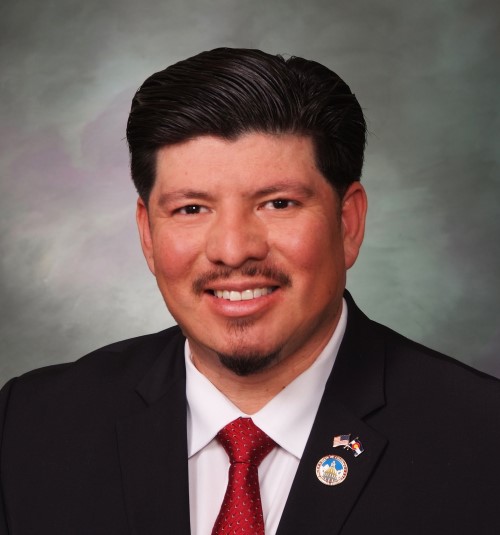
Rep. Carlos Barron
Sponsored bills
Maddy summaryHJR 25-1010 is a symbolic resolution designating Colorado's Military, Veterans, and POW/MIA Appreciation Day to honor active service members, veterans, and their families. It expresses legislative gratitude for military contributions, supports installations like Fort Carson, and encourages Coloradans to participate in annual celebrations. The resolution does not create new laws or programs but serves as a formal recognition of military service and sacrifice. It passed unanimously in both chambers of the Colorado legislature in early 2025.
Maddy summaryThis joint resolution commemorates the 57th anniversary of the 1968 North Korean capture of the USS Pueblo, a U.S. Navy ship named after Pueblo, Colorado. It honors the crew's bravery, notes Colorado's historical connection to the ship, and calls for North Korea to return the vessel. The resolution designates January 23 as "USS Pueblo Day" for annual remembrance. As a symbolic gesture, it has no legal effect on policy or operations.
Maddy summaryHJR 25-1013 is a symbolic joint resolution honoring Colorado veterans who served in World War II on the 80th anniversary of the war's end. It recognizes the service of approximately 250,000 Coloradans who served during 1941-1945, including over 3,500 who died in action, and specifically references Colorado's military units like the 10th Mountain Division and the 157th Infantry Regiment. The resolution encourages support for commemorating this anniversary but does not create new programs, funding, or legal obligations. As a procedural resolution, it serves only to express legislative recognition.
Maddy summaryHJR 25-1016 is a Colorado legislative resolution honoring veterans who served in the Persian Gulf War (1990-1991), including three Coloradans who died in combat. It formally acknowledges their service, honors those who made the ultimate sacrifice, expresses gratitude to families of fallen service members, and encourages all Coloradans to remember their sacrifices. The resolution does not create new laws or policies but serves as a symbolic recognition through the Colorado General Assembly. It was passed unanimously by both chambers of the state legislature in early 2025.
The act transfers all the unexpended and unencumbered money in the financial literacy and exchange (FLEX) fund to the general fund on June 30, 2025, and repeals the FLEX program on July 1, 2025. (Note: This summary applies to this bill as enacted.)
Under current law, based on a tenant's failure to pay one or more late fees, a landlord cannot: Remove or exclude a tenant from a dwelling; Terminate a tenancy or other estate at will; or Terminate a lease in a mobile home park. The bill clarifies that a landlord can take such actions if there is another legal reason and the landlord is not taking the action solely because the landlord is owed one or more late fees. Additionally, a landlord cannot issue a written demand notice for a tenant to give up possession of the premises (demand letter) based solely on the tenant's failure to pay one or more late fees, but must have another legal reason to issue the demand letter. Under current law, the demand letter must be written in English, Spanish, or any other language that the landlord knows, or has reason to know, is the primary language of the tenant. The bill instead requires that the demand letter must be written in English or, if requested by the tenant at the time the tenant enters into the lease, in another language that is the tenant's primary language. Under current law, a landlord is permitted to post a notice to vacate in a conspicuous place on the premises after at least one unsuccessful attempt at service on 2 separate days. The bill allows the landlord to post the notice in a conspicuous place on the premises after only one unsuccessful attempt to serve the tenant with the notice. (Note: This summary applies to this bill as introduced.)
Current law requires mandatory sentencing to at least the minimum of the prescribed range for a person who, within the immediately preceding 4 years, was twice convicted of felony theft from a store and who is once again convicted of felony theft from a store. The bill requires a state court to sentence a person convicted of burglary, robbery, theft, or a related property crime from or of a store, who was convicted of any 2 of the specified property crimes or comparable municipal offenses from or of a store within the preceding 4 years, to at least the midpoint term for the current offense. The bill adds language to the existing theft statute clarifying how a gift card's value is determined for purposes of determining the offense level and associated penalty. If the stolen item of value is a gift card, then the value is the full monetary face value or, in the case of a variable load gift card, the maximum potential value, regardless of whether funds have been transferred to the gift card at the time of the theft. The bill adds gift cards to the list of written instruments subject to forgery. (Note: This summary applies to this bill as introduced.)
The bill grants a person who is at least 18 years of age and permitted to possess a handgun pursuant to federal and state law the same authority to carry a concealed handgun as a person who holds a permit to carry a concealed handgun (permit). A person who carries a concealed handgun without a permit has the same rights, limitations, and authority to carry as a person who holds a permit. A person may obtain a permit for the purpose of using the permit to carry a concealed handgun in another state that recognizes a Colorado permit. The bill makes the minimum age to obtain a permit 18 years of age. Under existing law, Colorado recognizes permits issued in other states that meet certain criteria, including that the holder of the out-of-state permit is at least 21 years of age. The bill changes the minimum age for recognition of an out-of-state permit to 18 years of age. Under existing law, a permit is valid for 5 years. The bill makes a permit valid for the life of the permit holder. Existing permits, other than temporary emergency permits, are converted to lifetime permits. Because the bill makes permits valid for the life of the holder, the bill repeals provisions relating to the renewal of permits. The bill repeals the temporary emergency permit to carry a concealed handgun. The bill repeals local government authority to regulate open or concealed carry of a handgun, including repealing the authority of special districts and the governing boards of institutions of higher education, as applicable. (Note: This summary applies to this bill as introduced.)
The bill prohibits an individual, organization, or entity from: Permitting a minor to attend events, performances, or activities explicitly involving sexual content or pornographic materials; or Exposing a minor to pornographic materials in any form, including digital, print, or broadcast mediums. The prohibition does not apply to: Educational materials or school programs explicitly designed for age-appropriate sex education in accordance with local and federal regulations; or Parental or guardian discussions about sexual health and development appropriate to the child's maturity level. A violation is an unclassified misdemeanor, and for the first violation the penalty is a fine of up to $10,000. A second or subsequent violation is subject to a sentence of up to 2 years in jail. A violator is also subject to revocation of a business license if the violator is an establishment that knowingly permits such exposure. (Note: This summary applies to this bill as introduced.)