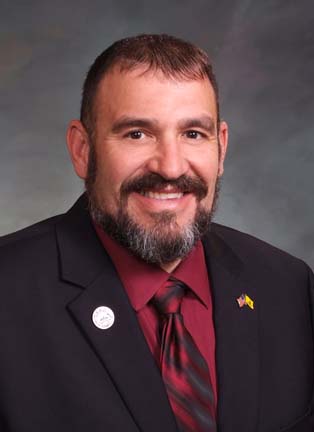
Photo of Ty Winter
R Colorado House · District 47 On the 2026 ballot

Rep. Ty Winter

Compare
Total votes
2,660
all sessions
Attendance
98%
46 missed
Near the chamber average
With party
93%
of cast votes
Lower than 79% of chamber peers
Bipartisan score
5%
crosses aisle rarely
Higher than 75% of chamber peers
Sponsored
216
bills & resolutions
Near the chamber average
Committees
3
assignments
216 bills and resolutions

Sponsored bills

Total
216
Primary
88
Co-sponsor
128
This page
216
matching current filters
Co-sponsor HB 25-1074
In committee · Colorado House · Co-sponsor
Change Confinement Standards Egg-Laying Hens

The bill repeals standards created in House Bill 20-1343, enacted in 2020, regarding confinement standards for egg-laying hens whose eggs are sold. (Note: This summary applies to this bill as introduced.)

In committee Jan 27, 2025 1 co-sponsor
Co-sponsor HJR 25-1003
Passed · Colorado House · Co-sponsor
Joint Session Address by Tribal Councils

Maddy summaryHJR 25-1003 is a procedural resolution that schedules a joint session of the Colorado General Assembly for January 16, 2025, to hear a message from representatives of the Ute Mountain Ute Tribe and Southern Ute Indian Tribe tribal councils. It directs the appointment of a committee consisting of three House members and three Senate members to escort tribal representatives to the session. The resolution does not create new laws or alter policies but formalizes a ceremonial meeting to recognize the tribes' historical and cultural contributions to Colorado. This is a standard procedural step for legislative recognition events, not a substantive policy change.

Passed Jan 22, 2025 1 co-sponsor
Co-sponsor HJR 25-1005
Passed · Colorado House · Co-sponsor
Commemoration of Martin Luther King Jr. Day

Maddy summaryHJR 25-1005 is a ceremonial resolution encouraging Colorado communities to observe Martin Luther King Jr. Day on January 20, 2025 - the 41st anniversary of the state holiday. It does not create new laws or alter existing policies but urges cities, schools, counties, and local governments to hold commemorative events. The resolution honors Dr. King’s legacy, noting Colorado’s early adoption of the holiday in 1985 and its ongoing observance through events like the annual Marade. This is a non-binding call for community engagement, not a substantive legislative change.

Passed Jan 22, 2025 1 co-sponsor
Co-sponsor HR 25-1002
Passed · Colorado House · Co-sponsor
House Officers & Employees

Maddy summaryThis bill (HR 25-1002) is a procedural measure concerning House officers and employees. The provided context includes no bill text, summary, or specific provisions describing its content or effects. Without the actual text or a substantive description of the bill's requirements, mechanisms, or who it directly affects, a factual summary cannot be generated. The recent actions (introduced, passed, signed) only confirm procedural steps, not the bill's policy content.

Passed Jan 13, 2025 1 co-sponsor
Primary HB 24-1247
Passed · Colorado House · Lead sponsor
Digital Education Materials

A public school contracting entity (entity) that executes enters into a contract or renews a contract on or after July 1, 2024, with a vendor or provider of a curated digital research collection (collection) shall include in the terms of the contract a termination clause stating that the contract is materially breached and grounds for termination exist if on 3 separate occasions, a collection is found to have advertisements, promotions, or embedded links or URLs that contain material that is harmful to students or direct students to material that is harmful to students. A public school employee, contractor, or volunteer shall report, and students, parents, guardians, legal custodians, or community members (interested parties) may report, the material that is harmful to students to the entity. The report must include the name of the digital collection and the title of the document, the reference number, or keywords used to access the collection. The entity shall notify the vendor or provider and the department of education (department) of each reported incident. The vendor or provider must remove the material that is harmful to students within 3 business days after receiving notice. the collection contains advertisements, promotions, or embedded links or URLs. All vendors must certify that collections are free of advertisements, promotions, or embedded links or URLs. If a vendor violates the terms of the contract, the entity is entitled to reimbursement and may pursue remedies for breach of contract. The bill requires public schools to annually notify interested parties of the reporting procedures. Public schools may include information on their websites regarding how to make a report. If a public school contracts or enters into an agreement with a public library that promotes a collection, the public school shall annually disclose the details of the contract or agreement by e-mail to the local school district board of education and parents, guardians, or legal custodians of students enrolled in the public school. If any material changes to the contract occur, the public school shall send an e-mail notification to the local school district board of education, parents, guardians, or legal custodians of students enrolled in the school. The department is required to annually report to the general assembly on the number of reports that occur each year. (Note: Italicized words indicate new material added to the original summary; dashes through words indicate deletions from the original summary.) (Note: This summary applies to the reengrossed version of this bill as introduced in the second house.)


Passed Jun 14, 2024 0 co-sponsors
Primary HB 24-1457
Signed into law · Colorado House · Lead sponsor
Asbestos & Lead Paint Abatement Grant Program

The act creates the rural housing and development asbestos and lead paint abatement pilot grant program (pilot grant program) in the department of public health and environment (department) to award grants, beginning July 1, 2025, to local governments in rural areas to offset costs associated with the abatement of asbestos and lead paint in housing, commercial buildings, and other development projects. To be eligible for a grant, a local government must submit an application to the department. The application must: For renovation or demolition sites, include an inspection report consistent with rules detailing asbestos-containing materials in excess of trigger levels; For renovation of lead-based paint abatement sites, include a description of eligibility that shows that the facility meets the statutory definition; For both asbestos and lead-based paint abatement, renovation, or demolition, include documentation demonstrating that the applicant has acquired any necessary permits and regulatory approval from the air pollution control division; and Include an assessment of needs of the local government's rural communities. The act creates the rural housing and development asbestos and lead paint abatement fund (fund) in the state treasury. The fund consists of money generated from penalties and fines collected in association with violations of laws concerning hazardous materials in an amount up to $200,000 for the 2025-26 state fiscal year and up to $200,000 for the 2026-27 state fiscal year. The department may expend money in the fund to award grants. The pilot grant program and the fund are repealed, effective July 1, 2027. APPROVED by Governor June 3, 2024 EFFECTIVE August 7, 2024(Note: This summary applies to this bill as enacted.)

Signed into law Jun 3, 2024 0 co-sponsors
Primary SB 24-220
Signed into law · Colorado Senate · Lead sponsor
Overweight & Oversize Motor Vehicle Permits

The act requires an applicant for an overweight motor vehicle permit to provide third-party documentation establishing the gross weight of the load if the permit application is for a vehicle and load combination that weighs at least 200,000 pounds and less than 500,000 pounds. The carrier is required to carry the documentation in the vehicle during the permitted move and produce the documentation for any state agency or law enforcement personnel. In addition to any other penalty, a driver who violates this provision is subject to a penalty of one dollar per pound in excess of the gross weight authorized by the permit. The act authorizes the department of transportation to issue a single-use overweight or oversize state permit or local permit on an expedited basis to help in an emergency. If the permit is a local permit, the applicant and the executive director of the department of transportation, or the executive director's designee, are required to make a reasonable attempt to contact and obtain the approval of the local authorities. If the department of transportation is unable to contact or obtain the approval of the local authority within a reasonable amount of time, the department of transportation may issue the local permit. If the permitted vehicle needs a law enforcement escort, the department of transportation must obtain the approval of the state patrol. The local permit fees must be collected and remitted to the local authorities. APPROVED by Governor May 31, 2024 EFFECTIVE August 7, 2024(Note: This summary applies to this bill as enacted.)

Signed into law May 31, 2024 0 co-sponsors
Primary HB 24-1249
Signed into law · Colorado House · Lead sponsor
Tax Credit Agricultural Stewardship Practices

The act establishes a refundable state income tax credit for active qualified stewardship practices on a farm or ranch for income tax years beginning on or after January 1, 2026, but before January 1, 2031. A qualified taxpayer may earn a state income tax credit equal to: At least $5 and no more than $75 per acre of land covered by one qualified stewardship practice, up to a maximum credit of $150,000 in one income tax year. At least $10 and no more than $100 per acre of land covered by 2 qualified stewardship practices, up to a maximum credit of $200,000 in one income tax year. At least $15 and no more than $150 per acre of land covered by at least 3 qualified stewardship practices, up to a maximum of $300,000 per income tax year. The department of agriculture may issue rules to implement the tax credit, including specifying requirements for implementing and demonstrating qualified stewardship practices. Before issuing any rules, the commissioner of the department of agriculture shall initiate a public stakeholder process to advise the commissioner about the requirements for implementing and demonstrating qualified stewardship practices. To claim the credit, a qualified taxpayer must apply to the department of agriculture for a tax credit certificate. The department of agriculture will evaluate the application and issue the certificate if the taxpayer qualifies for the tax credit. If a tax credit certificate is issued, the qualified taxpayer must attach it to the taxpayer's income tax return and submit it to the department of revenue. The aggregate amount of tax credits issued in one calendar year cannot exceed $3 million. After certificates have been issued for credits that exceed an aggregate of $3 million for all qualified taxpayers during a calendar year, any claims that exceed the amount allowed are placed on a wait list and a certificate is issued for use of the credit in the next income tax year. No more than $2 million in claims shall be placed on the wait list in any given calendar year. Only one tax credit certificate may be issued per qualified taxpayer in an income tax year, and the qualified taxpayer claiming the credit may only receive the tax credit for up to 3 income tax years. No credit may be earned if the qualified taxpayer has received another tax credit, a tax deduction, or a grant related to agricultural land health from any source during the income tax year for which the tax credit is sought. The act appropriates $17,117 to the department of agriculture from the general fund for the 2024-25 state fiscal year for use by the agricultural services division (division) to implement the act. APPROVED by Governor May 24, 2024 EFFECTIVE August 7, 2024(Note: This summary applies to this bill as enacted.)

Signed into law May 24, 2024 0 co-sponsors
Primary HB 24-1319
Signed into law · Colorado House · Lead sponsor
Fire Fighters License Plate Expiration on Transfer

The Colorado professional fire fighters license plate is a distinctive special license plate. Under current law, distinctive special license plates do not expire when an owner of a motor vehicle who has been issued a distinctive special license plate transfers or assigns the owner's title or interest in the motor vehicle. The act provides that the Colorado professional fire fighters license plate expires upon the transfer or assignment of the motor vehicle. A person whose Colorado professional fire fighters license plate expires as a result of the transfer or assignment of the motor vehicle may apply again for the license plate by paying the required fees and fulfilling the application requirements. APPROVED by Governor May 22, 2024 EFFECTIVE August 7, 2024(Note: This summary applies to this bill as enacted.)

Signed into law May 22, 2024 0 co-sponsors
Primary HB 24-1244
Signed into law · Colorado House · Lead sponsor
Minor Autopsy Report Release Requirements

The act specifies that an autopsy report prepared in connection with the death of a minor is confidential and may be disclosed by the county coroner to another person or entity only in accordance with certain exceptions. The report is not a public record for purposes of the Colorado open records act. Under the act, upon the request of an entity or individual entitled to the report, the coroner or the coroner's designee shall provide a copy of the autopsy report prepared in connection with the death of a minor to: A parent or legal guardian of the deceased; A law enforcement or criminal justice agency that is investigating the death or prosecuting a criminal violation arising out of the death; A requesting party in a civil case; Counsel for the defendant or the respondent for discovery purposes in a criminal case only if discovery has not otherwise been provided and in accordance with any protective order; A state, local, or regional child fatality prevention review team; The Colorado department of public health and environment as necessary for the collection of data in accordance with the Colorado violent death reporting system and the Colorado unintentional drug overdose reporting system; The Colorado child fatality review team; A county department of human or social services; The division of youth services in the Colorado department of human services; A health-care facility where the deceased had received treatment; A community clinic or a treating hospital for inclusion within the medical records of the deceased; An eye bank, organ procurement organization, or tissue bank; A local or regional domestic violence fatality review team; The Colorado department of human services in connection with the investigation of a fatality that has occurred within any facility licensed under the "Child Care Licensing Act"; The office of the child protection ombudsman; A health-care provider that had previously established a patient-provider relationship with the deceased; The Colorado maternal mortality review committee for the purpose of conducting public health death reviews of deceased individuals who are pregnant or within one year postpartum; The Colorado department of public health and environment and county public health agencies for the purpose of data collection related to the department's authority to investigate and control the causes of epidemic and communicable diseases and related board of health rules; The Colorado department of public health and environment's health facility and emergency medical services division for the purpose of health facilities and emergency medical services investigations; or The public if the death occurs while the minor is in the custody or under the supervision of the state or a local government. Upon written request by any individual, the coroner shall not release a copy of the autopsy report and instead shall release the cause, time, place, and manner of the minor's death, and the name, age, gender, and race or ethnicity of the deceased minor. This information must be released within 3 days of the request or 3 days of receiving the information, whichever is later. Under the act, any person may petition a district court to allow the person access to an autopsy report prepared in connection with the death of a minor. The petitioner shall serve process on the coroner and a members of the deceased minor's next of kin pursuant to the Colorado rules of civil procedure. The district court shall hold a hearing including the petitioner, coroner, and a member of the deceased minor's next of kin, if available. The hearing must be conducted under the simplified process in the Colorado rules of civil procedure. The district court shall provide access if: Public disclosure of the report substantially outweighs the harm to the privacy interests of the deceased and members of the family of the deceased; and The information sought by the petitioner is not otherwise publicly available. A coroner is required to provide the name of the deceased minor and the name and address of a member of the deceased minor's next of kin to the district court, which shall disclose that information to the petitioner under a protective order for the purpose of service of process. APPROVED by Governor May 22, 2024 EFFECTIVE January 1, 2025(Note: This summary applies to this bill as enacted.)

Signed into law May 22, 2024 0 co-sponsors
Showing 181 to 190 of 216 bills
Previous 1 18 19 20 22 Next