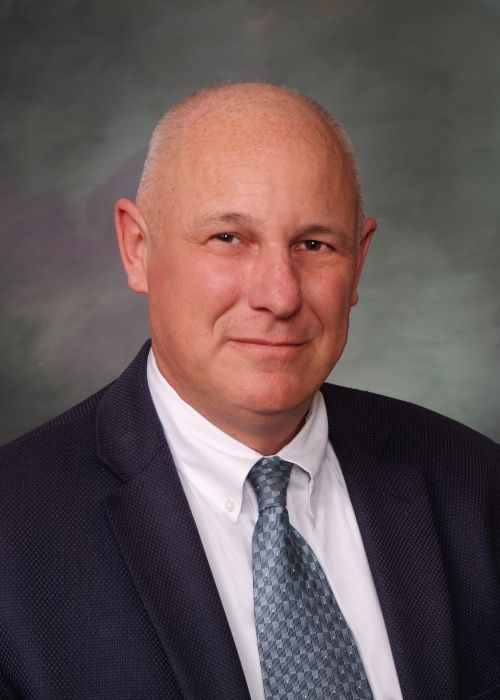
Photo of Bob Marshall
D Colorado House · District 43 On the 2026 ballot

Rep. Bob Marshall

Compare
Total votes
3,579
all sessions
Attendance
98%
53 missed
Near the chamber average
With party
89%
of cast votes
Lower than 93% of chamber peers
Bipartisan score
6%
crosses aisle rarely
Higher than 86% of chamber peers
Sponsored
276
bills & resolutions
Near the chamber average
Committees
3
assignments
276 bills and resolutions

Sponsored bills

Total
276
Primary
42
Co-sponsor
234
This page
276
matching current filters
Co-sponsor HB 25-1003
Signed into law · Colorado House · Co-sponsor
Children Complex Health Needs Waiver

The act merges 2 existing medicaid waiver programs for children into one children's home- and community-based services waiver program, known as the children with complex health needs waiver program. The act relocates provisions to the new program due to the repeal of the 2 existing waiver programs. (Note: This summary applies to this bill as enacted.)

Signed into law Mar 31, 2025 1 co-sponsor
Co-sponsor HB 25-1009
Signed into law · Colorado House · Co-sponsor
Vegetative Fuel Mitigation

The act allows a fire protection district or a metropolitan district that provides fire protection services (district) to create a program to mitigate the presence of dead or dry plant material that can burn and contribute to a fire on privately owned property within a district (vegetative fuel program). A district that creates a vegetative fuel program may require an owner or occupier with an interest in private real property that contains vegetative fuel within the district to remove the vegetative fuel and assess a fine per incident of noncompliance. An incident covers all vegetative fuel on a property. A district may not require an owner or occupier of private real property to remove vegetative fuel on private real property that is classified as agricultural land by the tax assessor, owned by a nonprofit entity and leased for agricultural purposes, owned or occupied by a public utility with a vegetation management or wildfire mitigation plan to address vegetative fuel sources, or adjacent to a ditch that conveys decreed water rights or within the easement where the ditch is located. In order to assess a fine, for each incident, the district must provide written notice by certified mail of the requirement to remove vegetative fuel and allow at least 14 days for the owner or occupier to comply. An owner or occupier that does not remove the vegetative fuel as provided in the first notice may be subject to a second notice requiring the removal of vegetative fuel. An owner or occupier has at least 14 days to comply with the second notice. An owner or occupier that does not comply within at least 14 days after the second notice may receive a third notice providing for a fine approximately equal to the cost of removing the vegetative fuel. The fine may not exceed $200 per property per incident, and an owner or occupier is not subject to more than one fine for the same incident. The sum of all fines assessed against a single property may not exceed $1,200. An owner or occupier receiving a third notice may avoid a fine by removing the vegetative fuel within 14 days of the date of the third notice. A district may not access any privately owned real property without the written permission of the owner or occupier of the property. An owner or occupier is not liable to a district for damages to district personnel or equipment that occurs on the property while district personnel or equipment are present on the property to carry out a vegetative fuel program. A district may not use a drone to discover vegetative fuel on a property or to administer or enforce a vegetative fuel program created pursuant to the act. The money that a district collects from a fine must be used by the district only to remove vegetative fuel on private real property within the district's jurisdiction. A district's board may waive the fine in all or in part, in its discretion if it determines that the fine was not assessed pursuant to law, an owner or occupier is financially unable to pay the fine, the vegetative fuel has been removed, or a waiver is appropriate under the circumstances and must prioritize use of the money to assist a low-income owner or occupier, a senior owner or occupier, or an owner or occupier with a disability in removing vegetative fuel from the owner or occupier's property. A district's board may also waive a fine for delays due to weather or upon a petition for a time extension from an owner or occupier if they have undertaken good faith efforts to remove the vegetative fuel. Good faith efforts include documentation from an arborist or licensed professional landscape architect that states when the arborist or landscape architect will be able to mitigate vegetative fuel on the property and the cost of mitigation. A district's board shall grant a property owner or occupier a time extension to mitigate or pay a fine for: No longer than 3 months if the cost to mitigate exceeds $1,000 and is less than $2,500; No longer than 6 months if the cost to mitigate equals or exceeds $2,500 and is less than $5,000; No longer than 9 months if the cost to mitigate equals or exceeds $5,000 and is less than $10,000; or No longer than one year if the cost to mitigate equals or exceeds $10,000. A district's board shall adopt rules and policies after a public hearing, public notice and public comment to implement the act and shall post the adopted rules and policies to the district's website, on social media operated by the district, and in a local newspaper of general circulation. A vegetative fuel program may only be effective 30 days or more after posting of the adopted rules and policies on the district's website. As part of the rules and policies, a district shall designate an individual to oversee and manage the district's vegetative fuel program. A district may certify to the county treasurer a delinquent charge made or levied against a property, and the treasurer may collect and pay over the charge in the same manner that property taxes are collected and paid. (Note: This summary applies to this bill as enacted.)


Signed into law Mar 31, 2025 1 co-sponsor
Co-sponsor HB 25-1040
Signed into law · Colorado House · Co-sponsor
Adding Nuclear Energy as a Clean Energy Resource

The statutory definition of "clean energy" determines which energy projects are eligible for clean energy project financing at the county and city and county level. The statutory definition of "clean energy resource" determines which energy resources may be used by a qualifying retail utility to meet the 2050 clean energy target. The act updates the 2 statutory definitions to include nuclear energy; except that, for property valuations made for tax purposes, the act exempts from the definition of "clean energy resource" nuclear energy. (Note: This summary applies to this bill as enacted.)
Signed into law Mar 31, 2025 1 co-sponsor
Co-sponsor HB 25-1077
Signed into law · Colorado House · Co-sponsor
Backflow Prevention Devices Requirements

Backflow is the reverse flow of water, fluid, or gas caused by back pressure or back siphonage. Under current law, individuals who are engaged in the business of installing, removing, inspecting, testing, or repairing backflow prevention devices are subject to the licensure requirements for plumbers, except when the individuals are installing or testing a stand-alone fire suppression sprinkler system. The act exempts individuals engaged in the business of inspecting, testing, or repairing backflow prevention devices from licensure requirements but retains the licensure requirements for individuals engaged in the installation or removal of the devices; except that individuals who install or replace a backflow prevention device on a stand-alone fire suppression system remain exempted from the licensure requirements. The act requires that, on and after July 1, 2025, a licensed plumber who installs, tests, inspects, repairs, or reinstalls a backflow prevention device and a certified cross-connection control technician or a licensed plumber with a cross-connection control technician certification who tests or repairs a backflow prevention device must affix a tag on the backflow prevention device that contains certain information about the licensed plumber, the certified cross-connection control technician, or the licensed plumber with a cross-connection control technician certification, as applicable, and the service that was provided. (Note: This summary applies to this bill as enacted.)

Signed into law Mar 28, 2025 1 co-sponsor
Co-sponsor SB 25-039
Signed into law · Colorado Senate · Co-sponsor
Agricultural Buildings Exempt from Energy Use Requirements

Under current law, owners of certain large buildings (covered buildings) are required to annually collect and report each covered building's energy use to the Colorado energy office. The act clarifies that agricultural buildings are not covered buildings, and therefore, owners of agricultural buildings are exempt from the energy use collecting and reporting requirements. The act defines an agricultural building as a building or structure used to house agricultural implements, hay, unprocessed grain, poultry, livestock, or other agricultural products or inputs primarily for the purpose of maintaining or operating an agricultural process. Agricultural implements include certain agricultural equipment and do not include implements that are primarily for rent or sale. The act permits an owner of an agricultural building to submit for an affirmative exemption from any requirement to report benchmarking data and for an exemption to remain valid until there is a change in ownership or a change that renders the building no longer an agricultural building. For the duration of an exemption, the owner of an agricultural building is required to certify, upon request, the exemption status of an exempt building. (Note: This summary applies to this bill as enacted.)

Signed into law Mar 28, 2025 1 co-sponsor
Co-sponsor SB 25-016
Signed into law · Colorado Senate · Co-sponsor
Updating Escrow Disbursement Practices

The act modifies the types of funds that are available for immediate withdrawal as a matter of right in real estate transactions by: Limiting wire transfer funds to only those funds that are wired through a funds-transfer system operated by the federal reserve or the Clearing House Payments Company; and Adding a real-time or an instant payment made through a funds-transfer service operated by the federal reserve or the Clearing House Payments Company's real-time payments system.(Note: This summary applies to this bill as enacted.)

Signed into law Mar 26, 2025 1 co-sponsor
Co-sponsor SB 25-170
Signed into law · Colorado Senate · Co-sponsor
Deoxyribonucleic Acid & Sexual Assault Kit Backlog Testing & Data

The act requires the Colorado bureau of investigation (CBI) to spend $3,000,000 in specifically appropriated money from House Bill 24-1430, concerning the provision for payment of the expenses of the executive, legislative, and judicial departments of the state of Colorado, and of its agencies and institutions, for and during the fiscal year beginning July 1, 2024, except as otherwise noted, on backlogged DNA evidence and sexual assault kit tests, as well as DNA retesting related to CBI's laboratory misconduct that was discovered in 2023. Additionally, the act allows CBI to contract with external labs to perform the testing. The act requires CBI to create a dashboard on the department of public safety's website to update the public on the backlog at least every 30 days. CBI shall provide the general assembly with updates on the sexual assault kit backlog, including the number of cases pending, the number of tests CBI's lab conducted, the number of tests CBI contracted out, an update on CBI's laboratory staffing levels, the average turnaround time for a sexual assault kit test, and other relevant data points every 30 days from March 10, 2025, through June 30, 2026. (Note: This summary applies to this bill as enacted.)

Signed into law Mar 26, 2025 1 co-sponsor
Co-sponsor SB 25-042
Signed into law · Colorado Senate · Co-sponsor
Behavioral Health Crisis Response Recommendations

No later than June 30, 2026, the act requires the department of public safety (DPS), in collaboration with the behavioral health administration (BHA), to consult with stakeholders to identify: Existing resources and model programs that communities throughout Colorado utilize when responding to behavioral health crises, including, but not limited to, co-responder programs, alternative response programs, and mobile crisis response programs, and the reimbursement shortages and gaps within the continuum of care for behavioral health crisis response; and The reimbursement shortages and gaps within the continuum of care for behavioral health crisis response, and reimbursement and funding options that are available at the state and federal levels to address the shortages and gaps, including funding for treatment in place. The act requires DPS to compile a list of the existing resources and model programs, and report reimbursement shortages and gaps identified by the stakeholder group and develop recommendations for addressing the shortages and gaps. The act requires DPS to make the resources, model programs, and recommendations publicly available on DPS's website. On or before January 1, 2027, the act requires the BHA, in collaboration with the department of health care policy and financing (HCPF), to provide information to the general assembly regarding the reimbursement shortages and gaps within the continuum of care for behavioral health crisis response and the reimbursement and funding options at the state and federal level that are available to address the shortages and gaps, including funding for treatment in place. The act requires HCPF to reimburse an institution for mental diseases for providing inpatient mental health treatment to a member for up to 60 days or to the extent permitted by federal law. Current law requires each person detained for an emergency mental health hold to receive an evaluation as soon as possible after the person is presented to a facility, and the evaluation may, but is not required to, include an assessment to determine if the person continues to meet the criteria for an emergency mental health hold and requires further mental health care in a facility designated by the commissioner. The act requires the evaluation to include the assessment determination. The act requires a hospital that is subject to the federal "Emergency Medical Treatment and Labor Act" to only discharge a person placed on an emergency mental health hold if the person no longer meets the criteria for an emergency mental health hold; except that a hospital may transfer the person to another hospital if the hospital is unable to provide the appropriate medical or behavioral health care to the person and the receiving hospital agrees to the transfer. (Note: This summary applies to this bill as enacted.)

Signed into law Mar 26, 2025 1 co-sponsor
Co-sponsor SJR 25-013
Passed · Colorado Senate · Co-sponsor
Nowruz Day

Maddy summarySJR 25-013 is a symbolic resolution recognizing Thursday, March 20, 2025, as Nowruz Day in Colorado. It honors the ancient Persian New Year celebration observed by Iranian, Kurdish, Afghan, and Central Asian communities, acknowledging its cultural significance and the contributions of Colorado's Iranian-American residents. The resolution has no legal effect but formally extends recognition to the traditions of Nowruz, including its themes of renewal and community. It directly affects Colorado's Iranian-American community by affirming their cultural heritage through state acknowledgment.

Passed Mar 24, 2025 1 co-sponsor
Co-sponsor SB 25-024
Signed into law · Colorado Senate · Co-sponsor
Judicial Officers

Beginning July 1, 2025, the act increases by one the number of district court judges in the fourth, seventeenth, eighteenth, and twenty-third judicial districts and increases by one the number of county court judges in La Plata county. Beginning July 1, 2026, the act increases by one the number of district court judges in the fourth, seventh, thirteenth, seventeenth, eighteenth, and nineteenth judicial districts and increases by one the number of county court judges in Larimer county, Douglas county, Mesa county, and Eagle county. Current law requires district court judges regularly assigned to Arapahoe county to maintain offices within Arapahoe county. The act allows the district court judges assigned to Arapahoe county to maintain offices outside of the county seat. For the 2025-26 state fiscal year, the act appropriates $2,638,326 from the general fund to the judicial department to implement the increased number of judges and appropriates $621,337 from the general fund to the judicial department for use by the office of state public defender. (Note: This summary applies to this bill as enacted.)

Signed into law Mar 24, 2025 1 co-sponsor
Showing 231 to 240 of 276 bills
Previous 1 … 23 24 25 … 28 Next