

The act authorizes a county, special district, or school district to negotiate property tax relief with a taxpayer that establishes or expands a "qualified communication services facility", which is a facility or other real or personal property used in the provision of fixed broadband or mobile broadband internet access service, if the facility will serve an unserved or underserved area of the county, special district, or school district. The act sets limits and standards for the tax relief. The act also amends the legislative declaration for the statute establishing a sales tax refund for rural broadband service providers by: Stating that requirements to pay sales and use tax on federal-funded and state-funded broadband deployment reduce the efficacy and impact of the federal and state deployment grant money; Noting that wireless telecommunications technologies rely on forms of broadband infrastructure like fiber and landline networks and are, therefore, interconnected to broadband; and Including a tax preference performance statement for the sales tax refund indicating that a purpose of the sales tax refund is to incentivize private sector investment in broadband infrastructure.(Note: This summary applies to this bill as enacted.)
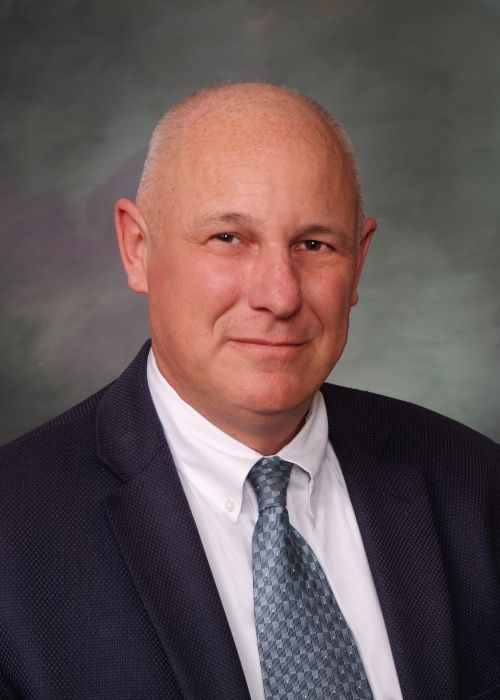
Rep. Bob Marshall
Sponsored bills
For state fiscal year 2025-26, the act appropriates $5,000,000 from the species conservation trust fund in the state treasury for various wildlife conservation programs directed at conserving candidate native species that have been listed as threatened or endangered under state or federal law or are species that are likely to become candidate species, as determined by the United States fish and wildlife service, as follows: $2,480,000 for the upper Colorado river endangered fish recovery program; $20,000 for selenium management, research, monitoring, evaluation, and control; $1,250,000 for native terrestrial wildlife conservation; and $1,250,000 for native aquatic wildlife conservation.(Note: This summary applies to this bill as enacted.)
The act creates the work-based learning consortium pilot program (pilot program) in the department of higher education (department). The purpose of the 3-year pilot program is to: Demonstrate the value of work-based learning in postsecondary curricula by studying the impact of industry-sponsored projects on course objectives and learning outcomes; Promote the adoption of work-based learning in higher education by working with faculty at institutions of higher education (institutions) that participate in the pilot program (participating institutions) to embed project-based learning opportunities into credit-bearing programs; Provide broader access to collegiate work-based learning for students; Measure the impact of work-based learning on participating students; and Learn how institutions can increase the value of postsecondary education through career exposure and preparedness. Pending the receipt of sufficient funds, the department shall convene a consortium (consortium) of representatives from participating institutions, the commission on higher education (commission), the department of labor and employment, the department of education, and a subject matter expert with experience implementing work-based learning. The consortium shall: Work with each participating institution's faculty to embed industry-sponsored projects in course curriculum that meet the work-based learning quality standards; Work with the department to determine the impact of industry-sponsored projects; Work with a third-party platform to connect faculty from participating institutions to employers for the purpose of developing high-quality, project-based learning opportunities for classroom instruction; Advise the commission on strategies to improve student access to high-quality, work-based learning opportunities for students based on participating faculty members' experience embedding industry-sponsored projects into curriculum; Develop best practices for institutions to expand access to work-based learning in the classroom through industry-sponsored projects; and Develop findings and recommendations. Subject to available appropriations, at the end of the pilot program, the act requires the consortium to complete and submit a report to the education committees of the house of representatives and the senate, or their successor committees. The report must include: A description of the consortium's findings and recommendations; Details on the consortium's impacts on participating institutions and the effects of creating additional work-based learning activities on students, faculty, and employers; and Recommendations for statutory changes, financial resources, department policy changes, and policy changes in institutions that are necessary to improve successful work-based learning opportunities for students in institutions. The department may seek, accept, and expend gifts, grants, or donations from private or public sources for the pilot program. The department shall transmit all gifts, grants, or donations to the state treasurer, who shall credit the money to the higher education work-based learning consortium fund (fund). If, by June 30, 2028, the money in the fund has never reached or exceeded $2 million dollars, the state treasurer shall return each grantor's or donor's gift, grant, or donation. On or before November 1, 2026, the commission shall recommend a list of terms used by institutions related to work-based learning to the Colorado workforce development council for inclusion in the talent development glossary (glossary). The purpose of the list of terms is to: Augment the glossary so that collegiate work-based learning activities are accurately reflected in statewide efforts to promote work-based learning; and Demonstrate to institutions relevant opportunities to participate in statewide efforts to promote work-based learning. On or before July 1, 2026, the commission shall work with institutions, the Colorado workforce development council, the department of education, the consortium, nonprofit organizations, industry associations, and businesses to develop recommendations on how to best embed work-based learning opportunities into current degree pathways. On or before December 31, 2026, the department shall work with institutions to identify which work-based learning activities are measurable and how to best report work-based learning activities. Institutions that are eligible for the work-study program may use work-study program money to cover the costs of work-based learning credits for students who are required to complete credit-bearing work-based learning requirements to graduate from an institution. The office of economic development (office) administers the universal high school scholarship program (program). The act allows the office to spend unexpended or unencumbered money appropriated in the 2023-24 state fiscal year through the 2025-26 state fiscal year without further appropriation. The act requires that expenditures for the administrative costs of the program not exceed $1.5 million. The act extends the date for the state treasurer to transfer all unexpended and unencumbered money in the universal high school scholarship cash fund from December 30, 2026, to June 30, 2027. (Note: This summary applies to this bill as enacted.)
The act requires that, for health insurance policies providing maternity coverage, policies issued or renewed on or after January 1, 2027, must include prenatal care coverage without cost sharing for up to 3 office visits. (Note: This summary applies to this bill as enacted.)
Under current law, a sheriff may allow an individual to choose to stay in jail overnight after release when extenuating circumstances exist. The act makes facilitation of a connection to a service provider an extenuating circumstance. If an individual chooses to remain in jail overnight, the individual must be released by 10 a.m. the next morning. Under current law, to qualify for special needs parole, there is a distinction between inmates who are 55 years of age or older and those who are under 55 years of age. The act changes that distinction. The act makes an inmate eligible for special needs parole if the inmate suffers from a diagnosed severe cognitive impairment or serious impairment that limits the person's ability to function. If the inmate is under 55 years of age, the act provides for special needs parole if the inmate has served at least 25% of the inmate's sentence and is eligible for parole after serving 50% of their sentence including earned time; has served at least 35% of the inmate's sentence and is eligible for parole after serving 75% of their sentence including earned time; has served at least 40% of the inmate's sentence and is eligible for parole after serving 75% of the sentence; or has been diagnosed by a licensed health-care provider as having a terminal illness that is irreversible, unlikely to be cured, and likely to cause death; and has not incurred a class I code of penal discipline violation within the 12 months before the date of the application for special needs parole. An inmate who is 64 years of age or older and has served at least 20 years of their sentence and was not convicted of a class 1 or class 2 felony, unlawful sexual behavior, a crime that includes domestic violence, or stalking is eligible for special needs parole. The act makes a person eligible for special needs parole if the person has a condition such as advanced or metastatic cancer; end-stage renal disease; end-stage chronic obstructive pulmonary disorder; end-stage heart disease; end-stage liver disease; progressive neurodegenerative disease such as Huntington's disease, Parkinson's disease, and amyotrophic lateral sclerosis; intractable seizure disorder; severe dementia; or Alzheimer's disease. The act provides that when a health-care provider who is providing care or recently provided care to the person makes a determination that the person's medical condition meets the standard for special needs parole, then a referral must be made to the parole board. The department of corrections is required to include in each contract with a licensed health-care provider involved in providing inmate care a requirement that the provider screen for eligibility for special needs parole. The act requires legislative council staff to conduct a study of options for releasing aging and seriously ill offenders from secure custody to appropriate care or placing offenders in alternative programs that can better provide the offender's needed medical care. (Note: This summary applies to this bill as enacted.)
The act creates the American Indian affairs interim committee (committee). The purpose of the committee is to examine issues and challenges that impact American Indian Tribal Nations. The committee consists of 6 voting members of the general assembly who serve for the duration of the committee unless they resign, are removed, or are no longer in office and 2 nonvoting members, one from the Southern Ute Indian Tribe and one from the Ute Mountain Ute Tribe. The act allows the committee to meet up to 6 times and recommend up to 5 bills during each interim, but the committee does not meet or recommend legislation during the 2025 interim. On or before January 15, 2031, the act requires the committee to submit a report to the executive committee of the legislative council summarizing the work of the committee during the preceding 5 years. The committee is repealed, effective June 30, 2031. (Note: This summary applies to this bill as enacted.)
The act requires a property insurer that uses a wildfire risk model, a catastrophe model, or a scoring method to assign risk to: For the purposes of underwriting homeowners and other property insurance policies, adhere to specific requirements to share information with the commissioner of insurance (commissioner) and the public, include specific activities in the models, and provide notices to policyholders; Submit available data concerning the models and scoring method as required by rule of the commissioner to the division of insurance as part of the insurer's rate filings; and Ensure that specific factors are either incorporated in the wildfire risk model, catastrophe model, or combination of models or are otherwise demonstrably included in the insurer's underwriting and pricing. If an insurer does not incorporate property-specific and community-level mitigation actions into its models, the act requires the insurer to provide discounts to policyholders who demonstrate actions taken on the property to reduce the risk of loss. The act requires an insurer to post on its website information regarding premium savings that are available to policyholders who undertake property-specific mitigation actions or provide evidence of community-level mitigation actions and the process for appealing a wildfire risk score. The act requires an insurer that provides a mitigation discount or that uses a wildfire risk model or risk score to underwrite, nonrenew, price, create a rate differential, or surcharge the premium based upon the policyholder's or applicant's wildfire risk to provide an annual written notice to each policyholder or applicant for property insurance of the applicable mitigation discounts, the wildfire risk score, and any other wildfire risk classification used by the insurer to underwrite the policyholder's or applicant's wildfire risk. The insurer is required to provide the wildfire risk score or classification to the policyholder or applicant. The act authorizes the policyholder and applicant to appeal the score or classification directly to the insurer. The act authorizes the commissioner to adopt rules. (Note: This summary applies to this bill as enacted.)
Infusion pharmacies supply medicaid members with parenteral nutrition, which provides patients with essential nutrients through an intravenous infusion. The act requires the state department of health care policy and financing (state department) to create specific professional dispensing fees for the preparation and dispensing of parenteral nutrition (fees) to encourage an adequate level of market participation among infusion pharmacies that serve medicaid members. During the year beginning January 1, 2026, the fees must not exceed 30% of infusion pharmacy administrative costs for the preparation and dispensing of parenteral nutrition. The state department shall seek federal authorization, as necessary, to implement the fees. The act requires the state department to annually report on the adequacy of the infusion pharmacy network that supplies parenteral nutrition to medicaid members. For the 2025-26 state fiscal year, the act appropriates $54,832 to the state department from the general fund. The state department may use the appropriation for medical and long-term care services for medicaid-eligible individuals. The general assembly anticipates that the state department will receive an equal amount in federal funds to implement the act. (Note: This summary applies to this bill as enacted.)
The act prevents a pharmacy benefit manager (PBM) from prohibiting a rural independent pharmacy from using a private courier or a delivery service to deliver a prescription drug to a patient. A PBM is required to reimburse a rural independent pharmacy for a prescription drug in an amount not less than the national average drug acquisition cost for the dispensed prescription drug ingredients, plus pay a dispensing fee. When a PBM conducts an audit of a rural independent pharmacy and the audit results in a recoupment of more than $1,000 or a penalty of more than $1,000, the PBM must: Electronically notify the rural independent pharmacy of the rural independent pharmacy's rights to appeal at least 30 days before the recoupment of funds; If the rural independent pharmacy does not respond to the electronic notification within 30 days after the electronic notification, again electronically notify the rural independent pharmacy of the rural independent pharmacy's rights to appeal at least 30 days before the recoupment of funds; and If the rural independent pharmacy does not respond to the second electronic notification within 30 days after the second electronic notification, serve process on the rural independent pharmacy notifying of the rural independent pharmacy's rights to appeal at least 30 days before the recoupment of funds. The act allows a rural independent pharmacy to operate without being under the direct charge of a pharmacist if the initial interpretation and final evaluation of the prescription is done by a state-licensed pharmacist in person or remotely. (Note: This summary applies to this bill as enacted.)
On or after July 1, 2025, the act requires a person, before commencing a project to install or substantially repair a contiguous fence of at least a specified certain size in the Sangre de Cristo land grant lands (covered fencing project), to submit an application for the covered fencing project to the local government with jurisdiction over the covered fencing project (application) if the local government has opted into the act's requirements. No later than 14 days after the local government's receipt of an application, the local government must publish notice of the application on the local government's website. No later than 60 days after the local government's receipt of an application, the local government must either approve or reject the application based on certain criteria; except that, despite the criteria, a local government may approve an application if it determines that the benefits of the covered fencing project outweigh the harms. If the local government finds that a covered fencing project presents no significant environmental impacts, then the local government shall not require a person commencing the covered fencing project to submit an application or pay a fee. The act does not apply to a covered fencing project that is necessary for a public utility or department of transportation project, an energy sector public works project, the safety or security of a public school or prison, or fences provided by the division of parks and wildlife. (Note: This summary applies to this bill as enacted.)