

A community integrated health-care service (service) is an out-of-hospital medical service that may be provided by an emergency medical service provider who obtains a community paramedic endorsement. A community integrated health-care service agency (agency) is an entity or sole proprietorship that manages and offers services. The act implements the recommendations in the 2024 sunset report by the department of regulatory agencies by: Continuing the regulation of agencies by 9 years to 2034; Clarifying that a suspension of, a revocation of, or a refusal to renew an agency's license due to a disqualifying felony or misdemeanor conviction of an owner, manager, or administrator of the agency includes circumstances in which the owner, manager, or administrator entered a plea of guilty or nolo contendere to the felony or misdemeanor; Updating language to be gender neutral; Changing references from "consumers" to "patients or clients"; Referencing the definition of service in the statutes governing the regulation of agencies; and Defining "service" to include mobile integrated health care and, as determined by rule by the state board of health, care and services provided by practitioners other than community paramedics.(Note: This summary applies to this bill as enacted.)
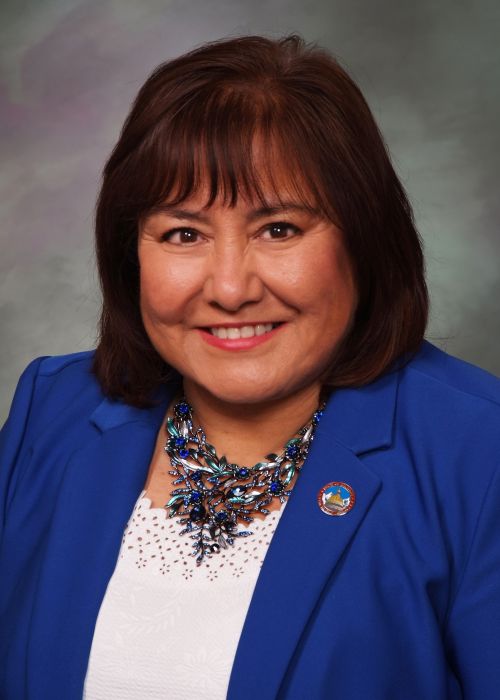
Rep. Cecelia Espenoza
Sponsored bills
The act repeals an obsolete provision that: Authorized the department of public health and environment to award grants to 3 state institutions of higher education in state fiscal year 2006-07; and Required each recipient of a grant award to report to committees of the general assembly on or before March 15, 2007, regarding the use of the grant money awarded.(Note: This summary applies to this bill as enacted.)
The definitions of "community mental health center" and "community mental health clinic" were repealed in House Bill 22-1278; however, references to the repealed definitions are still in statute. The act changes the obsolete references. (Note: This summary applies to this bill as enacted.)
Current law gives a trial court judge 91 days from the day a conviction enters in a criminal case to order restitution, which is the monetary loss a victim suffers due to a defendant's criminal conduct, in a criminal case. The act grants the prosecuting attorney 63 days to submit restitution information to the trial court judge following a conviction if the information is not available on the day a conviction enters, and then grants the trial court judge an additional 63 days following the submission of restitution information to order restitution after it receives the information from the prosecuting attorney. The act applies to defendants sentenced on or after the act's effective date. (Note: This summary applies to this bill as enacted.)
The act removes the term "homosexuality" from the definition of sexual conduct in the sexually explicit materials harmful to children part of the "Colorado Criminal Code". (Note: This summary applies to this bill as enacted.)
Current law does not allow a voice court reporter to administer an oath or affirmation. The act adds voice reporters to the list of professionals who may administer an oath or affirmation. (Note: This summary applies to this bill as enacted.)
The act changes the term "epinephrine auto-injector" to "emergency-use epinephrine" in order to encompass alternatives to injecting epinephrine as a means to treat anaphylaxis in school settings. (Note: This summary applies to this bill as enacted.)
Current law requires the department of corrections (department) to assess a copayment for inmate-initiated visits to providers of medical, dental, mental health, and optometric care services. Current law permits a waiver or reduction of the copayment under a range of circumstances. The department's current administrative regulations assess fees when an inmate fails to attend or refuses a scheduled health-care appointment. The act eliminates the copayment and prohibits the department from assessing a fee when an inmate fails to attend or refuses a health-care appointment. The department is required to report during its 2026 "SMART Act" hearing on the number of times in the previous year that an inmate failed to attend a scheduled health-care appointment or requested an appointment when the request was not relevant to an actual medical condition. The act reduces appropriations to the department by a net of $165,682, which includes an increase of $157,179 appropriated from the general fund and a decrease of $322,861 from cash funds. VETOED by Governor 5/29/2025(Note: This summary applies to this bill as enacted.)
For ground ambulance services (ambulance services), the act: Allows a political subdivision or an ambulance service providing ambulance services on behalf of the political subdivision to submit to the division of insurance (division) the established rates for the ambulance services, if the rates meet specified conditions; Requires the division to publish reimbursement rates on the division's public-facing website; Establishes reimbursement rates for ambulance services that are out of network; and Prohibits an out-of-network ambulance service from billing an individual covered under a health insurance coverage plan (covered person) any outstanding balance for a covered service not paid for by an insurance carrier, except for any coinsurance, deductible, or copayment amount required to be paid by the covered person. If a covered person makes a payment for an out-of-network ambulance service, the payment must be applied to the covered person's in-network deductibles and in-network out-of-pocket maximum amounts. For the 2025-26 state fiscal year, $38,149 is appropriated from the division of insurance cash fund to the department of regulatory agencies for use by the division to implement the act. VETOED by Governor 5/29/2025(Note: This summary applies to this bill as enacted.)
The act allows enrolled members of the Southern Ute Indian Tribe and enrolled members of the Ute Mountain Ute Tribe to enter state parks without having to pay an entrance fee. By June 1, 2026, the division of parks and wildlife (division) in the department of natural resources (department) shall build on existing efforts to conduct outreach to and engagement with the Southern Ute Indian Tribe, the Ute Mountain Ute Tribe, other tribal governments, American Indian communities, and Indigenous communities about opportunities related to state parks that are managed by the division. In January 2026 and January 2027, the department shall include, as part of its presentation during its "SMART Act" hearing, information concerning the division's outreach and engagement about opportunities related to state parks. (Note: This summary applies to this bill as enacted.)