

The Colorado rangers law enforcement shared reserve, commonly known as the Colorado rangers (CLER), is a statewide law enforcement agency that has been established as a political subdivision of the state through the execution of an intergovernmental agreement for the public purpose of promoting the safety, security, and general welfare of all Coloradans by establishing a peace officers standards and training board (P.O.S.T. board) certified statewide shared peace officer reserve force. Sections 1 through 4 of the act update laws relating to civil defense workers and peace officers to clarify the status of the CLER as a governmental entity created by intergovernmental agreement rather than as a volunteer organization, as it was prior to 2018, the requirement that a Colorado ranger be a P.O.S.T. board certified peace officer, and the scope of a Colorado ranger's authority. Section 5: Authorizes the board of the CLER to establish policies to allow compensation to be paid to a Colorado ranger if the Colorado ranger: Is deployed as a peace officer to a jurisdiction for an extended period, as defined or described in the policies; or Is deployed as a peace officer outside the state as authorized by a specified interstate compact for any length of time; and Authorizes the CLER to accept gifts, grants, and donations.(Note: This summary applies to this bill as enacted.)
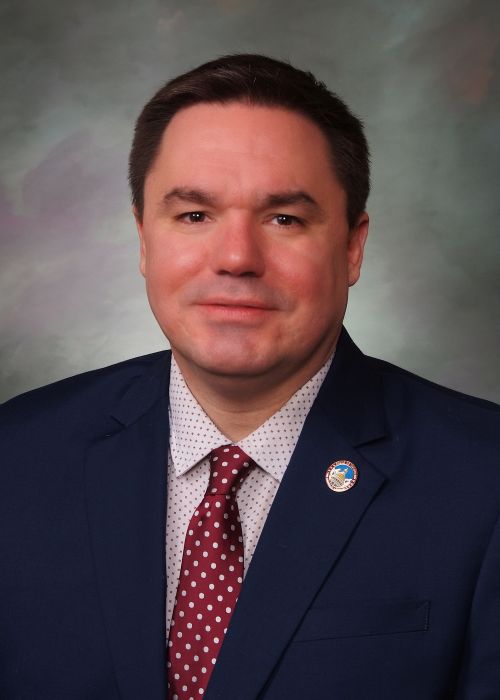
Rep. Chad Clifford
Sponsored bills
The act requires the Colorado bureau of investigation (CBI) to spend $3,000,000 in specifically appropriated money from House Bill 24-1430, concerning the provision for payment of the expenses of the executive, legislative, and judicial departments of the state of Colorado, and of its agencies and institutions, for and during the fiscal year beginning July 1, 2024, except as otherwise noted, on backlogged DNA evidence and sexual assault kit tests, as well as DNA retesting related to CBI's laboratory misconduct that was discovered in 2023. Additionally, the act allows CBI to contract with external labs to perform the testing. The act requires CBI to create a dashboard on the department of public safety's website to update the public on the backlog at least every 30 days. CBI shall provide the general assembly with updates on the sexual assault kit backlog, including the number of cases pending, the number of tests CBI's lab conducted, the number of tests CBI contracted out, an update on CBI's laboratory staffing levels, the average turnaround time for a sexual assault kit test, and other relevant data points every 30 days from March 10, 2025, through June 30, 2026. (Note: This summary applies to this bill as enacted.)
Maddy summarySJR 25-013 is a symbolic resolution recognizing Thursday, March 20, 2025, as Nowruz Day in Colorado. It honors the ancient Persian New Year celebration observed by Iranian, Kurdish, Afghan, and Central Asian communities, acknowledging its cultural significance and the contributions of Colorado's Iranian-American residents. The resolution has no legal effect but formally extends recognition to the traditions of Nowruz, including its themes of renewal and community. It directly affects Colorado's Iranian-American community by affirming their cultural heritage through state acknowledgment.
Beginning July 1, 2025, the act increases by one the number of district court judges in the fourth, seventeenth, eighteenth, and twenty-third judicial districts and increases by one the number of county court judges in La Plata county. Beginning July 1, 2026, the act increases by one the number of district court judges in the fourth, seventh, thirteenth, seventeenth, eighteenth, and nineteenth judicial districts and increases by one the number of county court judges in Larimer county, Douglas county, Mesa county, and Eagle county. Current law requires district court judges regularly assigned to Arapahoe county to maintain offices within Arapahoe county. The act allows the district court judges assigned to Arapahoe county to maintain offices outside of the county seat. For the 2025-26 state fiscal year, the act appropriates $2,638,326 from the general fund to the judicial department to implement the increased number of judges and appropriates $621,337 from the general fund to the judicial department for use by the office of state public defender. (Note: This summary applies to this bill as enacted.)
Under existing law, the department of corrections is required to develop and implement initiatives specifically designed to assist each offender's transition from a correctional facility into the community. The act adds peer support behavioral health services that are provided by credentialed peer support professionals or other researched-based programs as a component listed in state law that may be included in an initiative. (Note: This summary applies to this bill as enacted.)
The act clarifies that the health benefits coverage for the prevention of, screening for, and treatment of behavioral, mental health, and substance use disorders must be no less extensive than the coverage provided for any physical illness. The act requires that every health benefit plan provide coverage for medically necessary treatment of covered behavioral, mental health, and substance use disorder benefits, consistent with specified criteria. The act also specifies criteria to be used for conducting utilization review, service intensity, and the level of care for covered persons. In addition, the act prohibits: A health benefit plan from limiting coverage for chronic behavioral, mental health, or substance use disorders to short-term symptom reduction; and A health insurance carrier from reversing or altering a determination of medical necessity except in the case of fraud. The act requires carriers that provide benefits for mental health conditions or substance use disorders to offer meaningful benefits for mental health conditions and substance use disorders. The act describes how to determine whether the benefits provided are meaningful benefits. The commissioner of insurance is authorized to adopt rules to: Establish carrier utilization review compliance; Specify data testing requirements for plan design and application of parity compliance; Set standard definition for coverage requirements; Establish timelines for carriers to provide comparative analysis information to the division of insurance; and Establish time periods for visits with a provider for treatment of a behavioral, mental health, or substance use disorder after an initial visit with a provider.(Note: This summary applies to this bill as enacted.)
Maddy summarySJR 25-011 is a symbolic resolution passed by the Colorado General Assembly to recognize the 19th annual Latino/a Advocacy Day 2025. It honors the contributions of Latinas and Latinos to Colorado's political engagement and their advocacy for equitable policies addressing systemic inequities in health, housing, education, and economic opportunity. The resolution directs copies to the event organizers, the Colorado Organization for Latina Opportunity and Reproductive Rights (COLOR) and Voces Unidas de las Montañas, and expresses the legislature's commitment to creating a Colorado that works for all residents regardless of immigration status. As a commemorative resolution, it has no legal effect but serves as a formal acknowledgment of community advocacy efforts.
Maddy summaryThis is a ceremonial resolution designating March 17, 2025, as "Colorado FFA Day." It recognizes the Future Farmers of America (FFA) organization's role in supporting agricultural education and youth development in Colorado. The resolution directly affects Colorado FFA members, educators, and supporters by formally honoring their contributions through this annual recognition. It does not create new laws or policy changes, as it is a symbolic gesture celebrating the organization's work.
Current law requires each county with a population of 2,000 or more to maintain a county jail. The act exempts a county from the requirement to maintain a county jail if the county has entered into an intergovernmental agreement with another county to operate a multijurisdictional county jail. (Note: This summary applies to this bill as enacted.)
When a plea of not guilty by reason of insanity is accepted by a court, the act requires the court, in consultation with the department of human services (CDHS) and the parties, to determine whether a sanity examination requires the defendant to stay overnight for an extended examination and the number of days of the extended examination. If the defendant is in custody, the act authorizes the sanity examination to be conducted at the jail or place of confinement or at a facility operated by or under contract with CDHS. If the defendant is at liberty on summons or on bond, the act authorizes the sanity examination to be conducted at a facility operated by or contracted with CDHS or at an out-of-custody location that the court and CDHS determine is appropriate. If a sanity examination is recorded, the act prohibits a defendant from being dressed in prison or jail clothing and prohibits restraints on the defendant from being visible on the recording. Current law authorizes psychiatrists, forensic psychologists, and other personnel conducting a sanity examination to conduct a narcoanalytic interview of the defendant with drugs that are medically appropriate, to subject the defendant to a polygraph examination, and to testify to the results of the procedures, statements, and reactions of the defendant. The act repeals this provision. The act makes conforming amendments and technical corrections. (Note: This summary applies to this bill as enacted.)