Maddy summarySJR 3 is a procedural resolution scheduling a joint meeting of Colorado's Senate and House of Representatives on January 16, 2026, to hear a message from representatives of the Ute Mountain Ute Tribal Council and Southern Ute Tribal Council. It directs the appointment of a six-member committee (three from each chamber) to escort tribal representatives to the session. The resolution recognizes the tribes' historical and cultural contributions to Colorado but does not create new laws or policies. This is a formal procedural step to facilitate the tribal message, not a substantive legislative change.
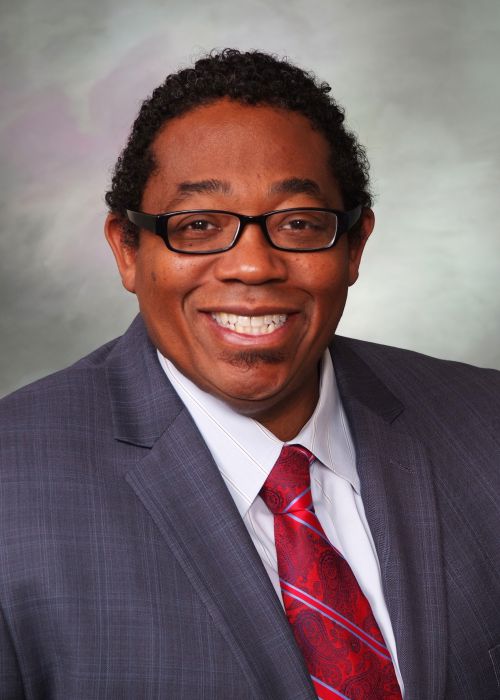
Rep. Michael Carter
Sponsored bills
The state allows a student pursuing higher education who satisfies statutorily specified eligibility criteria to claim an income tax incentive for amounts paid for tuition and fees for qualifying academic semesters or terms that the student completes. The act clarifies the statute that provides for the income tax incentive to improve the administration, including data tracking and reporting, of the incentive. For the 2025-26 state fiscal year, $135,446 is appropriated from the general fund to the department of revenue for use by the taxation business group to implement the act. (Note: This summary applies to this bill as enacted.)

To determine objections and protests concerning valuations of taxable property, state law requires a county with a population of over 300,000 (mandatory county) to use alternate protest and appeal procedures (alternate procedures) in any general reassessment year for real property that is valued biennially and allows any other county (elective county) to use alternate procedures. Alternate procedures deadlines for county assessors and taxpayers are later than standard protest and appeal procedure deadlines. The act clarifies that the later deadlines for alternate procedures apply to all mandatory counties and elective counties that use alternate procedures. The act also updates the deadline for an assessor to conclude all hearings for objections and protests concerning valuations of taxable real property from June 1 to June 8 to better reflect the intent of previously enacted law. (Note: This summary applies to this bill as enacted.)

To improve the clarity and certainty of the statutes, the act amends, repeals, and reconstructs various statutory provisions of law that are obsolete, imperfect, or inoperative. The specific reasons for each amendment or repeal are set forth in the appendix to the act. The amendments made by the act are not intended to change the meaning or intent of the statutes. (Note: This summary applies to this bill as enacted.)
The act establishes visitation as a right for a person confined in a correctional facility (confined person). The department of corrections (department) may: Limit visitation for a confined person who is in restrictive housing or as a sanction following a conviction for a class 1 code of penal discipline violation; Reduce, but not eliminate, the number of visits available per week to a confined person as a result of an increase in the person's custody classification level; Temporarily deprive visitation as necessary for facility operations or for the safety of the facility, persons in the facility, and the general public; and Deny or cancel visitation for a confined person at any time as necessary to comply with requirements imposed by a court order, for victim safety, to prevent communication with a co-defendant, to preserve the integrity of a criminal investigation, to comply with treatment protocols, or for any other reason required by law. Video visits may supplement, but must not take the place of, in-person visits when in-person visits are permitted. If a confined person provides the department with reasonable notice that a requested visitation is for virtual attendance at a funeral or during or immediately following the birth of a child in the person's family, the act requires the department to make all reasonable efforts to allow the person to participate in the visitation via virtual attendance, or, if virtual attendance is not possible, via telephone. The department may adopt policies to govern visitations, including policies necessary to allow visitation as part of routine facility operations. The act states that it does not create a private right of action. The act permits a confined person to file a grievance with the department if the confined person alleges deprivation of visitation. The department is required to include information about visitation and grievances in its annual SMART Act hearing. (Note: This summary applies to this bill as enacted.)
The act repeals obsolete references to the teacher residency expansion program (program), which was repealed in 2023. Current law continues to reference the definition for "paraprofessional" as it appeared in the program. The act recreates the definition of "paraprofessional" for the current statutory uses of the term. (Note: This summary applies to this bill as enacted.)
The act prohibits residential rental agreements, in relation to a tenant's death, from requiring acceleration of rent beyond the end of the month or more than 10 business days after the dwelling unit is vacated after notice to the landlord of the tenant's death, whichever is later. Further, the act prohibits the enforcement of terms in rental agreements that authorize liquidated damages or other penalties if the rental agreement is terminated before the end of its term due to the death of a tenant. The act authorizes a landlord to take possession of the dwelling unit without filing an eviction action or otherwise obtaining a court order if the personal representative of the tenant's estate notifies the landlord of the surrender of the premises or,30 days after the death of the tenant, rent remains unpaid or substantially all of the tenant's property has been removed. In addition, a landlord may retain a security or damages deposit sufficient to cover costs of damages caused by the death of the tenant. (Note: This summary applies to this bill as enacted.)
The act incorporates the federal "Uniform Code of Military Justice" (federal code) into the "Colorado Code of Military Justice" (state code), including specifically the punitive articles and general article of the federal code, which describe punishable offenses, and the statute of limitations that applies to charges brought pursuant to the state code. The act repeals sections of the state code that are duplicative of the incorporated federal code. Additionally, the act: Applies the state code to a member of the state military forces (member) at all times, except when the member is ordered to active federal service pursuant to title 10 of the United States Code; Clarifies a commanding officer's authority to impose nonjudicial punishment under the state code; Makes changes to the procedures that govern courts-martial, the punitive authority of courts-martial, and the review of the decisions of courts-martial; and If concurrent civilian and military jurisdiction exists over the same offense and a district attorney has filed felony charges against a member for the offense, requires the state military forces to defer felony prosecution of the member to the district attorney.(Note: This summary applies to this bill as enacted.)
Existing law permits an individual to request a self-pay estimate of the total cost of an anticipated health-care service (self-pay estimate) from the designated billing or patient services personnel representing the health-care provider or health-care facility providing the service. Unless the patient suffers a medical emergency or other unforeseen circumstance that affects the services provided, statute states that the final cost of the health-care service must be no more than 15% higher than the self-pay estimate or $400, whichever is less. The act corrects the mistake in the statutory language by clarifying that the $400 qualifier relates to the permissible dollar amount above the cost estimated in the self-pay estimate rather than the qualifier itself reflecting the maximum allowable cost of the health-care service, regardless of the service provided. Further, when referencing the exception in statute that, due to an emergency or unforeseen circumstance, the total cost of services may exceed the self-pay estimate by more than 15% or $400, the act removes the erroneous qualifier, "whichever is less", as that language is inapplicable when the exception applies. (Note: This summary applies to this bill as enacted.)
The act creates the community schoolyards grant program (grant program) in the division of local government (division) within the department of local affairs (department). The grant program is a 2-part grant program that includes: The planning and design grant program (planning program), which awards up to $150,000 to each grant recipient selected by the division for the planning and design of a community schoolyard; and The capital construction and improvement grant program (construction program), which awards up to $850,000 to each grant recipient selected by the division for the capital construction of a community schoolyard. The purpose of the grant program is to address inequities in underserved and underfunded schools and communities, specifically communities socially or economically affected by the development, processing, or energy conversion of minerals and mineral fuels subject to taxation, by: Making community schoolyards accessible to the broader community outside of school hours; Improving physical activity and mental health opportunities for students and community members; and Incorporating natural landscapes, natural playgrounds, and recreational spaces that promote adaptation; sustainability; resilience; and hands-on learning across subject matters, including science, technology, engineering, arts, and mathematics. On or before January 15, 2026, the division shall implement a timeline for the planning program and the construction program (programs), which must include, at a minimum: Announcing each of the programs; Accepting applications from eligible applicants for each of the programs; Selecting the grant recipients for each of the programs; Distributing grant money to the grant recipients for each of the programs; and Establishing reporting timelines and requirements for each of the programs. On or before January 15, 2028, the division shall compile a report summarizing the grant recipient reports from the programs. The division shall submit the report to the education committees of the house of representatives and senate; the house of representatives transportation, housing, and local government committee; and the senate local government and housing committee, or their successor committees. For the 2025-26 and 2026-27 state fiscal years, the department shall use $4 million from the local government mineral impact fund or the local government severance tax fund for the grant program. The division may use up to 5% of the funds it receives for the grant program to pay for the direct and indirect costs of administering the grant program. The division may adopt rules to carry out the purposes of the grant program. The grant program is repealed, effective January 1, 2030. For the 2025-26 state fiscal year, $50,000 is appropriated to the department for use by the division from the reappropriated funds from the local government mineral impact fund and the local government severance tax fund. (Note: This summary applies to this bill as enacted.)