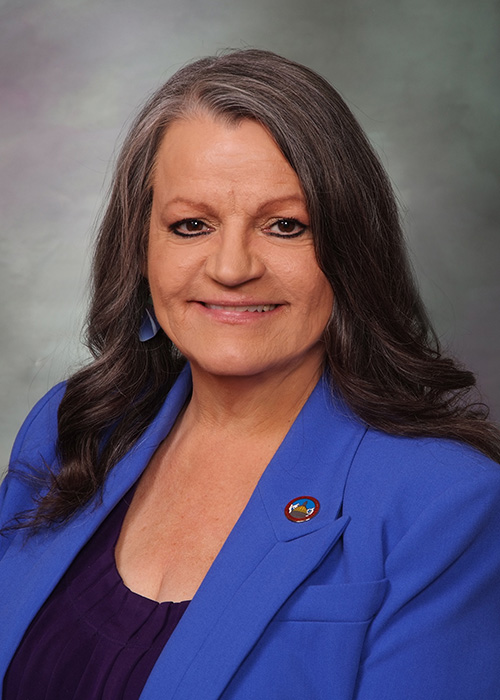
Photo of Sheila Lieder
D Colorado House · District 28

Rep. Sheila Lieder

Compare
Total votes
3,593
all sessions
Attendance
98%
76 missed
Near the chamber average
With party
95%
of cast votes
Near the chamber average
Bipartisan score
3%
crosses aisle rarely
Near the chamber average
Sponsored
444
bills & resolutions
Higher than 80% of chamber peers
Committees
3
assignments
444 bills and resolutions

Sponsored bills

Total
444
Primary
50
Co-sponsor
394
This page
444
matching current filters
Co-sponsor HB 25-1015
Signed into law · Colorado House · Co-sponsor
Ability to Pay Bond Online Clarifications

Current law requires that bond can be posted online. The act makes clarifying changes to the bond statutes to ensure that bond can be posted online. (Note: This summary applies to this bill as enacted.)

Signed into law Mar 31, 2025 1 co-sponsor
Co-sponsor HB 25-1003
Signed into law · Colorado House · Co-sponsor
Children Complex Health Needs Waiver

The act merges 2 existing medicaid waiver programs for children into one children's home- and community-based services waiver program, known as the children with complex health needs waiver program. The act relocates provisions to the new program due to the repeal of the 2 existing waiver programs. (Note: This summary applies to this bill as enacted.)

Signed into law Mar 31, 2025 1 co-sponsor
Co-sponsor HB 25-1040
Signed into law · Colorado House · Co-sponsor
Adding Nuclear Energy as a Clean Energy Resource

The statutory definition of "clean energy" determines which energy projects are eligible for clean energy project financing at the county and city and county level. The statutory definition of "clean energy resource" determines which energy resources may be used by a qualifying retail utility to meet the 2050 clean energy target. The act updates the 2 statutory definitions to include nuclear energy; except that, for property valuations made for tax purposes, the act exempts from the definition of "clean energy resource" nuclear energy. (Note: This summary applies to this bill as enacted.)

Signed into law Mar 31, 2025 1 co-sponsor
Primary HB 25-1077
Signed into law · Colorado House · Lead sponsor
Backflow Prevention Devices Requirements

Backflow is the reverse flow of water, fluid, or gas caused by back pressure or back siphonage. Under current law, individuals who are engaged in the business of installing, removing, inspecting, testing, or repairing backflow prevention devices are subject to the licensure requirements for plumbers, except when the individuals are installing or testing a stand-alone fire suppression sprinkler system. The act exempts individuals engaged in the business of inspecting, testing, or repairing backflow prevention devices from licensure requirements but retains the licensure requirements for individuals engaged in the installation or removal of the devices; except that individuals who install or replace a backflow prevention device on a stand-alone fire suppression system remain exempted from the licensure requirements. The act requires that, on and after July 1, 2025, a licensed plumber who installs, tests, inspects, repairs, or reinstalls a backflow prevention device and a certified cross-connection control technician or a licensed plumber with a cross-connection control technician certification who tests or repairs a backflow prevention device must affix a tag on the backflow prevention device that contains certain information about the licensed plumber, the certified cross-connection control technician, or the licensed plumber with a cross-connection control technician certification, as applicable, and the service that was provided. (Note: This summary applies to this bill as enacted.)


Signed into law Mar 28, 2025 0 co-sponsors
Co-sponsor SB 25-039
Signed into law · Colorado Senate · Co-sponsor
Agricultural Buildings Exempt from Energy Use Requirements

Under current law, owners of certain large buildings (covered buildings) are required to annually collect and report each covered building's energy use to the Colorado energy office. The act clarifies that agricultural buildings are not covered buildings, and therefore, owners of agricultural buildings are exempt from the energy use collecting and reporting requirements. The act defines an agricultural building as a building or structure used to house agricultural implements, hay, unprocessed grain, poultry, livestock, or other agricultural products or inputs primarily for the purpose of maintaining or operating an agricultural process. Agricultural implements include certain agricultural equipment and do not include implements that are primarily for rent or sale. The act permits an owner of an agricultural building to submit for an affirmative exemption from any requirement to report benchmarking data and for an exemption to remain valid until there is a change in ownership or a change that renders the building no longer an agricultural building. For the duration of an exemption, the owner of an agricultural building is required to certify, upon request, the exemption status of an exempt building. (Note: This summary applies to this bill as enacted.)
Signed into law Mar 28, 2025 1 co-sponsor
Co-sponsor HB 25-1286
In committee · Colorado House · Co-sponsor
Protecting Workers from Extreme Temperatures

The bill requires employers to implement protections for workers who are exposed to extreme hot and cold temperatures at the worksite, including temperature mitigation measures, rest breaks, and temperature-related injury and illness prevention plans. (Note: This summary applies to this bill as introduced.)

In committee Mar 27, 2025 1 co-sponsor
Co-sponsor HB 25-1155
Signed into law · Colorado House · Co-sponsor
Modify Candidate Authority Watchers General Election

The act allows a candidate who is on the ballot for an election for the office of United States congress, state office, or district office of state concern and is subject to a recount to select one watcher in addition to any watchers otherwise selected for the recount. The act also allows a candidate that is on the ballot for an election coordinated by the county clerk and recorder that is not for the office of United States congress, state office, or district office of state concern and is subject to a recount to select one watcher for the recount in addition to any watchers otherwise selected for the recount. (Note: This summary applies to this bill as enacted.)

Signed into law Mar 26, 2025 1 co-sponsor
Co-sponsor HB 25-1181
Signed into law · Colorado House · Co-sponsor
Colorado Rangers Law Enforcement Shared Reserve

The Colorado rangers law enforcement shared reserve, commonly known as the Colorado rangers (CLER), is a statewide law enforcement agency that has been established as a political subdivision of the state through the execution of an intergovernmental agreement for the public purpose of promoting the safety, security, and general welfare of all Coloradans by establishing a peace officers standards and training board (P.O.S.T. board) certified statewide shared peace officer reserve force. Sections 1 through 4 of the act update laws relating to civil defense workers and peace officers to clarify the status of the CLER as a governmental entity created by intergovernmental agreement rather than as a volunteer organization, as it was prior to 2018, the requirement that a Colorado ranger be a P.O.S.T. board certified peace officer, and the scope of a Colorado ranger's authority. Section 5: Authorizes the board of the CLER to establish policies to allow compensation to be paid to a Colorado ranger if the Colorado ranger: Is deployed as a peace officer to a jurisdiction for an extended period, as defined or described in the policies; or Is deployed as a peace officer outside the state as authorized by a specified interstate compact for any length of time; and Authorizes the CLER to accept gifts, grants, and donations.(Note: This summary applies to this bill as enacted.)

Signed into law Mar 26, 2025 1 co-sponsor
Co-sponsor SB 25-170
Signed into law · Colorado Senate · Co-sponsor
Deoxyribonucleic Acid & Sexual Assault Kit Backlog Testing & Data

The act requires the Colorado bureau of investigation (CBI) to spend $3,000,000 in specifically appropriated money from House Bill 24-1430, concerning the provision for payment of the expenses of the executive, legislative, and judicial departments of the state of Colorado, and of its agencies and institutions, for and during the fiscal year beginning July 1, 2024, except as otherwise noted, on backlogged DNA evidence and sexual assault kit tests, as well as DNA retesting related to CBI's laboratory misconduct that was discovered in 2023. Additionally, the act allows CBI to contract with external labs to perform the testing. The act requires CBI to create a dashboard on the department of public safety's website to update the public on the backlog at least every 30 days. CBI shall provide the general assembly with updates on the sexual assault kit backlog, including the number of cases pending, the number of tests CBI's lab conducted, the number of tests CBI contracted out, an update on CBI's laboratory staffing levels, the average turnaround time for a sexual assault kit test, and other relevant data points every 30 days from March 10, 2025, through June 30, 2026. (Note: This summary applies to this bill as enacted.)

Signed into law Mar 26, 2025 1 co-sponsor
Co-sponsor SB 25-042
Signed into law · Colorado Senate · Co-sponsor
Behavioral Health Crisis Response Recommendations

No later than June 30, 2026, the act requires the department of public safety (DPS), in collaboration with the behavioral health administration (BHA), to consult with stakeholders to identify: Existing resources and model programs that communities throughout Colorado utilize when responding to behavioral health crises, including, but not limited to, co-responder programs, alternative response programs, and mobile crisis response programs, and the reimbursement shortages and gaps within the continuum of care for behavioral health crisis response; and The reimbursement shortages and gaps within the continuum of care for behavioral health crisis response, and reimbursement and funding options that are available at the state and federal levels to address the shortages and gaps, including funding for treatment in place. The act requires DPS to compile a list of the existing resources and model programs, and report reimbursement shortages and gaps identified by the stakeholder group and develop recommendations for addressing the shortages and gaps. The act requires DPS to make the resources, model programs, and recommendations publicly available on DPS's website. On or before January 1, 2027, the act requires the BHA, in collaboration with the department of health care policy and financing (HCPF), to provide information to the general assembly regarding the reimbursement shortages and gaps within the continuum of care for behavioral health crisis response and the reimbursement and funding options at the state and federal level that are available to address the shortages and gaps, including funding for treatment in place. The act requires HCPF to reimburse an institution for mental diseases for providing inpatient mental health treatment to a member for up to 60 days or to the extent permitted by federal law. Current law requires each person detained for an emergency mental health hold to receive an evaluation as soon as possible after the person is presented to a facility, and the evaluation may, but is not required to, include an assessment to determine if the person continues to meet the criteria for an emergency mental health hold and requires further mental health care in a facility designated by the commissioner. The act requires the evaluation to include the assessment determination. The act requires a hospital that is subject to the federal "Emergency Medical Treatment and Labor Act" to only discharge a person placed on an emergency mental health hold if the person no longer meets the criteria for an emergency mental health hold; except that a hospital may transfer the person to another hospital if the hospital is unable to provide the appropriate medical or behavioral health care to the person and the receiving hospital agrees to the transfer. (Note: This summary applies to this bill as enacted.)

Signed into law Mar 26, 2025 1 co-sponsor
Showing 371 to 380 of 444 bills
Previous 1 … 37 38 39 … 45 Next