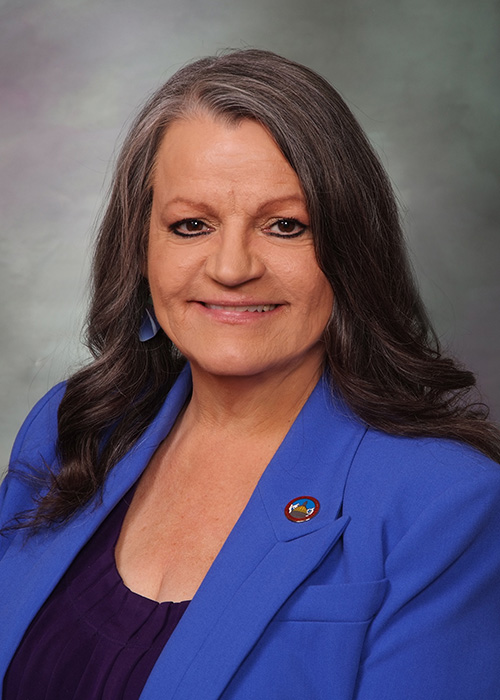
Photo of Sheila Lieder
D Colorado House · District 28

Rep. Sheila Lieder

Compare
Total votes
3,593
all sessions
Attendance
98%
76 missed
Near the chamber average
With party
95%
of cast votes
Near the chamber average
Bipartisan score
3%
crosses aisle rarely
Near the chamber average
Sponsored
444
bills & resolutions
Higher than 80% of chamber peers
Committees
3
assignments
444 bills and resolutions

Sponsored bills

Total
444
Primary
50
Co-sponsor
394
This page
444
matching current filters
Co-sponsor HB 25-1062
Signed into law · Colorado House · Co-sponsor
Penalty for Theft of Firearms

In current law, the sentencing structure for theft, except for auto theft, is based on the value of the item stolen. The act exempts theft of firearms from that sentencing structure and makes theft of a firearm a class 6 felony, regardless of the firearm's value. The act appropriates $324,225 from the general fund to the judicial department to implement the act. (Note: This summary applies to this bill as enacted.)

Signed into law Jun 2, 2025 1 co-sponsor
Co-sponsor HB 25-1098
Signed into law · Colorado House · Co-sponsor
Automated Protection Order Victim Notification System

The act requires the division of criminal justice in the department of public safety (division) to establish an automated protection order notification system (notification system) to provide a protected person, a protected person's immediate family, and other interested persons (registered users) with information related to a criminal or civil protection order. The notification system must disseminate specific information to registered users in English and Spanish through a telephone call, email, text message, or mobile phone application. The act authorizes the division to contract with a third-party entity to provide the functionality for the notification system. A public entity is immune from liability in any civil action based on its release of information or failure to release information related to the notification system. The act prohibits the division from establishing or operating the notification system until the division receives sufficient money to establish and operate the notification system for at least one year from gifts, grants, or donations, including federal funds, or money appropriated to the division from the Colorado crime victim services fund. (Note: This summary applies to this bill as enacted.)

Signed into law Jun 2, 2025 1 co-sponsor
Co-sponsor HB 25-1290
Signed into law · Colorado House · Co-sponsor
Transit Worker Assault & Funding for Training

The act creates a specific criminal offense related to wrongfully interfering with a transit worker and adds it to the criminal harassment statute, as well as making the offense subject to the victim rights act. The act eliminates similar criminal conduct from the regional transportation district (district) statutory scheme. Further, a law enforcement agency may grant money received from the peace officer training and support fund to the district for training, equipment, and other purposes deemed necessary to ensure the safety of employees and patrons of the district. (Note: This summary applies to this bill as enacted.)

Signed into law Jun 2, 2025 1 co-sponsor
Co-sponsor HB 25-1275
Signed into law · Colorado House · Co-sponsor
Forensic Science Integrity

The act defines "knowing misconduct" as a voluntary act or omission or series of acts or omissions consciously performed by a crime laboratory employee (employee) as a result of effort or determination in which the employee is aware that the employee's conduct is improper or deceptive and involves mishandling physical evidence or data or results, incorrectly performing forensic testing, presenting misleading or false results, concealing material information, or presenting false sworn testimony about evidence. The act defines a "significant event" as an act or omission by an employee that is a gross deviation from the standard operation procedures or accreditation requirements of the crime laboratory, or requirements in law that were applicable at the time of the act or omission of the employee, that could substantially negatively affect the integrity of the crime laboratory activities. The act requires an employee to report witnessed or discovered knowing misconduct or a significant event (collectively, "wrongful action") within 7 days of witnessing or discovering the wrongful action to the director of the crime laboratory (director) or to the employee's immediate supervisor, who shall report it to the director. A director who receives a report shall investigate the alleged wrongful action. As part of the investigation, the director must compile a list of all cases that the employee worked on. At the conclusion of the investigation, the director shall prepare a written final report. When an investigation is of alleged wrongful action in a pending case, the director shall notify each district attorney who has jurisdiction over the pending case about the investigation. At the conclusion of the investigation, if the investigation determines that the employee did not engage in wrongful action, the director shall deliver the final report to each district attorney who received notice of the investigation and to each district attorney who has jurisdiction over any case that was subject to investigation. If the investigation determines that the employee engaged in wrongful action, the director shall deliver the final report and all discoverable materials to each district attorney who has jurisdiction over any case that the employee worked on in an official capacity. If an investigation concerning wrongful action by a crime laboratory occurred after July 1, 2014, and before July 1, 2025, and the investigation resulted in criminal allegations filed against the employee or a sustained internal affairs action by the department supervising the employee, the director shall, as soon as practicable but no later than September 1, 2025, prepare a final report and provide the final report to all district attorneys with jurisdiction over any criminal case that is identified in the final report that is pending or has resulted in a conviction in that jurisdiction. Upon receipt of a notice from a director about an investigation into alleged wrongful action in a pending case, a district attorney shall notify the defendant in the case of the investigation. If the case involved a crime listed in the "Victim Rights Act", the district attorney shall also notify the victim about the alleged wrongful action, if the charges have been filed but the trial has not begun. A district attorney who receives a final report of an investigation that determines that a crime laboratory employee engaged in wrongful action in any case shall notify the defendant in that case, and each defendant whose case was reviewed as part of the investigation, of the determination of wrongful action. The act establishes a defendant's right to counsel in matters involving an employee's wrongful action and a right to investigate the wrongful action, to request discovery related to the wrongful action, and to seek post-conviction relief based on the wrongful action. The act permits a court to enter a protective order related to discovery requests. The act establishes a process for a defendant convicted in a case involving an employee's wrongful action to petition for post-conviction relief based on the wrongful action. If the defendant's petition for post-conviction relief asserts facts that, if true, demonstrate that a wrongful action was material to the case, the court shall decide the claim upon the merits after an evidentiary hearing. At the evidentiary hearing, the defendant has the burden to show that the employee committed the wrongful action and that the wrongful action is material to the case. If the defendant meets their burden, the court shall vacate the defendant's conviction and grant a new trial. The act makes all records related to an investigation criminal justice records and makes release of the records governed by the existing law governing criminal justice records; except that the custodian of a final report that concludes that a crime laboratory employee engaged in wrongful action may deny inspection of the report if there is an ongoing criminal investigation or criminal case. The act appropriates $140,433 from the general fund to the judicial department for use by the state courts. (Note: This summary applies to this bill as enacted.)


Signed into law Jun 2, 2025 1 co-sponsor
Co-sponsor SB 25-168
Signed into law · Colorado Senate · Co-sponsor
Prevention of Wildlife Trafficking

The act adds species that appear in Appendix I to the Convention on International Trade in Endangered Species of Wild Fauna and Flora (CITES Appendix I) to the wildlife covered under Colorado's wildlife trafficking and wildlife possession laws. The act clarifies that species listed on Colorado's endangered and threatened species list or the endangered and threatened species list pursuant to the federal "Endangered Species Act of 1973", 16 U.S.C. sec. 1531 et seq. (federal act) are also covered under Colorado's wildlife possession and wildlife trafficking laws. The act establishes penalties for violating wildlife trafficking laws. A person who violates wildlife trafficking laws commits a class 1 misdemeanor; except that: If a person violates wildlife trafficking laws and the aggregate value of the wildlife involved is more than $1,000 but less than $10,000, the person commits a class 5 felony; If a person is convicted of trafficking wildlife and the wildlife involved is an endangered species or threatened species under Colorado law or the federal act or is a species that appears in CITES Appendix I, the person commits a class 4 felony; or If a person violates wildlife trafficking laws and the aggregate value of the wildlife involved is more than $10,000, the person commits a class 4 felony. The act grants the parks and wildlife commission (commission) in the department of natural resources (department) authority to suspend wildlife licenses held by a person convicted of a violation of wildlife trafficking laws. The act clarifies that the division of parks and wildlife (division) in the department has the authority to pursue a civil action against an individual to recover the possession or value of wildlife that was unlawfully taken and the minimum value that the division may recover for certain animals that are on the federal endangered and threatened species lists. The act requires the division to conduct investigations and surveys to collect information and data related to wildlife trafficking and determine appropriate conservation, management, and law enforcement measures based on those investigations and surveys. The general assembly is required to appropriate sufficient money to implement the act from the wildlife cash fund; except that money from the sale of hunting and fishing licenses in the wildlife cash fund must not be used for these purposes. (Note: This summary applies to this bill as enacted.)
Signed into law Jun 2, 2025 1 co-sponsor
Co-sponsor SB 25-187
Signed into law · Colorado Senate · Co-sponsor
Sunset Motorcycle Operator Safety Training Program

The act implements some of the recommendations of the department of regulatory agencies (department) regarding the motorcycle operator training (MOST) program, as contained in the department's sunset review of the MOST program, as follows: Lowers the required minimum age to be a MOST instructor from 21 to 18 years of age; and To align with the placement of the MOST program within the Colorado state patrol rather than the department of transportation, clarifies that a MOST vendor must meet standards promulgated by the Colorado state patrol rather than by the department of transportation. The act also makes the following changes to the MOST program that were not included in the department's sunset review: Continues the MOST program in the office of the chief of the state patrol in the department of public safety (chief) for 5 years, until September 1, 2030; and Allows the chief to expend money from the MOST fund for a tuition benefit paid to MOST vendors to be passed on to eligible students in the form of reduced costs for eligible courses, as established by the chief by rule.(Note: This summary applies to this bill as enacted.)

Signed into law Jun 2, 2025 1 co-sponsor
Co-sponsor HB 25-1195
Signed into law · Colorado House · Co-sponsor
First Responder Voter Registration Record Confidentiality

In addition to individuals who may already request that their address included in certain records be kept confidential (address confidentiality) under certain circumstances, the act allows an individual or the spouse of an individual who is or has been a peace officer, firefighter, volunteer firefighter, emergency medical service provider, or emergency communications specialist (first responder) to also request address confidentiality for voter registration records that are in the custody of a county clerk and recorder or in the centralized statewide registration system maintained by the secretary of state (secretary) and financial disclosures that certain public officials are required to file with the secretary. A first responder may request address confidentiality with the county clerk and recorder of the county where the first responder who is making the request for address confidentiality resides. The secretary is required to approve the application form for a request for address confidentiality. Each county clerk and recorder is required to make the address confidentiality request application forms available in their office, provide the address confidentiality request application forms to interested persons by United States mail, email delivery, or facsimile transmission, and to process applications for address confidentiality without imposing a processing fee or any other charge. The custodian of any records specified in the act that concern a first responder who has requested address confidentiality is required to deny, with limited exceptions, the right of inspection of the first responder's address contained in the records on the ground that disclosure would be contrary to the public interest. (Note: This summary applies to this bill as enacted.)

Signed into law Jun 2, 2025 1 co-sponsor
Co-sponsor SB 25-079
Signed into law · Colorado Senate · Co-sponsor
Colorado Vending of Digital Assets Act

The act enacts the "Colorado Vending of Digital Assets Act", which requires an owner or operator of a virtual currency kiosk to: Provide certain disclosures to customers of the virtual currency kiosk; Provide each customer with an electronic receipt detailing the customer's virtual currency transaction; and Fully refund a customer's first virtual currency transaction if the virtual currency transaction is to a virtual currency wallet or exchange located outside of the United States and, within 60 days after the virtual currency transaction, the customer contacts the owner or operator of the virtual currency kiosk and a government or law enforcement entity regarding the fraudulent nature of the transaction and submits proof of the fraud. The act establishes a daily transaction limit of $2,000 for a new customer and $10,500 for an existing customer of a virtual currency kiosk. The act defines "virtual currency" as a type of digital unit that is used as a medium of exchange or a form of digitally stored value or that is incorporated into payment system technology. "Virtual currency kiosk" is defined as an electronic terminal acting as a mechanical agent of the owner or operator to enable the owner or operator to facilitate the exchange of virtual currency for other virtual currency or fiat currency. "New customer" is defined as a customer who has been a customer of a virtual currency kiosk for less than 7 days. (Note: This summary applies to this bill as enacted.)

Signed into law Jun 2, 2025 1 co-sponsor
Primary SB 25-181
Signed into law · Colorado Senate · Lead sponsor
Sunset Just Transition Advisory Committee

The act continues the just transition advisory committee (advisory committee) until September 1, 2030. Prior to its repeal, the department of regulatory agencies will conduct a sunset review of the advisory committee. The act requires the just transition office in the department of labor and employment (office) to consult with the advisory committee on issues related to the impact of facility closures and job layoffs in coal-related industries in a manner that best ensures continued economic stability and prosperity for impacted workers and communities during and after the transition away from coal as an economic driver. The office is also directed to develop and implement plans to maximize the economic stability and prosperity of coal workers and communities. When the general assembly created the advisory committee in 2019, the advisory committee was required to develop a draft just transition plan (plan) before July 1, 2020. The act repeals obsolete references to the development of the plan and requires the director of the office to update the plan as needed. The act increases the number of coal transition workers appointed to the advisory committee from 3 to 5 and requires that at least one advisory committee member works at a coal mine and at least one member works at an electric utility. (Note: This summary applies to this bill as enacted.)

Signed into law May 31, 2025 0 co-sponsors
Co-sponsor HB 25-1176
Signed into law · Colorado House · Co-sponsor
Behavioral Health Treatment Stigma for Providers

The act requires the following regarding the application for a license to practice medicine in Colorado (application) and the questionnaire accompanying the form for a license renewal (questionnaire): The Colorado medical board (board) must consider the recommendations of the Federation of State Medical Boards and the requirements of the federal "Americans with Disabilities Act of 1990" when developing the application questions; The application and questionnaire must not require the disclosure of personal medical or health information that is not relevant to the applicant's ability to provide safe, competent, and ethical patient care at the time of application; The application and questionnaire must not include questions seeking information about past health-related conditions that do not impact an applicant's ability to practice safe, competent, and ethical patient care at the time of application; and The board shall include information in the application about the board's peer health assistance program, the applicant's ability to self-refer to the peer health assistance program at any time, and the applicant's ability to self-refer in lieu of disclosure to the board. The act clarifies that an individual subject to the licensing requirements of the "Colorado Medical Practice Act" is not required to disclose a physical illness, physical condition, behavioral health disorder, mental health disorder, or substance use disorder that no longer impacts the individual's ability to practice the applicable health-care profession or occupation with reasonable skill and safety to patients or clients. Current law requires that if a health-care professional has a physical illness, physical condition, or behavioral or mental health disorder that renders the person unable to practice the applicable health-care profession or occupation with reasonable skill and safety to patients or clients, the licensee, registrant, or certificate holder shall notify the regulator that regulates the person's profession or occupation of the physical illness, physical condition, or behavioral or mental health disorder. The act requires that a health-care professional must additionally provide notice of a substance use disorder and specifies that the health-care professional is required only to provide notice of a current physical illness, physical condition, behavioral health disorder, mental health disorder, or substance use disorder. (Note: This summary applies to this bill as enacted.)

Signed into law May 31, 2025 1 co-sponsor
Showing 241 to 250 of 444 bills
Previous 1 … 24 25 26 … 45 Next