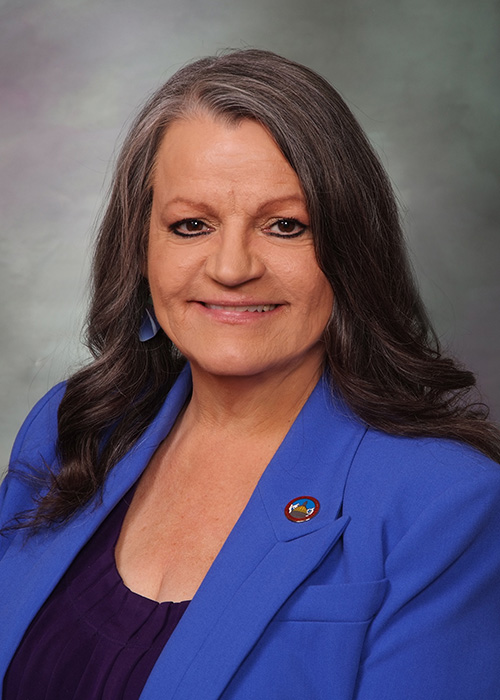
Photo of Sheila Lieder
D Colorado House · District 28

Rep. Sheila Lieder

Compare
Total votes
3,593
all sessions
Attendance
98%
76 missed
Near the chamber average
With party
95%
of cast votes
Near the chamber average
Bipartisan score
3%
crosses aisle rarely
Near the chamber average
Sponsored
444
bills & resolutions
Higher than 80% of chamber peers
Committees
3
assignments
444 bills and resolutions

Sponsored bills

Total
444
Primary
50
Co-sponsor
394
This page
444
matching current filters
Co-sponsor SJR 10
Passed · Colorado Senate · Co-sponsor
Lunar New Year Day

Maddy summarySJR 10 is a symbolic resolution celebrating Lunar New Year 2026 in Colorado, not a new law. It formally recognizes the cultural significance of Lunar New Year and honors Asian American contributions to the state, building on Colorado’s existing 2024 observed holiday (established by HB 23-1271). The resolution urges Coloradans to attend community events and acknowledges the holiday’s historical roots and global celebration by over two billion people. It has no direct policy impact or legal effect, as it serves purely ceremonial and commemorative purposes.

Passed Feb 12, 2026 1 co-sponsor
Co-sponsor SJR 8
Passed · Colorado Senate · Co-sponsor
Honoring CO 2026 Winter Olympians & Paralympians

Maddy summarySJR 8 is a symbolic resolution passed by the Colorado General Assembly to honor Colorado athletes who qualified for the 2026 Winter Olympics and Paralympics. It commends the athletes for representing Colorado and the United States with distinction on the global stage and expresses appreciation to their families, coaches, and communities for their support. The resolution does not create new laws or policies but serves as a formal gesture of recognition, with copies sent to each listed athlete. It specifically acknowledges 24 Colorado athletes across sports like skiing, snowboarding, and figure skating, including names like Mikaela Shiffrin and Red Gerard.

Passed Feb 11, 2026 1 co-sponsor
Co-sponsor HJR 1003
Passed · Colorado House · Co-sponsor
National Blood Donor Month

Maddy summaryHJR 1003 is a ceremonial joint resolution designating January as National Blood Donor Month in Colorado. It formally recognizes voluntary blood donors and urges all eligible Coloradans to donate regularly, while encouraging businesses and organizations to sponsor community blood drives with centers like Vitalant. The resolution has no binding legal effect - it expresses support and promotes awareness but does not create new laws, funding, or requirements. It directly affects Colorado residents (especially eligible donors), blood collection organizations, and local businesses through its non-binding recommendations.

Passed Jan 26, 2026 1 co-sponsor
Co-sponsor HJR 1001
Passed · Colorado House · Co-sponsor
General Assembly Positions & Salary Ranges

Maddy summaryHJR 1001 establishes salary ranges for various positions within the state legislature, including clerks, sergeants-at-arms, communications staff, and chaplains. The bill specifies pay grades (e.g., H1B5 for Chief Clerk) and fixed rates (like $25 per visit for the Chaplain) for over 30 legislative roles. It directly affects legislative staff members by defining their compensation structures without altering job duties or creating new policies. This procedural resolution sets standardized pay levels for existing positions in both the Senate and House of Representatives.

Passed Jan 21, 2026 1 co-sponsor
Co-sponsor HJR 1002
Passed · Colorado House · Co-sponsor
MLK Jr. Day

Maddy summaryHJR 1002 is a commemorative resolution honoring Dr. Martin Luther King Jr. It does not create new laws or policies. The resolution recognizes Dr. King's legacy through historical context about his civil rights leadership, his "I Have a Dream" speech, and his role in key legislation like the Civil Rights Act of 1964. It specifically acknowledges Colorado's history of observing MLK Jr. Day, noting that Colorado became the 50th state to recognize the holiday in 2000. The resolution serves only to formally commemorate Dr. King's life and work, with no direct effect on citizens or new government requirements.

Passed Jan 20, 2026 1 co-sponsor
Co-sponsor HR 1001
Passed · Colorado House · Co-sponsor
House Officers & Employees

Maddy summaryHouse Resolution 1001 appoints specific staff members to roles within the Colorado House of Representatives for the 75th General Assembly's Second Regular Session. It names individuals to positions including Chief Clerk, Assistant Chief Clerk, Journal Clerk, sergeants-at-arms, and leadership support staff for both majority and minority parties, plus student interns from Arrupe Jesuit High School. The resolution was approved without amendments on January 20, 2026, and serves as routine staffing for legislative operations. This procedural resolution does not create new laws or affect public policy.

Passed Jan 20, 2026 1 co-sponsor
Co-sponsor SJR 3
Passed · Colorado Senate · Co-sponsor
Joint Session Address by Tribal Councils

Maddy summarySJR 3 is a procedural resolution scheduling a joint meeting of Colorado's Senate and House of Representatives on January 16, 2026, to hear a message from representatives of the Ute Mountain Ute Tribal Council and Southern Ute Tribal Council. It directs the appointment of a six-member committee (three from each chamber) to escort tribal representatives to the session. The resolution recognizes the tribes' historical and cultural contributions to Colorado but does not create new laws or policies. This is a formal procedural step to facilitate the tribal message, not a substantive legislative change.

Passed Jan 15, 2026 1 co-sponsor
Co-sponsor HB 25-1324
Signed into law · Colorado House · Co-sponsor
Clarify Property Tax Objection & Protest Deadlines

To determine objections and protests concerning valuations of taxable property, state law requires a county with a population of over 300,000 (mandatory county) to use alternate protest and appeal procedures (alternate procedures) in any general reassessment year for real property that is valued biennially and allows any other county (elective county) to use alternate procedures. Alternate procedures deadlines for county assessors and taxpayers are later than standard protest and appeal procedure deadlines. The act clarifies that the later deadlines for alternate procedures apply to all mandatory counties and elective counties that use alternate procedures. The act also updates the deadline for an assessor to conclude all hearings for objections and protests concerning valuations of taxable real property from June 1 to June 8 to better reflect the intent of previously enacted law. (Note: This summary applies to this bill as enacted.)

Signed into law Jun 4, 2025 1 co-sponsor
Co-sponsor SB 25-300
Signed into law · Colorado Senate · Co-sponsor
Revisor's Bill

To improve the clarity and certainty of the statutes, the act amends, repeals, and reconstructs various statutory provisions of law that are obsolete, imperfect, or inoperative. The specific reasons for each amendment or repeal are set forth in the appendix to the act. The amendments made by the act are not intended to change the meaning or intent of the statutes. (Note: This summary applies to this bill as enacted.)

Signed into law Jun 4, 2025 1 co-sponsor
Co-sponsor HB 25-1013
Signed into law · Colorado House · Co-sponsor
Department of Corrections Visitation Rights

The act establishes visitation as a right for a person confined in a correctional facility (confined person). The department of corrections (department) may: Limit visitation for a confined person who is in restrictive housing or as a sanction following a conviction for a class 1 code of penal discipline violation; Reduce, but not eliminate, the number of visits available per week to a confined person as a result of an increase in the person's custody classification level; Temporarily deprive visitation as necessary for facility operations or for the safety of the facility, persons in the facility, and the general public; and Deny or cancel visitation for a confined person at any time as necessary to comply with requirements imposed by a court order, for victim safety, to prevent communication with a co-defendant, to preserve the integrity of a criminal investigation, to comply with treatment protocols, or for any other reason required by law. Video visits may supplement, but must not take the place of, in-person visits when in-person visits are permitted. If a confined person provides the department with reasonable notice that a requested visitation is for virtual attendance at a funeral or during or immediately following the birth of a child in the person's family, the act requires the department to make all reasonable efforts to allow the person to participate in the visitation via virtual attendance, or, if virtual attendance is not possible, via telephone. The department may adopt policies to govern visitations, including policies necessary to allow visitation as part of routine facility operations. The act states that it does not create a private right of action. The act permits a confined person to file a grievance with the department if the confined person alleges deprivation of visitation. The department is required to include information about visitation and grievances in its annual SMART Act hearing. (Note: This summary applies to this bill as enacted.)


Signed into law Jun 4, 2025 1 co-sponsor
Showing 201 to 210 of 444 bills
Previous 1 … 20 21 22 … 45 Next