Maddy summaryThis House Resolution (HR 25-1003) recognizes the importance of diversity in Colorado's legal community and honors the Colorado Women's Bar Association (CWBA) for its work supporting women in the legal profession. It highlights key milestones in Colorado's legal history, including the first women to earn law degrees, become judges, and serve in legal leadership roles. The resolution commends the CWBA's efforts to promote women's advancement in the judiciary and ensure equal representation. As a non-binding resolution, it does not create new law but formally acknowledges these contributions during Women's History Month.
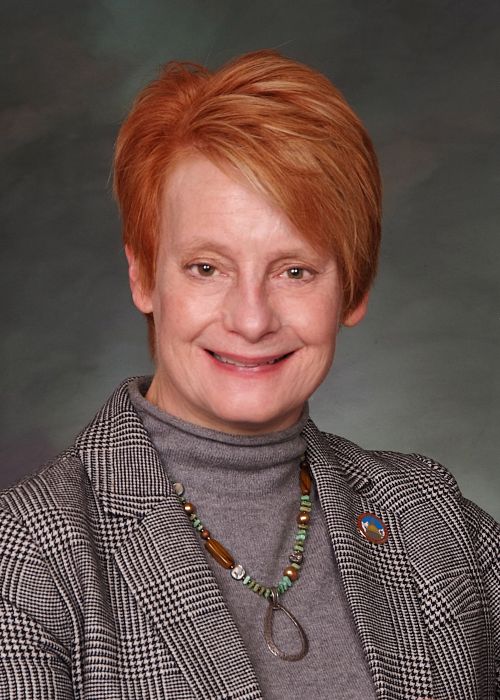
Rep. Amy Paschal
Sponsored bills
The statutory definition of "clean energy" determines which energy projects are eligible for clean energy project financing at the county and city and county level. The statutory definition of "clean energy resource" determines which energy resources may be used by a qualifying retail utility to meet the 2050 clean energy target. The act updates the 2 statutory definitions to include nuclear energy; except that, for property valuations made for tax purposes, the act exempts from the definition of "clean energy resource" nuclear energy. (Note: This summary applies to this bill as enacted.)
Backflow is the reverse flow of water, fluid, or gas caused by back pressure or back siphonage. Under current law, individuals who are engaged in the business of installing, removing, inspecting, testing, or repairing backflow prevention devices are subject to the licensure requirements for plumbers, except when the individuals are installing or testing a stand-alone fire suppression sprinkler system. The act exempts individuals engaged in the business of inspecting, testing, or repairing backflow prevention devices from licensure requirements but retains the licensure requirements for individuals engaged in the installation or removal of the devices; except that individuals who install or replace a backflow prevention device on a stand-alone fire suppression system remain exempted from the licensure requirements. The act requires that, on and after July 1, 2025, a licensed plumber who installs, tests, inspects, repairs, or reinstalls a backflow prevention device and a certified cross-connection control technician or a licensed plumber with a cross-connection control technician certification who tests or repairs a backflow prevention device must affix a tag on the backflow prevention device that contains certain information about the licensed plumber, the certified cross-connection control technician, or the licensed plumber with a cross-connection control technician certification, as applicable, and the service that was provided. (Note: This summary applies to this bill as enacted.)

The act substitutes gender-neutral language for gendered language in title 35, a title concerning agriculture, of the Colorado Revised Statutes. The act also updates archaic language in title 35. (Note: This summary applies to this bill as enacted.)

The act broadens the scope of the managed care entities that a local county department of human or social services may enter into memorandums of understanding with to coordinate and manage services for children and families who would benefit from integrated multiagency services. The act allows a court with jurisdiction to access records that are created by an individualized service and support team. (Note: This summary applies to this bill as enacted.)
Maddy summarySJR 25-013 is a symbolic resolution recognizing Thursday, March 20, 2025, as Nowruz Day in Colorado. It honors the ancient Persian New Year celebration observed by Iranian, Kurdish, Afghan, and Central Asian communities, acknowledging its cultural significance and the contributions of Colorado's Iranian-American residents. The resolution has no legal effect but formally extends recognition to the traditions of Nowruz, including its themes of renewal and community. It directly affects Colorado's Iranian-American community by affirming their cultural heritage through state acknowledgment.
Maddy summaryThis resolution (SJR 25-009) expresses Colorado's support for federal management of national public lands, including parks, forests, and monuments. It formally opposes efforts to sell, transfer, or dispose of these lands and urges Colorado's governor, attorney general, and congressional delegation to take action against such proposals. The resolution is non-binding but directs state officials to advocate for continued public stewardship by federal agencies like the National Park Service and Bureau of Land Management. It was passed by the Colorado Senate and referred to the House for consideration.
The act provides immunity from civil liability for damage or injury to persons or property, other than that which arises from gross negligence or willful and wanton misconduct, to a landowner who, in good faith and without compensation, allows access to the landowner's property for entry and exit in connection with an emergency. An emergency is a fire, a rescue call, a hazardous materials incident, a natural or human-caused disaster, or an incident reasonably determined to be an emergency by a first responder. (Note: This summary applies to this bill as enacted.)
The act clarifies that the health benefits coverage for the prevention of, screening for, and treatment of behavioral, mental health, and substance use disorders must be no less extensive than the coverage provided for any physical illness. The act requires that every health benefit plan provide coverage for medically necessary treatment of covered behavioral, mental health, and substance use disorder benefits, consistent with specified criteria. The act also specifies criteria to be used for conducting utilization review, service intensity, and the level of care for covered persons. In addition, the act prohibits: A health benefit plan from limiting coverage for chronic behavioral, mental health, or substance use disorders to short-term symptom reduction; and A health insurance carrier from reversing or altering a determination of medical necessity except in the case of fraud. The act requires carriers that provide benefits for mental health conditions or substance use disorders to offer meaningful benefits for mental health conditions and substance use disorders. The act describes how to determine whether the benefits provided are meaningful benefits. The commissioner of insurance is authorized to adopt rules to: Establish carrier utilization review compliance; Specify data testing requirements for plan design and application of parity compliance; Set standard definition for coverage requirements; Establish timelines for carriers to provide comparative analysis information to the division of insurance; and Establish time periods for visits with a provider for treatment of a behavioral, mental health, or substance use disorder after an initial visit with a provider.(Note: This summary applies to this bill as enacted.)
Maddy summaryThis joint resolution declares February 28, 2025, as Rare Disease Day in Colorado to raise awareness about rare diseases. It directly affects Colorado residents living with rare diseases - over 500,000 people - and their families, recognizing the challenges they face, including high medical costs and limited treatments. The resolution makes no new policy changes but symbolically honors those impacted by urging the state to "show our stripes" in solidarity. It references national statistics (e.g., 1 in 10 Americans affected) and the "zebra" awareness symbol for rare conditions, without creating any legal obligations or funding.