

Legislative Oversight Committee Concerning Tax Policy. For income tax years commencing on or after January 1, 2025, the bill both: Increases the amount of federal taxable income a taxpayer may have and still qualify for the state income tax credit for purchasing long-term care insurance and annually adjusts that federal taxable income amount for inflation; and Doubles the amount of the credit a taxpayer may claim and, for income tax years commencing on or after January 1, 2026, annually adjusts the credit amount for inflation. (Note: This summary applies to this bill as introduced.)
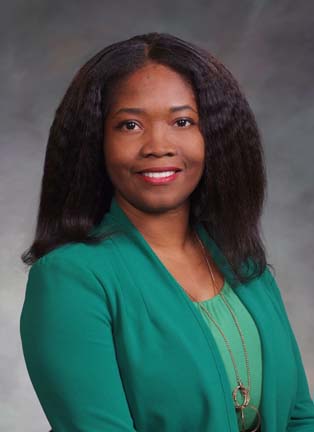
Rep. Junie Joseph
Sponsored bills
Maddy summaryHJR 25-1003 is a procedural resolution that schedules a joint session of the Colorado General Assembly for January 16, 2025, to hear a message from representatives of the Ute Mountain Ute Tribe and Southern Ute Indian Tribe tribal councils. It directs the appointment of a committee consisting of three House members and three Senate members to escort tribal representatives to the session. The resolution does not create new laws or alter policies but formalizes a ceremonial meeting to recognize the tribes' historical and cultural contributions to Colorado. This is a standard procedural step for legislative recognition events, not a substantive policy change.
Maddy summaryHJR 25-1005 is a ceremonial resolution encouraging Colorado communities to observe Martin Luther King Jr. Day on January 20, 2025 - the 41st anniversary of the state holiday. It does not create new laws or alter existing policies but urges cities, schools, counties, and local governments to hold commemorative events. The resolution honors Dr. King’s legacy, noting Colorado’s early adoption of the holiday in 1985 and its ongoing observance through events like the annual Marade. This is a non-binding call for community engagement, not a substantive legislative change.
Maddy summaryThis bill appoints six specific individuals - Senator Marc Snyder, Representative Cecelia Espenoza, Bob Gardner, Claire Levy, Anne McGihon, and Joseph Whitfield - to the Colorado Commission on Uniform State Laws for two-year terms. It directly affects these appointees by granting them membership on the commission, which advises Colorado on adopting uniform state laws. The resolution implements a statutory requirement (C.R.S. § 2-3-601) for filling commission positions, with no policy changes or new provisions beyond the appointments themselves.
Maddy summaryThis bill (SJR 25-002) is a procedural resolution establishing salary grades and pay ranges for specific legislative staff positions within the General Assembly. It directly affects Senate and House staff members by assigning standardized pay grades (e.g., 160SES, H1B5) to roles like Secretaries, Clerks, Policy Analysts, and Sergeants-at-Arms, with the Chaplain compensated at $25 per visit. The key mechanism is defining these compensation structures through detailed position classifications. This resolution does not create new policy but formalizes existing staffing and pay frameworks for legislative operations.
Maddy summaryThis procedural joint resolution (HJR 25-1002) schedules a ceremonial session for January 10, 2025, where Colorado's House and Senate will hear a message from Chief Justice Monica M. Marquez of the Colorado Supreme Court. It directs the appointment of a six-member committee (three from each chamber) to escort the Chief Justice to the session. The bill has no substantive policy impact - it solely establishes a formal procedure for this annual judicial communication event. It directly affects the legislative leadership and the Chief Justice's office by outlining the process for this specific ceremonial meeting.
Maddy summaryThis bill (HR 25-1002) is a procedural measure concerning House officers and employees. The provided context includes no bill text, summary, or specific provisions describing its content or effects. Without the actual text or a substantive description of the bill's requirements, mechanisms, or who it directly affects, a factual summary cannot be generated. The recent actions (introduced, passed, signed) only confirm procedural steps, not the bill's policy content.
Section 1 of the act clarifies that personal property used in direct connection with the operation of a greenhouse for the sole purpose of growing crops in the greenhouse to obtain a monetary profit from the wholesale of plant-based food for human or livestock consumption is included in the definition of equipment used in a controlled environment agricultural (CEA) facility and is thus exempt pursuant to the exemption for such agricultural equipment, which exemption is permanently extended to all future property tax years in section 2 of the act. APPROVED by Governor September 6, 2024 EFFECTIVE November 28, 2024(Note: This summary applies to this bill as enacted.)
The act creates multiple ways to promote equity, diversity, and inclusion (EDI) in Colorado's child welfare system. The state department of human services (department) is directed to work with county departments of human or social services to: Update the existing annual departmental EDI report using state data sources and national child welfare data clearinghouses; Identify necessary demographic or other data that is not currently collected in Colorado's child welfare case management system (management system) and determine recommendations for improving data collection statewide; Identify additional necessary demographic or other data about children, families, and people working in the child welfare that is not currently collected in the management system, the child welfare worker training system, or other components and data systems of the child welfare system, and, in collaboration with counties, determine internal or external processes and make recommendations for improving data collection and reporting statewide; Provide a report on the state's progress in addressing data collection and data entry challenges in the management system; Provide a report on the state's progress in training child welfare staff on demographic data collection; Report on the state's progress in training the child welfare workforce in reducing bias and in promoting EDI, and on progress in the training's alignment with current research and best practices in promoting EDI. The department shall strengthen EDI training for child welfare staff and management. The act requires the department to provide recommendations for training requirements for other child welfare agencies and to offer specific EDI training for mandatory reporters to address disparities in reporting in Colorado's child welfare system. APPROVED by Governor June 6, 2024 EFFECTIVE August 7, 2024(Note: This summary applies to this bill as enacted.)
The act requires the department of early childhood (department) to provide education and information in plain language and in prevalent languages to help individuals complete the paperwork required to meet child care licensing compliance requirements. Prevalent languages is defined as the 2 most prevalent languages spoken in Colorado. The department is required to provide services in prevalent languages to individuals seeking to open or otherwise participate in the operation of an early childhood program or facility licensed by the department. The act creates the bilingual licensing unit in the department to help the department satisfy its duties to provide education, information, and services in prevalent languages and requires the general assembly to appropriate $235,000 from the general fund to the department for the 2024-25 state fiscal year and for each state fiscal year thereafter to pay the costs of the bilingual licensing unit's activities. The act also requires the general assembly to appropriate $45,000 from the general fund to the department for the 2024-25 state fiscal year to pay costs associated with updating the department's mobile licensing application. APPROVED by Governor June 6, 2024 EFFECTIVE June 6, 2024(Note: This summary applies to this bill as enacted.)