Maddy summarySenate Joint Resolution 22 officially designates the week of July 12 through 18, 2026, as Plastic Pollution Awareness Week in Colorado. This symbolic measure aims to educate the public about the health and environmental risks of plastic pollution, including the dangers of microplastics and their impact on communities near production facilities. The resolution encourages consumers to make informed choices and calls on businesses to reduce plastic use, while also recognizing the benefits plastics provide in healthcare and food safety. Copies of the resolution are to be sent to various environmental and community organizations to support awareness efforts.
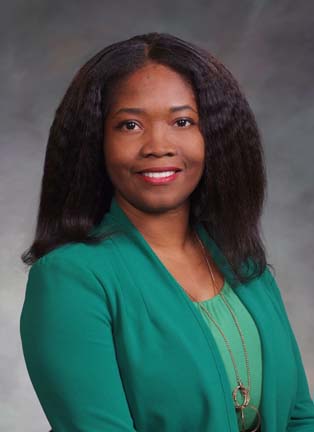
Rep. Junie Joseph
Sponsored bills
The act requires the secretary of state to refer a ballot issue at the November 2026 general election to seek voter approval for the state, beginning in the 2026-27 state fiscal year, to retain and spend an amount of state revenue equal to the amount of state public K-12 education funding in excess of the limitation on state fiscal year spending and to increase state public K-12 education funding by up to 2% per year for 10 years. The act directs legislative council staff to determine the amount of state public K-12 education funding and describes how legislative council staff will make that determination. The act creates a positive factor to increase state public K-12 education funding. The amount of the positive factor compounds annually for 10 years. The positive factor for the 2026-27 budget year is 2% of the program foundation calculated for the 2025-26 budget year. For the 2027-28 through 2034-35 budget years, it is the sum of 2% of the prior year's program foundation plus the prior year's positive factor. For the 2035-36 budget year and beyond, it is the sum of 2% of the 2034-35 program foundation plus the 2034-35 positive factor. A district's share of the positive factor is calculated proportionally based on the district's total program under the new school finance formula relative to the statewide total program. A district may only use its positive factor funding for increasing teacher pay, improving teacher retention, lowering class sizes, and increasing access to career and technical courses. For the 2026-27 state fiscal year, the children's account consists of an amount of money equal to the amount of state revenues that the state retains for a given fiscal year pursuant to voter approval of the act. For state fiscal years commencing on or after July 1, 2027, the account consists of that same amount minus an amount equal to the total dollar amount of warrants issued by the state treasurer to reimburse local governments for property tax exemptions. Money in the account must first be spent to pay districts their positive factor, then any remaining funds are appropriated for disability services and school services and to increase annual contact hours, and finally to programs prioritizing child care and full-day preschool. The act directs the state auditor to conduct and publish a report on excess state revenues for each state fiscal year that the state retains and spends state revenues in excess of the limitation on state fiscal year spending. That report must include descriptions of:The amount of state revenues that the state retained and spent that would otherwise have been in excess of the limitation on state fiscal year spending; andHow the state expended the state revenues that the state retained and spent that would otherwise have been in excess of the limitation on state fiscal year spending. Beginning August 1, 2027, the act requires each local education provider to post, online for free public access in a format that can be downloaded and sorted, its actual expenditures of any positive factor received. Lastly, the act updates provisions regarding the expanded earned income tax credit, the family affordability tax credit, and the affordable housing financing fund to ensure that voter approval of the act does not adversely impact those programs.(Note: This summary applies to this bill as enacted.)
The act requires a licensee, nurse, or certified midwife who performs a medical forensic examination to inform the victim-survivor about how to determine when the testing related to the examination is complete and how to obtain the results and records. The act subjects a cause of action against a person arising from any protected statement by a victim-survivor to a special motion to dismiss unless the court determines that the plaintiff has established that there is a reasonable likelihood that the plaintiff will prevail on the claim. The act makes a predispute arbitration agreement and predispute joint-action waiver void and unenforceable upon request of an individual who alleges conduct that results in a sexual harassment dispute or a sexual misconduct dispute or upon request of a named representative of a joint action, class action, or collective action that results in a sexual harassment dispute or a sexual misconduct dispute. The act requires a judge to allow a forensic scientist to testify remotely in a criminal proceeding if a party requests and both parties consent to the remote testimony. The act authorizes the court to order that the testimony of a victim-survivor of domestic violence, unlawful sexual behavior, stalking, human trafficking for involuntary servitude, or human trafficking for sexual servitude be taken in a room other than the courtroom and be televised by closed-circuit television in the courtroom under certain circumstances. The act requires peace officer annual in-service training programs to include a 2-hour training to improve a peace officer's understanding of the impact of trauma on victim-survivors of crimes and the optimal way for a peace officer to respond to victim-survivors who are experiencing trauma and includes trauma-informed investigation and response training as a permissible use of peace officer training and support fund money. The act renames the Colorado sexual assault forensic medical evidence review board as the Colorado sexual assault response review board and adds 4 members to the board.(Note: This summary applies to this bill as enacted.)
The bill creates the equal justice license plate (plate). An applicant becomes eligible for the plate by making a donation to the equal justice authority (authority). The department of revenue (department) will collect the donation on behalf of, and remit the money to, the authority. The authority must spend the donation in the same manner as currently required by law for the equal justice fee.In addition to the donation and the normal fees for a license plate, a person must pay 2 additional one-time fees in the amount of $25, one of which is credited to the highway users tax fund and the other to the Colorado DRIVES vehicle services account.The bill allows the department to seek, accept, and expend gifts, grants, and donations, and mandates that the department will not commence work on the creation of the plate until the department has received sufficient gifts, grants, and donations to cover the cost of creating the plate and any other related administrative or programming needs.(Note: This summary applies to this bill as introduced.)
The bill requires an individual being discharged from a nursing facility to be presumptively eligible for long-term services and supports under medicaid.The bill requires the department of health care policy and financing (state department) to determine presumptive eligibility and requires county departments of human or social services (county departments) to set up the long-term services and supports for an individual being discharged from a nursing facility prior to the individual's discharge date.The state department is required to submit an annual report to the state auditor and post the report on the state department's website detailing information about the individuals discharged from a nursing facility and the associated presumptive eligibility determinations.The bill establishes remedial measures against a county department if the county department fails to set up long-term services and supports for the individual. The bill establishes remedial measures against a nursing facility that fails to discharge an individual on the discharge date due to a failure within the nursing facility's control or fails to cooperate in good faith with the state department to ensure long-term care services and supports are in place for the individual.(Note: This summary applies to this bill as introduced.)
Section 1 of the bill requires an employer to ensure the employer's workplace is free from recognized hazards, as interpreted consistent with the federal occupational safety and health administration's interpretation of the general duty clause of the 'Occupational Safety and Health Act of 1970' (OSH Act) as of September 1, 2025. Additionally, employers have the general duty to:Ensure that each workplace is constructed, equipped, arranged, operated, and conducted as to provide reasonable and adequate protection to the lives, health, and safety of all individuals employed or working in the workplace; andComply with standards for workplace health and safety adopted by rule by the division of labor standards and statistics in the department of labor and employment (division) attorney general. The bill authorizes the following actions to address workplace health and safety concerns:The attorney general or the division may refer workplace health and safety concerns to relevant state or local authorities;The attorney general, the division, a labor organization, a worker organization, or a person aggrieved by a violation of the bill may file a civil action;For each violation of the bill or of rules adopted pursuant to the bill, a court may order the person an employer that violates the bill or rules to pay statutory damages to a person aggrieved by the violation; andA court may order a person an employer that violates the bill or rules adopted pursuant to the bill to pay a penalty to the attorney general for each violation. The bill creates the workplace health and safety fund (fund) into which penalties collected pursuant to the bill are credited. The money in the fund may be used by the division attorney general for specified purposes. The bill authorizes the division attorney general to adopt rules:To replace any requirement of the OSH Act or the 'Federal Mine Safety and Health Act of 1977' that is repealed or revoked; or amended in any manner that results in the federal protections of workers' rights or worker safety becoming less stringent; and To define standards for workplace health and safety if there is no standard in effect under the OSH Act; andAs necessary to implement the bill. Section 2 authorizes the attorney general to apply to the appropriate district court for an order for specified relief if a person fails to obey an investigative demand, subpoena, warrant, or other investigative process related to worker and employee protection. Sections 2 3 through 8 11 make conforming amendments.(Note: Italicized words indicate new material added to the original summary; dashes through words indicate deletions from the original summary.)(Note: This summary applies to the reengrossed version of this bill as introduced in the second house.)

Current law requires an individual to be at least 18 years old in order to obtain a marriage license; except that a minor who is 16 or 17 years old may obtain a marriage license with judicial approval. The bill repeals this exception, therefore requiring that an individual be at least 18 years old to obtain a marriage license.(Note: This summary applies to the reengrossed version of this bill as introduced in the second house.)

The producer responsibility program for statewide recycling (program) provides recycling services to covered entities in the state and is financed through annual dues assessed against producers of products that use packaging materials and paper products (producers). The bill reaffirms the authority of the solid and hazardous waste commission in the department of public health and environment (department) to direct an appeals process whereby producers may contest the program dues assessed against them by requesting a hearing before the producer responsibility program for statewide recycling advisory board (advisory board). If a producer requests a hearing before the advisory board, the advisory board is required to hold the hearing and issue written recommendations to the department as to whether the dues assessed against the producer should be adjusted. The department is required to make a determination whether to approve or reject the advisory board's recommendations regarding the assessed dues within 45 days after receiving the advisory board's recommendations on the matter. The department's determination is a final agency action subject to judicial review.(Note: This summary applies to the reengrossed version of this bill as introduced in the second house.)
The bill grants the energy and carbon management commission (commission) authority over class I, class IV, and class V injection wells and allows the commission to seek and adopt rules related to primacy from the United States environmental protection agency (EPA) for these classes of injection wells. The rules adopted by the commission may only be more stringent than corresponding federal requirements if certain findings are made at a public hearing. The commission may assess and collect fees related to the regulation of class I, class IV, and class V injection wells. A person that willfully violates a rule, permit, authorization, or order of the commission related to these classes of injection wells commits a misdemeanor and is subject to certain penalties. The executive director of the department of resources (executive director) is required to propose initial spending authority in the amount necessary to enforce rules for the permitting, authorization, and regulation of class I, class IV, and class V injection wells. The office of state planning and budgeting (OSPB) is also required to submit a proposal to eliminate or minimize the impact of associated fee revenue for the first state fiscal year that the fee revenue is assessed on the state fiscal year spending limitation in the state constitution. The bill also grants the mined land reclamation board (board) authority over class III injection wells and allows the board to seek and adopt rules related to primacy from the EPA for class III injection wells. The board may assess and collect fees related to the regulation of class III injection wells. The rules adopted by the board may only be more stringent than corresponding federal requirements if certain findings are made at a public hearing. A person that violates a rule, permit, authorization, or order of the board related to class III injection wells or that operates a class III injection well without a permit from the board is subject to certain penalties. The bill also provides that a class III injection well is not eligible for an exemption from designated mining operation status, which status subjects the operator to certain rules adopted by the board. The executive director is required to propose initial spending authority in the amount necessary to enforce rules for the permitting, authorization, and regulation of class III injection wells. OSPB is also required to submit a proposal to eliminate or minimize the impact of associated fee revenue for the first state fiscal year that the fee revenue is assessed on the state fiscal year spending limitation in the state constitution.(Note: Italicized words indicate new material added to the original summary; dashes through words indicate deletions from the original summary.)(Note: This summary applies to the reengrossed version of this bill as introduced in the second house.)
The Colorado Clean Energy Fund (CCEF) is a nonprofit institution with experience administering clean energy financing programs and is the designated green bank for the federal environmental protection agency's region 8. The CCEF administers an on-bill repayment program (program) to help finance certain energy-related upgrades installed at a utility customer's premises that are associated with the utility meter. Under the program, in partnership with Colorado-based utilities, the CCEF finances energy-related upgrades that are then repaid through a customer's monthly utility bill payments. The bill directs the state treasurer to, on August 15, 2026, execute a loan agreement with the CCEF for a low-interest loan of $50 million from the unclaimed property trust fund.The purpose of the loan is to capitalize and expand the CCEF's on-bill repayment program and to accelerate utility adoption of the program. The Colorado energy office is required to review the design of the program before August 1, 2026. The bill specifies certain requirements for the program and for a utility to access the funding for the program, including requirements related to disclosures, notices, transfers of responsibility for an on-bill repayment obligation, and interest rates. The CCEF is required to submit annual reports to the joint budget committee, the Colorado energy office, and the state treasurer detailing the deployment of the program.(Note: This summary applies to this bill as introduced.)