Issue · Healthcare

Healthcare

Every healthcare bill, vote, and legislator stance in Colorado, automatically classified by Maddy, our AI policy reader.

Total bills
76
2026 Regular Session
Top supporter
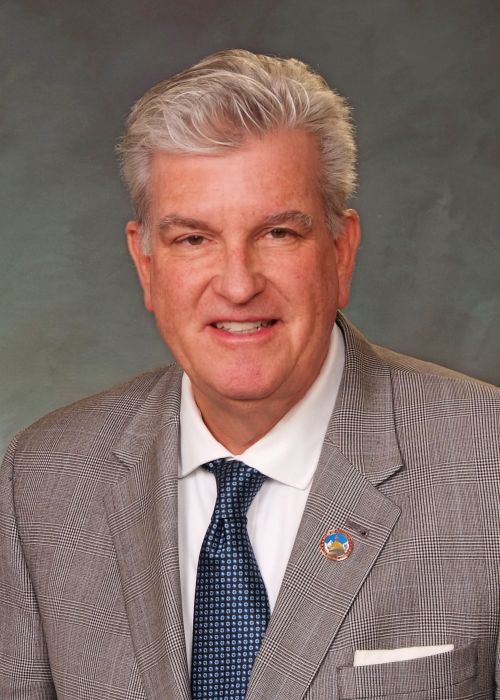
James Coleman
100% support rate
Top opponent
Ken DeGraaf
12% support rate
Ranked legislators
10
5 support · 5 oppose
Key legislators

Who's moving healthcare in Colorado

Legislators moving healthcare in Colorado
Legislator Party Stance Support rate Votes
James Coleman
James Coleman Senate · District 33
D
Strong +
100% 7
Nick Hinrichsen
Nick Hinrichsen Senate · District 3
D
Strong +
100% 15
Julie Gonzales
Julie Gonzales Senate · District 34
D
Strong +
93% 27
Jeff Bridges
Jeff Bridges Senate · District 26
D
Strong +
92% 25
Chris Kolker
Chris Kolker Senate · District 16
D
Strong +
92% 36
Ken DeGraaf
Ken DeGraaf House · District 22
R
Strong −
12% 82
John Carson
John Carson Senate · District 30
R
Strong −
20% 13
Ron Weinberg
Ron Weinberg House · District 51
R
Oppose
21% 99
Max Brooks
Max Brooks House · District 45
R
Oppose
25% 117
Scott Bottoms
Scott Bottoms House · District 15
R
Oppose
25% 111
Showing 61–70 of 76 bills

All healthcare bills

in committee · Colorado · Senate Apr 7, 2026

SB 63: Nonemergency Medical Transportation Services

The bill requires a transportation broker to contract with at least 5 transportation providers to provide nonemergency transportation services to medicaid members.A transportation provider must meet certain requirements before providing transportation services.The bill requires that medicaid members be able to preapprove nonemergency medical transportation services and choose a preferred transportation provider to receive nonemergency transportation services through.(Note: This summary applies to this bill as introduced.)
signed · Colorado · House Apr 2, 2026

HB 1042: Dry Needling by Occupational Therapists

The act authorizes an occupational therapist to perform dry needling on and after September 1, 2027, if the occupational therapist:Has the knowledge, skill, ability, and documented competency to perform the act;Has successfully completed a dry needling course of study that meets supervisorial, educational, and clinical prerequisites to be established by rule; andObtains a written informed consent from each patient for dry needling, including information concerning the potential benefits and risks of dry needling and a statement that the occupational therapist performing dry needling is not an acupuncturist.     The act requires the director of the division of professions and occupations within the department of regulatory agencies to adopt rules to implement the authorization for an occupational therapist to perform dry needling. At a minimum, the rules must establish requirements for dry needling performed by an occupational therapist that are equivalent to the requirements in rules adopted by the state physical therapy board for dry needling performed by a physical therapist.(Note: This summary applies to this bill as enacted.)
in committee · Colorado · Senate Apr 2, 2026

SB 8: Mental Health Access

The bill establishes the adult mental health services program (program) to facilitate access for adults to mental health services, including substance use disorder services, and to respond to identified mental health needs. The program reimburses providers for up to 6 mental health sessions with an adult and may provide additional reimbursement, subject to available money. The adult mental health program enterprise (enterprise), created in the bill, creates, operates, and funds the program. The enterprise is required to enter into an agreement with a vendor to create or use an existing website or web-based application as a portal that is available to adults and providers to facilitate the program. The department of human services is required to annually report to the general assembly about the program.The bill establishes the internet-enabled mental health access grant program (grant program) to award grants to entities that use the internet to facilitate mental health services. The enterprise administers the grant program. The enterprise shall annually report to the health and human services committees of the house of representatives and the senate about the grant program.The bill creates the mental health services enterprise as a government-owned business within the behavioral health administration for the business purpose of imposing and collecting a surcharge on internet service account holders in Colorado and to use the surcharge revenue to create, operate, and fund the adult mental health services program and internet-enabled mental health access grant program. Each internet service provider shall collect from its account holders located in Colorado the mental health services access surcharge and remit the surcharge to the enterprise.(Note: This summary applies to this bill as introduced.)
signed · Colorado · House Jun 2, 2026

HB 1063: Treating People with Behavioral Health Disorder

The act requires the department of health care policy and financing and the behavioral health administration to publish on each department's website an easily accessible list of secure transportation providers that have contracts with managed care entities and behavioral health administrative services organizations, as applicable.(Note: This summary applies to this bill as enacted.)
passed · Colorado · Senate May 5, 2026

SB 66: Regulation of Compounded Weight-Loss Medication

The bill establishes regulations for the sale, transfer, or distribution of compounded weight-loss medication, which custom-made medications that, is defined in the bill as a drug that is:           Created by combining, mixing, or altering other drugs or drug substances;           Intended to be used by humans for obesity or weight management and contains an active ingredient that is named in a drug approved by the federal food and drug administration (FDA); and           A glucagon-like peptide-1 receptor agonist drug, known as a 'GLP-1' drug. Unlike mass-produced medications, a compound weight-loss medication is not subject to approval by the federal food and drug administration (FDA). A person may not sell, transfer, or distribute a compounded weight-loss medication unless the person confirms that the medication: FDA. Is made from bulk drug substances and drugs that are approved by the FDA when such approval is required; Was manufactured in compliance with FDA processes; Contains bulk drug substances that are pharmaceutical grade and are accompanied by a certificate of analysis containing information that is material to the safety and efficacy of the bulk drug substances; Was manufactured at a facility that is registered with the FDA and passed an FDA inspection within the previous 2 years; and Is verified for purity and accurate dosage.      Labels for compounded weight-loss medications must list all active and inactive ingredients, the quantity of those ingredients, and the ingredients' country of origin. There must also be a warning on the label stating that the compounded weight-loss medication has not been FDA-approved, has inadequate evidence of safety or efficacy, and has known and unknown side effects. A person must also provide certain disclosures to a patient when prescribing compounded weight-loss medications.      The bill prohibits the use of false or misleading claims, including unsubstantiated claims, when advertising or promoting compounded weight-loss medications.      A person that sells, transfers, or distributes compounded weight-lost medication must keep records related to the compounded weight-loss medication for at least 2 years after the date of expiration of the compounded weight-loss medication and make those records available for inspection by the state board of pharmacy.      The state board of pharmacy may issue fines of up to $1,000 per dose of compounded weight-loss medications that are sold or distributed in violation of the bill and may revoke a pharmacy or business license for violations.      The attorney general has authority to enforce this bill as a deceptive trade practice under the 'Colorado Consumer Protection Act'.      The bill establishes that a person engages in a deceptive trade practice when the person : Makes a false or misleading claim about a compounded weight-loss medication when advertising or promoting the medication; Distributes a compounded weight-loss medication when not legally authorized to distribute or transfer the drug used in the compounded weight-loss medication; Makes a materially false or misleading representation that the compounded weight-loss medication is approved by the FDA when the medication is not approved by the FDA; or Makes a materially false, misleading, or unverified claim regarding the efficacy, safety, performance, outcomes, or benefits of the compounded weight-loss medication.      The attorney general has exclusive authority to enforce the bill as a deceptive trade practice under the 'Colorado Consumer Protection Act'. There is no private right of action for a violation of the bill, and the provisions of the bill may only be enforced by the attorney general.     The bill does not apply to certain facilities or in certain circumstances, including: The administration of a compounded weight-loss medication by a practitioner at certain hospitals, clinics, and other health facilities licensed by the department of public health and environment; Long term care facilities; Assisted living residences; Home care agencies; The program of all-inclusive care for the elderly or PACE program; Adult day care facilities; or The compounding of drugs for animal use.(Note: Italicized words indicate new material added to the original summary; dashes through words indicate deletions from the original summary.)(Note: This summary applies to the reengrossed version of this bill as introduced in the second house.)
signed · Colorado · House Apr 13, 2026

HB 1070: Third-Party Network Agreements for Dental Services

The act imposes requirements regarding a contract or agreement between an insurance carrier (carrier) and a third party concerning access to dental care services, including:Prohibiting a carrier from entering into a third-party network lease agreement to provide access to dental care services or contractually agreed-upon discounts provided by a dental provider who is contracted as a participating provider (provider) with the carrier, unless the provider gives affirmative consent to allow the third party to access the provider's dental care services and contractually agreed-upon discounts;Prohibiting a carrier from canceling or entering into a contract with a provider on the grounds that the provider refuses to allow access by a third party to the dental care services and contractually agreed-upon discounts provided by the provider; andIf a provider allows a third party to access the provider's dental care services and contractually agreed-upon discounts through a contract between a carrier and a third party, requiring the carrier to comply with specified obligations.     The act creates exemptions from the prohibitions on specified contract provisions in contracts between carriers and dental providers, including if:A provider network contract for dental services is provided to beneficiaries of programs for medical assistance sponsored by the state of Colorado; orAccess to a provider network contract is granted to a dental carrier or an entity operating in accordance with the same brand licensee program as the contracting entity, and a list of the carriers or entities with the same brand licensee program as the contracting entity is made available to a provider on the contracting entity's website.(Note: This summary applies to this bill as enacted.)
signed · Colorado · House May 26, 2026

HB 1019: Kidney Screening Mandatory Preventive Coverage

The act adds kidney function screening services as mandated preventive health-care services for which insurance policies or contracts in the state must provide total-cost coverage. Coverage for kidney function screening services will be implemented for all large employer health benefit policies or contracts issued or renewed in this state on or after January 1, 2027, and coverage will be implemented for all individual and small group health benefit plans issued or renewed in this state on or after January 1, 2028, as long as the state is not required to defray the cost of the coverage of the kidney function screening services.     The act permits the exclusion of the 'State Employees Group Benefits Act' from this mandate and exempts certain high deductible plans from having to provide total-cost coverage for such services.(Note: This summary applies to this bill as enacted.)
Sub-Topics Insurance
signed · Colorado · House Jun 2, 2026

HB 1069: Availability of Emergency Medical Services

The act defines 'first responder' to include:A peace officer;A firefighter;A volunteer firefighter;An emergency medical service provider; orA mental health professional who responds in a professional capacity to a justifiable medical emergency.     Existing law requires the emergency medical and trauma services advisory council (council) to review and approve new rules and modifications to rules prior to the adoption of such rules or modifications by the state board of health. The act requires the council to make recommendations for, instead of approve, rules and modifications to rules concerning emergency medical and trauma services prior to the adoption of such rules or modifications by the state board of health.     Beginning January 1, 2027, the act requires the department of health care policy and financing (state department) to reimburse the following entities under the 'Colorado Medical Assistance Act':An ambulance service for ground transportation by an ambulance or other vehicle to a hospital or other destination as deemed appropriate by the ambulance service's medical director;An ambulance service for treatment on the scene of a medical emergency, which treatment does not result in ground transportation; andA qualified provider, an ambulance service, or an agency for evaluation by telemedicine of a person being treated by an ambulance service or an agency for the purpose of preventing the need to transport the person to a hospital.(Note: This summary applies to this bill as enacted.)
Sub-Topics Healthcare Workforce Hospitals Mental Health Tags Emergency Management Public Safety
signed · Colorado · Senate Jun 3, 2026

SB 6: Parity for Non-Opioid Pain Management Drugs

The act requires a health insurance carrier that provides prescription drug benefits to require that:The utilization review requirements, including prior authorization and step therapy, for a non-opioid drug prescribed and approved by the federal food and drug administration (FDA) for the treatment or management of chronic or acute pain (non-opioid pain management drug) are no more restrictive than the least restrictive utilization review requirements for opioid drugs prescribed for the treatment or management of chronic or acute pain; andThe cost-sharing, copayment, or deductible for a non-opioid pain management drug is not greater than the cost-sharing, copayment, or deductible for an opioid drug prescribed for the treatment or management of chronic or acute pain.     The act requires each individual and small group health benefit plan issued or renewed on or after January 1, 2027, and each large employer health benefit plan issued or renewed on and after January 1, 2028, to ensure there is at least one non-opioid pain management drug available as a clinically appropriate alternative for an opioid pain management drug. If the division of insurance determines that coverage for a non-opioid pain management drug offered by individual and small group health benefit plans requires state defrayal of the cost of coverage, the requirement to make a non-opioid pain management drug available is inoperative.     The state employee health benefit plan is excluded from the requirements of the act.     The act appropriates $15,415 to the department of regulatory agencies for use by the division of insurance to implement the act.(Note: This summary applies to this bill as enacted.)
signed · Colorado · Senate Mar 30, 2026

SB 7: Medical Marijuana Use in Health Facilities

The act permits a health facility to allow patients who are terminally ill and who are registered in the state's medical marijuana program to use medical marijuana within the health facility, subject to certain parameters. The act requires a health facility that allows such use to document the patient's medical marijuana program registration and medical marijuana usage in the patient's medical records and develop guidelines for and impose restrictions on the possession, usage, storage, and administration of medical marijuana to ensure the safety of others, safe facility operations, and compliance with other laws. A health facility is not required to handle medical marijuana for a patient.     The act prohibits the department of public health and environment (department) from requiring compliance with the act as a condition for a health facility to obtain or renew a license or certification that it is required to carry to operate as a health facility. Additionally, the act prohibits the department from requiring compliance if compliance would result in a violation of state law, a loss of federal funding, noncompliance with the federal medicare or medicaid programs, or noncompliance with accreditation or licensing requirements. Lastly, the act allows a health facility to suspend compliance with the act's provisions in the event that, and only as long as, a listed federal entity takes an action that requires the health facility to suspend its compliance with the act.(Note: This summary applies to this bill as enacted.)
Showing 61 to 70 of 76 bills
Previous 1 6 7 8 Next