Issue · Healthcare

Healthcare

Every healthcare bill, vote, and legislator stance in Colorado, automatically classified by Maddy, our AI policy reader.

Total bills
76
2026 Regular Session
Top supporter
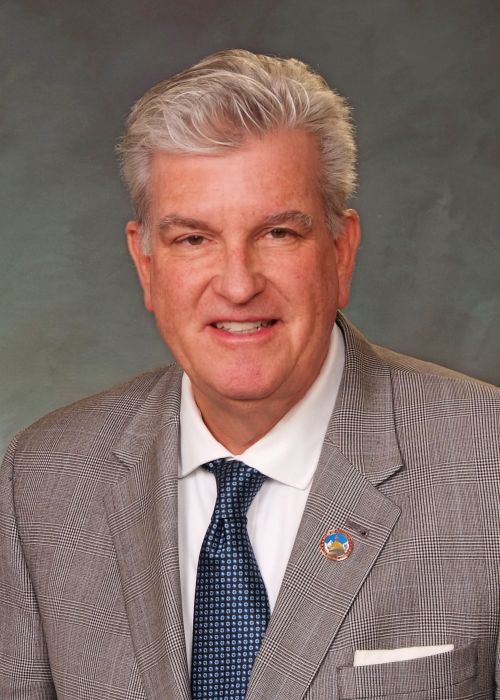
James Coleman
100% support rate
Top opponent
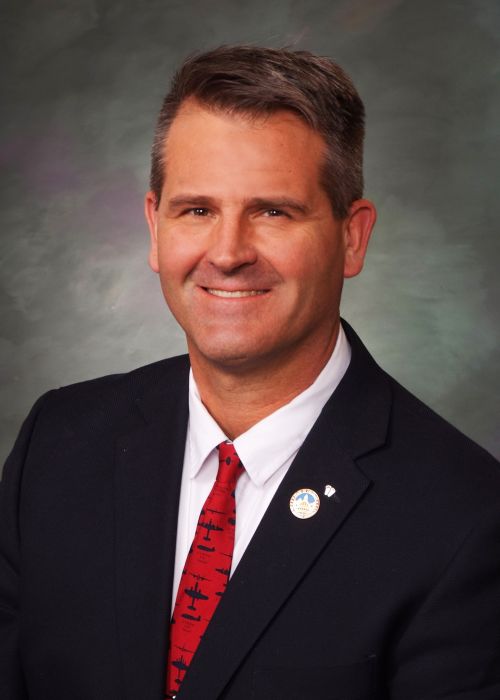
Ken DeGraaf
12% support rate
Ranked legislators
10
5 support · 5 oppose
Key legislators

Who's moving healthcare in Colorado

Legislators moving healthcare in Colorado
Legislator Party Stance Support rate Votes
James Coleman
James Coleman Senate · District 33
D
Strong +
100% 7
Nick Hinrichsen
Nick Hinrichsen Senate · District 3
D
Strong +
100% 15
Julie Gonzales
Julie Gonzales Senate · District 34
D
Strong +
93% 27
Jeff Bridges
Jeff Bridges Senate · District 26
D
Strong +
92% 25
Chris Kolker
Chris Kolker Senate · District 16
D
Strong +
92% 36
Ken DeGraaf
Ken DeGraaf House · District 22
R
Strong −
12% 82
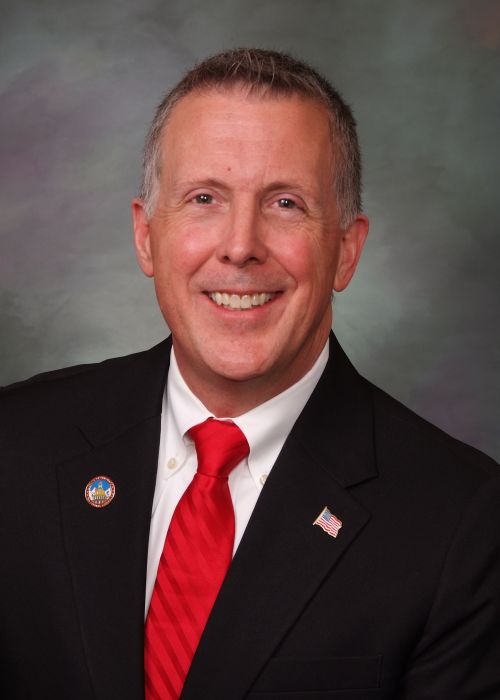
John Carson
John Carson Senate · District 30
R
Strong −
20% 13
Ron Weinberg
Ron Weinberg House · District 51
R
Oppose
21% 99
Max Brooks
Max Brooks House · District 45
R
Oppose
25% 117
Scott Bottoms
Scott Bottoms House · District 15
R
Oppose
25% 111
Showing 41–50 of 76 bills

All healthcare bills

in committee · Colorado · House Feb 24, 2026

HB 1122: Mandatory Coverage Hormone Replacement Therapy

The bill requires all health benefit plans in the state and the medicaid program to provide coverage for hormone replacement therapy, as prescribed by licensed physicians, for women who are experiencing menopause or perimenopause.     Coverage for hormone replacement therapy will be implemented for all large employer health benefit plans issued or renewed in this state on or after January 1, 2027. Coverage for hormone replacement therapy will be implemented for all individual and small group health benefit plans issued or renewed in this state on or after January 1, 2028, as long as the state is not required to defray the cost of the coverage of the hormone replacement therapy.     The state medicaid program is required to provide hormone replacement therapy beginning on July 1, 2027.(Note: This summary applies to this bill as introduced.)
signed · Colorado · House May 26, 2026

HB 1228: Marriage & Family Therapy Clinical Requirements

The act allows an applicant for licensure as a marriage and family therapist (LMFT) whose master's or doctoral degree program did not include an internship or practicum to also be registered as an LMFT candidate but requires these candidates to complete an additional 700 supervised clinical hours to become an LMFT.(Note: This summary applies to this bill as enacted.)
Sub-Topics Medical Licensing
passed both · Colorado · House Feb 11, 2026

HJR 1009: Veterans Mental Health Awareness

HJR 1009 is a symbolic resolution (not a law) recognizing Colorado's veterans and their mental health challenges. It cites Colorado's high veteran suicide rate (178 in 2022) and highlights successful existing programs like Next Chapter and Mt. Carmel Veterans Service Center, which enrolled over 1,200 veterans with no suicides among participants. The resolution commits the state to continuing support for veterans' mental health, breaking down stigmas, and expanding community services to ease their transition to civilian life. It does not create new programs or allocate funds but expresses legislative support and directs copies to the governor, U.S. Department of Veterans Affairs, and the mentioned organizations.
signed · Colorado · House Jun 4, 2026

HB 1116: Process for People with Behavioral Health Disorder

After an individual has been discharged from a facility where an individual was held for an emergency mental health hold, current law requires the facility to attempt to follow up with the individual at least 48 hours after discharge. The act extends the time to attempt to follow up with the individual to 72 hours following discharge, excluding weekends and holidays.     The act restricts the behavioral health administration (BHA) from issuing or renewing a license for a behavioral health entity unless the BHA receives a certificate of compliance for the applicant's building or structure from the division of fire prevention and control. The act adds the following exceptions to this requirement:An applicant that provides only telehealth services is not required to receive a certificate of compliance; andAn applicant that provides only outpatient services may receive a certificate of compliance from the division of fire prevention and control based on inspections conducted by a fire department that employs a certified inspector rather than from the division of fire prevention and control.(Note: This summary applies to this bill as enacted.)
in committee · Colorado · Senate Apr 9, 2026

SB 127: Family Medical Leave Insurance Duration Extensions

With regard to the family and medical leave insurance (FAMLI) program, the bill:Defines a neonatal intensive care unit (NICU) for the duration extension that applies to a covered individual who has a child receiving care in a NICU; andExtends the duration of paid FAMLI leave for claims arising on or after January 1, 2027, up to an additional 2 weeks, following the death of a family member for whom a covered individual cared for while using such leave.(Note: This summary applies to this bill as introduced.)
signed · Colorado · House Jun 3, 2026

HB 1235: Updates to Medicaid

On or before December 1, 2026, and annually thereafter, the act requires each transportation broker that administers nonemergency medical transportation to medicaid members to submit certain information to the department of health care policy and financing (state department) regarding transportation providers that the transportation broker contracts with. Beginning January 1, 2027, the state department is required to include this information in its annual 'SMART Act' presentation.     The act changes the term 'qualified alien' to 'qualified noncitizen' to align with federal requirements.     If the state department plans to implement, apply, or enforce new multiple procedure payment reductions for outpatient therapy services, the act requires the state department to provide notice to the impacted providers of the changes at least 6 months prior to implementing the changes and to hold at least one stakeholder meeting to discuss the payment reductions.     The act requires the state department to reimburse a provider who is licensed and authorized to prescribe, dispense, compound, or administer medication-assisted treatment in a jail setting.     The act requires the medical services board to adopt rules before January 1, 2027, to comply with federal community engagement requirements and requires the state department make available on its website data on the community engagement requirements and their impact on medical assistance enrollment.     The act requires the state department to collect direct care service cost to administrative cost ratio information from home- and community-based service provider agencies and submit a report to the general assembly detailing the information collected.     The act repeals the state medical assistance and services advisory council.(Note: This summary applies to this bill as enacted.)
signed · Colorado · House May 5, 2026

HB 1296: Revision to Nurse & Nurse Aide Practice Act

In 2025, House Bill 25-1082 added physician assistants and advanced practice registered nurses to the professions subject to discipline for a failure to timely complete a medical certification for a certificate of death. The act adds the repeated or willful failure, without reasonable cause, to comply with the requirements of completing a medical certification for a certificate of death to the grounds for discipline in the 'Nurse and Nurse Aide Practice Act'.(Note: This summary applies to this bill as enacted.)
passed · Colorado · House Apr 23, 2026

HB 1241: Carrier to Notify Provider Material Change Contract

In current law concerning contracts with health-care providers, an entity wishing to make a material change to such a contract must provide written notice of the change to the health-care provider (provider) at least 90 days before the effective date of the change. The bill adds language requiring a person to give such written notice two separate times by standard electronic means and, if the provider has not affirmatively responded, a third time by registered mail and by email or personal service to the health-care provider or administrator who signed the contract. and The bill adds a reference to this language in the area of the Colorado Revised Statutes concerning health-care insurance carriers.(Note: Italicized words indicate new material added to the original summary; dashes through words indicate deletions from the original summary.)(Note: This summary applies to the reengrossed version of this bill as introduced in the second house.)
signed · Colorado · House May 4, 2026

HB 1107: Health Care in Regulated Facilities

The act establishes information disclosure requirements for a licensed facility that offers on-site and residential services for individuals with dementia and dementia-related conditions, including Alzheimer's disease ('dementia care facility' or 'facility').     The act requires the department of public health and environment (department), in consultation with the state long-term care ombudsman or the ombudsman's designee, to create a dementia care services information form (form) by July 1, 2027. The form must include certain specified fields for the disclosure of information regarding a dementia care facility's dementia care services, including the facility's:Dementia training requirements for staff that are in addition to statutory training requirements;Guidelines for using restraints;Security features and procedures for addressing the needs of residents with dementia; andCriteria and processes to determine placement, transfer, or discharge of residents living with dementia.     The department may review and update the form to ensure that it facilitates the disclosure of the required information. After creating or updating the form, the department must provide the form to every dementia care facility in the state.     A dementia care facility must complete the form with responsive, accurate, and complete information regarding the facility's dementia care services. Beginning October 1, 2027, every dementia care facility shall:Provide its completed form to every individual who contacts the facility seeking dementia care services;Review and update the form when the facility's information changes to ensure the information on the form is current, complete, and correct;Publish the facility's current completed form on the facility's website; andMaintain on the facility's premises and have available for inspection a copy of the facility's current completed form, and produce the form upon request by the department during a survey or inspection of the facility.     The act requires the department to issue a citation to a facility that fails to maintain on its premises and have available for inspection its completed form or that fails to produce the form upon request by the department during a survey or inspection.     The department may adopt rules, as necessary, to implement the act's requirements concerning the form; except that the rules adopted by the department must not exceed applicable national standards. The department may use money from the assisted living residence improvement cash fund for the purposes of creating the form and adopting related rules.(Note: This summary applies to this bill as enacted.)
signed · Colorado · House Jun 2, 2026

HB 1139: Use of Artificial Intelligence in Health Care

On and after January 1, 2027, when determining coverage for health-care services, the act requires entities that use an artificial intelligence system (AI system) for the purpose of conducting utilization review of health-care services, including health insurance companies (carriers), pharmacy benefit managers, private utilization review organizations, behavioral health administrative services organizations, and managed care entities (entities), ensure that the AI system complies with certain requirements specified in the act. Specifically, an entity shall ensure that the AI system:Makes determinations based on medical or clinical history, the patient's individual clinical circumstances, and other relevant clinical factors specified in the act, with denial of coverage reviewed by a licensed clinician or physician or other competent regulated professional who is competent to evaluate the specific clinical issues and review the health benefit plan's terms of coverage (competent regulated professional);Does not base its determination solely on group data without reference to the individual's data;Is not used in any way that discriminates against individuals in violation of other state or federal laws and is fairly and equitably applied, including in accordance with regulations and guidance issued by the federal department of health and human services; andIs periodically reviewed to ensure the AI systems outcomes are accurate and reliable and that an individual's health data is not used beyond its intended or stated purpose.     Entities that use AI systems shall disclose to the division of insurance, the department of human services, or the department of health care policy and financing, as applicable, the utilization review functions for which the AI system will be used and the points in the utilization review process when it will be used, the process for human oversight of adverse coverage determinations, and the process for maintaining audit information to ensure that the use of the AI system complies with the requirements in the act.     The AI system may be used to assist in utilization review, including expedited approvals. A carrier's denial of coverage for a service based in whole or in part on medical necessity shall not be issued solely on the output of an AI system without human review by a licensed clinician or physician or other competent regulated professional.     Further, the act prohibits a carrier and a payer of services under the 'Colorado Medical Assistance Act' and the 'Children's Basic Health Plan Act' from paying for psychotherapy services that are provided directly to a client and that are conducted by an AI system.(Note: This summary applies to this bill as enacted.)
Showing 41 to 50 of 76 bills
Previous 1 4 5 6 8 Next