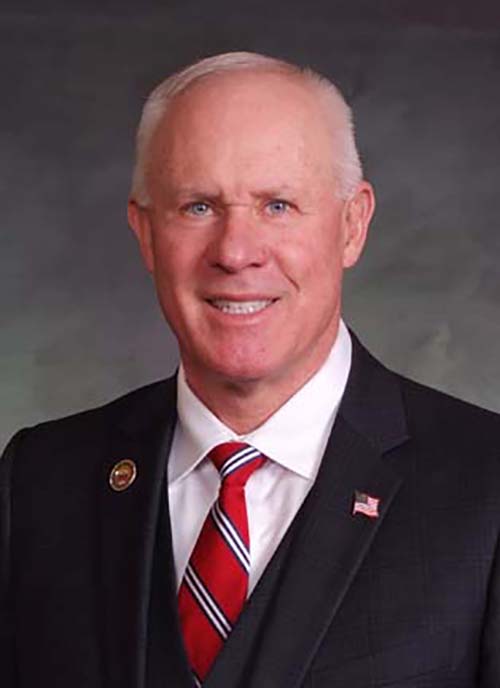
Key legislators
Who's moving energy in Colorado
Showing 2 of 2
bills
All energy bills
The act implements the recommendation of the department of regulatory agencies' 2025 sunset review and report on the biomass utilization grant program by repealing the biomass utilization grant program.(Note: This summary applies to this bill as enacted.)
The act establishes a first and preferred opportunity for available employment for coal transition workers in coal transition communities (hiring preference). A business entity located in a coal transition community that is engaged in the business of constructing or operating railroads, utilities, energy generation facilities, or advanced manufacturing facilities (covered business) is required to comply with the hiring preference. A covered business does not include the state government or a local government. A covered business is required to make good faith efforts to provide a hiring preference to a coal transition worker who meets the qualifications for an employment position (qualified coal transition worker). A covered business may hire an individual who is not a qualified coal transition worker only if a qualified coal transition worker did not apply for employment with the covered business, each qualified coal transition worker declined a job offer from a covered business, or a qualified coal transition worker's qualifications did not meet the qualifications of other candidates for the same job. If a qualified coal transition worker applies for employment with a covered business, the covered business is required to report specified information annually to the just transition office. The executive director is required to adopt policies and procedures to implement the act. A hiring preference does not apply if a covered business places an existing employee in another employment position with the covered business or to the extent that a hiring preference conflicts with the terms of a collective bargaining agreement that applies to the relationship between a covered business and its employees. Currently, a public entity is not allowed to invest public funds in certain types of investments, such as equity instruments, instruments convertible to equity, or equity interests, or to deposit public funds with any person except certain depository institutions, which are primarily banks. The act authorizes a public entity to deposit or invest, either directly or through an investment firm or other third party authorized by the public entity, public funds from a payment or settlement that the public entity has received to offset the socioeconomic impacts to a community or government from the closure of a coal mine or coal power generating station in any investment permitted by an investment policy approved by the public entity.(Note: This summary applies to this bill as enacted.)