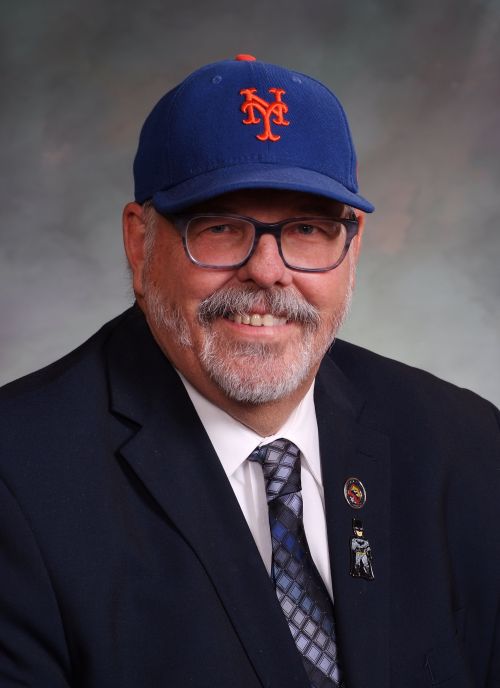
SB 132, known as the "Magnus Law," requires Colorado law enforcement officers to offer drivers involved in collisions resulting in death or suspected serious injury the opportunity to voluntarily take a breath test for alcohol. The bill mandates officers provide clear, plain-language advisement that the test is voluntary, refusal carries no penalty, and results cannot be used in court. It applies when officers reasonably suspect the driver was at fault and the driver isn't critically injured, creating a standardized protocol to ensure consistent investigation of potential impairment at serious crash scenes. This change aims to preserve evidence that might otherwise be lost, without altering existing legal standards for driving under the influence.
Current law requires that the automated protection order notification system (notification system) include information about whether a restrained person completed and submitted a firearm purchase or transfer application that indicated the restrained person was ineligible to possess a firearm pursuant to state or federal law. The act repeals this provision. Current law requires the Colorado bureau of investigation to make the information in the notification system available to the division of criminal justice (division) for the purpose of providing the information to a protected person. The act requires the Colorado integrated criminal justice information system program to also make the information available to the division.(Note: This summary applies to this bill as enacted.)
After an individual has been discharged from a facility where an individual was held for an emergency mental health hold, current law requires the facility to attempt to follow up with the individual at least 48 hours after discharge. The act extends the time to attempt to follow up with the individual to 72 hours following discharge, excluding weekends and holidays. The act restricts the behavioral health administration (BHA) from issuing or renewing a license for a behavioral health entity unless the BHA receives a certificate of compliance for the applicant's building or structure from the division of fire prevention and control. The act adds the following exceptions to this requirement:An applicant that provides only telehealth services is not required to receive a certificate of compliance; andAn applicant that provides only outpatient services may receive a certificate of compliance from the division of fire prevention and control based on inspections conducted by a fire department that employs a certified inspector rather than from the division of fire prevention and control.(Note: This summary applies to this bill as enacted.)
The act permits a county or municipal jail (local detention facility) to conduct a strip search of a person who is detained in the local detention facility, only:When the facility is conducting intake of the detained person who has come in from outside the facility and a strip search upon intake is part of the detention facility's policy;When 2 personnel of the facility have determined and reasonably believe the detained person is concealing a controlled substance, a dangerous instrument, or contraband; or Under a circumstance or set of conditions in which there has been a prior incident of possession of a controlled substance, a dangerous instrument, contraband, or any other item that creates grave danger to property or injury to persons and substantially obstructs the performance of the institutional functions of the local detention facility, the circumstance or set of conditions give rise to a substantial likelihood that a similar incident may occur again, and the local detention facility has a written policy authorizing a strip search under the circumstances or set of conditions. The act requires that each local detention facility document the number of, reason for, and results of a strip search in a report that each facility must submit annually to the jail standards advisory committee and the Colorado attorney general. The act requires detention facility personnel to record strip searches via body-worn camera and limits access to the recordings. The act requires each sheriff to coordinate with the sheriff's body-worn camera vendor to implement a tag for strip searches in body-worn camera footage tagging options and ensure that strip search footage has the most restrictive level of access available within the sheriff's body-worn camera system. The act requires local detention facilities to have a policy detailing staff protocol for responding to suspected, alleged, or witnessed sexual abuse and requires staff to report suspected, alleged, or witnessed sexual abuse. The act creates whistleblower protection policies for jail staff and creates a right of action against a local detention facility for a staff member who was subject to an adverse employment action because the staff member disclosed information to the proper supervising authority about sexual abuse or sex-based harassment in the local detention facility. The act requires local detention facilities to inform prisoners of their rights and the resources available to them if they are a victim of sexual abuse while in jail and allow sexual assault advocates to access prisoners who request advocacy services. The act requires local detention facilities to designate a 'Prison Rape Elimination Act of 2003' (PREA) coordinator and requires jails to provide the coordinator's contact information to prisoners and the public. The act requires the removal of peace officers standards and training board (P.O.S.T. board) certification from any peace officer who is found by an administrative law judge, hearing officer, or internal investigation to have sexually abused a prisoner in a local detention facility. The act appropriates $38,916 to the department of law from the P.O.S.T. board cash fund for P.O.S.T. board support.(Note: This summary applies to this bill as enacted.)
The act requires the department of corrections (department) to furnish an individual being discharged from the department's custody a release allowance of at least $100, free of any deductions. Beginning by September 15, 2027, and annually thereafter, the department is required to collect and report discharge data, including the number of individuals released from department correctional facilities, the number and percentage of released individuals who received the release allowance, and the total amount of money spent on release allowances. The department must issue a report to the general assembly annually. The act repeals provisions requiring the department to give an individual a ticket to leave prior to discharging the individual from a correctional facility. The act requires eligible offenders to participate in the department's existing program to procure state-issued identification cards for offenders (program), unless the offender affirmatively opts-out of the program. Beginning by September 15, 2027, and annually thereafter, the department is required to collect data on the process of securing necessary identification documents to issue state identification cards and issue a report to the general assembly. The report must include the number and percentage of offenders released with an identification card, birth certificate, and social security number and the number and percentage of offenders who were ineligible to participate in the program and the reason for ineligibility. The department is prohibited from charging an offender a fee to obtain a state identification card, and any fee incurred in the process of securing an offender's identification documents to create the state identification card must be assessed after the offender has been released and may be consolidated with existing restitution, fees, or other legal financial obligations owed by the offender. The department of public health and environment shall assist the department in securing necessary identification documents.(Note: This summary applies to this bill as enacted.)
The act requires a person seeking certification or recertification from the peace officers standards and training board to undergo training on various missing person alerts active within the state. The department of public safety is required to create a missing person alert training program for persons seeking certification or recertification of their peace officer status. The act requires an institution of higher education (institution) to either conduct a preliminary wellness assessment for no longer than 6 hours or immediately contact a law enforcement agency if a student is reported missing. If the student is not found within the 6-hour period, or if there is evidence of a credible risk to the student's safety, the institution shall notify the institution's police department or the nearest law enforcement agency with jurisdiction over the student's current local address on file with the institution or the student's permanent address on file with the institution if the institution does not have its own police department. An institution is required to adopt and publish a preliminary wellness assessment policy. The preliminary wellness assessment must consist of at least the following steps: A digital contact attempt, a residential verification, and an academic and social inquiry. An institution that conducts a preliminary wellness assessment is immune from civil liability if the institution acted in good faith. An institution is required to maintain contemporaneous written documentation regarding the steps the institution took to complete the preliminary wellness assessment. The records are subject to certain disclosure requirements.(Note: This summary applies to this bill as enacted.)
Under current law, a court is required to release a person on a personal recognizance bond if the person was charged with an offense for a violation with a maximum penalty that does not exceed 6 months' imprisonment and the court cannot require the person to give security of any kind for their appearance for trial other than their personal recognizance, unless certain conditions exist. The bill clarifies that these provisions apply in both state and municipal courts. The bill adds to the conditions for which a person may be required to give security that the defendant previously failed to appear in court 2 or more times in the present case.Existing law prohibits a court from imposing a monetary condition of release for a defendant charged with a traffic offense, petty offense, or comparable municipal offense, or a municipal offense for which there is no comparable state misdemeanor offense, with specified exceptions. The bill adds exceptions for:A petty offense for theft, criminal mischief, or arson, or a comparable municipal offense, or a municipal offense involving threats of violence, injury, or property damage, if the defendant has previously failed to appear in court 2 or more times in the present case; andAny other petty offense, traffic offense, or a comparable municipal offense, or a municipal offense for which there is no comparable state offense, if the defendant has previously failed to appear for a court proceeding 2 or more times in the present case and has another pending charge for the same offense in the same jurisdiction.The bill states that if a defendant's counsel is present at a court proceeding as required by a court and the defendant is not present, with the exceptions of trial, arraignment, contested hearings, and hearings in which a witness or victim is testifying before the court, the defendant's absence may not be considered a failure to appear. The bill applies the exceptions involving previous instances of a defendant's failure to appear for a municipal court proceeding only when, prior to issuing a warrant for the arrest of the defendant for the previous failure to appear, the court conducted a search to determine whether the defendant was being held in a correctional facility or county jail, and at the time of the previous failure to appear, the court had certain processes in place governing failures to appear.The bill requires municipal courts to not consider a person's absence from a place and time specified in a summons or summons and complaint as a failure to appear if the person's counsel is present on their behalf.(Note: This summary applies to this bill as introduced.)
The bill prohibits a government entity from accessing a database that reveals an individual's or a vehicle's historical location information, subject to certain exceptions. The bill prohibits a government entity from sharing historical location information with third parties or government agencies outside their jurisdiction, subject to certain exceptions, and makes historical location information not a public record for the purposes of the "Colorado Open Records Act".The bill requires a government entity that collects historical location information to adopt a policy to maintain compliance with the provisions of the regulatory scheme.An enforcement action is created for the attorney general to enforce the provisions of the bill. Historical location information obtained in violation of the prohibitions of the bill are inadmissible in trial.(Note: This summary applies to this bill as introduced.)
SB 13 removes cohabitation (living together as a couple) from the legal definition of bigamy in Colorado. It changes the law so that merely living with someone else without a formal marriage or civil union no longer constitutes bigamy. The bill specifically amends Colorado's bigamy statute to delete "cohabits" as a potential element and repeals the definition of "cohabitation" in the law. This change directly affects individuals living together without marriage, ensuring they cannot be charged with bigamy solely based on their living arrangement.
For purposes of the 'Victim Rights Act', the act prohibits a defendant or alleged offender in the underlying case from being the 'lawful representative' of a victim or the victim's designee if the victim is a child or an at-risk adult. The act creates new rights for a victim under the 'Victim Rights Act', including the right to:Be notified by the district attorney if the district attorney receives a notice that a crime laboratory employee engaged in a wrongful action that includes a crime against the victim and a notice that an evidentiary hearing on post-conviction petition for relief is held;Request to be referred to by an abbreviation, pseudonym, initials, or another preferred name during hearings; andBe heard at a restitution assessment hearing.(Note: This summary applies to this bill as enacted.)