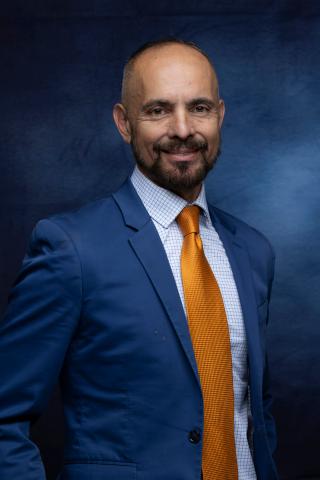
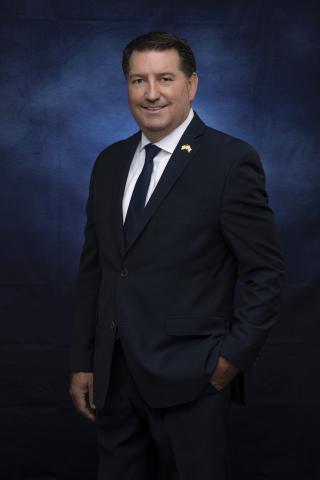
This measure would designate a specified portion of State Route 91 in the County of Orange as the Deputy David Piquette Memorial Highway. The measure would request that the Department of Transportation determine the cost of appropriate signs showing this special designation and, upon receiving donations from nonstate sources sufficient to cover the cost, to erect those signs.
Senate Resolution 135 is a commemorative measure that formally honors the 40th Infantry Division of the California National Guard for its more than century-long history of service. The resolution highlights the unit's contributions in major conflicts, including World War I, World War II, the Korean War, and post-9/11 operations, as well as its role in responding to natural disasters within California. It specifically acknowledges the division's Medal of Honor recipients and notes that Major General Laura L. Yeager became the first woman to command an infantry division in 2019. The bill directs the Secretary of the Senate to send copies of the resolution to the Adjutant General of California, the division commander, and the author for distribution.
The California Constitution provides that all property is taxable and requires that it be assessed at the same percentage of fair market value, unless otherwise provided by the California Constitution or federal law. The California Constitution and existing property tax law provide various exemptions from taxation, including, among others, a disabled veterans' exemption and a veterans' organization exemption. This bill would exempt from taxation, as provided, 50% of the full value of the property owned by, and that constitutes the principal place of residence of, a veteran, the veteran's spouse, or the veteran and the veteran's spouse jointly, if the veteran is 100% disabled. The bill would provide an unmarried surviving spouse a property exemption in the same amount that they would have been entitled to if the veteran were alive and if certain conditions are met. In the case of a disabled veteran or unmarried surviving spouse whose household income does not exceed a specified amount for the relevant assessment year, as prescribed, the bill would exempt 100% of the full value of the property from taxation. The bill would require certain documentation to be provided to the county assessor to receive the exemption and would prohibit any other real property tax exemption from being granted to the claimant if receiving the exemption provided by the provisions of this bill. The bill would make these exemptions applicable for property tax lien dates occurring on or after January 1, 2027, but occurring before January 1, 2032. By imposing additional duties on local tax officials, the bill would impose a state-mandated local program. Existing law requires any bill authorizing a new tax expenditure to contain, among other things, specific goals, purposes, and objectives that the tax expenditure will achieve, detailed performance indicators, and data collection requirements. This bill also would include additional information required for any bill authorizing a new tax expenditure. The California Constitution requires the state to reimburse local agencies and school districts for certain costs mandated by the state. Statutory provisions establish procedures for making that reimbursement. This bill would provide that, if the Commission on State Mandates determines that the bill contains costs mandated by the state, reimbursement for those costs shall be made pursuant to the statutory provisions noted above. Existing law requires the state to reimburse local agencies annually for certain property tax revenues lost as a result of any exemption or classification of property for purposes of ad valorem property taxation. This bill would provide that, notwithstanding those provisions, no appropriation is made and the state shall not reimburse local agencies for property tax revenues lost by them pursuant to the bill. This bill would take effect immediately as a tax levy.
The Small Business Procurement and Contract Act permits a state agency or the California State University to award a contract for goods, services, or information technology with an estimated value between $5,000 and $250,000 to a certified small business, including a microbusiness and a disabled veteran business enterprise, without complying with specified competitive bidding requirements. This bill would increase the maximum estimated value of a contract for services or information technology awarded pursuant to the act from $250,000 to $350,000. Commencing January 1, 2029, and biennially thereafter, the bill would require the Director of General Services to conduct a review of that maximum value, and would authorize the director to adjust that value to reflect changes in the California Consumer Price Index.
(1) Existing law requires the Wildlife Conservation Board to establish and administer, through the Department of Fish and Wildlife, the California Riparian Habitat Conservation Program with the purpose and goal of protecting, preserving, and restoring riparian habitats throughout the state, as specified. Existing law authorizes the board to authorize the department to award grants and loans for the purposes of the program to specified entities. This bill would authorize the board to authorize the department to make those awards to federally recognized tribes. (2) Existing law establishes the Inland Wetlands Conservation Program under the board with the purpose and goal of carrying out the programs of the Central Valley Habitat Joint Venture. Existing law authorizes the board to make grants or loans for the purpose of wetland and associated upland habitat acquisition, restoration, or enhancement to specified entities. This bill would authorize the board to make those grants or loans to federally recognized tribes. (3) Existing law authorizes the department to enter into contracts or other agreements with nonprofit conservation groups or resource conservation districts for the management and operation of department-managed lands. This bill would authorize the department to also enter into those contracts or other agreements with federally recognized tribes.
This measure would urge the United States Congress to act favorably in regard to legislation, Senate Bill 2195 and House of Representatives Bill 4901 to award the Congressional Gold Medal to the World War II members of the United States Army Nurse Corps and the United States Navy Nurse Corps.
This measure would urge the Congress and President of the United States to permit states to extend burial and memorial benefits in state cemeteries to Republic of Korea veterans who served in the Vietnam War and who subsequently became United States citizens.
California Senate Resolution 121 formally recognizes the Killed in Action flag as a symbol honoring military personnel who died in combat. The resolution encourages the voluntary display of this flag at state and local public buildings, schools, and private homes to express remembrance for fallen service members. It also suggests that Californians display the flag during specific observances such as Memorial Day, Veterans Day, and Independence Day. Finally, the bill directs the Secretary of the Senate to send copies of the resolution to the Governor, the Department of Veterans Affairs, and various veterans' service organizations.
This measure would designate a specified portion of State Highway Route 395 in the County of Mono as the Captain Vidar Anderson Memorial Highway. The measure would request that the Department of Transportation determine the cost of appropriate signs showing this special designation and, upon receiving donations from nonstate sources sufficient to cover the cost, to erect those signs.
Senate Resolution 120 establishes Filipino American History Month to recognize the long-standing contributions of Filipinos and Filipino Americans to California and the United States. The resolution highlights key historical events, including early immigration, service during World War II, and the significant role Filipino workers played in California's agricultural industry and labor rights movements. By documenting these achievements, the bill aims to honor the resilience and impact of this community throughout American history.