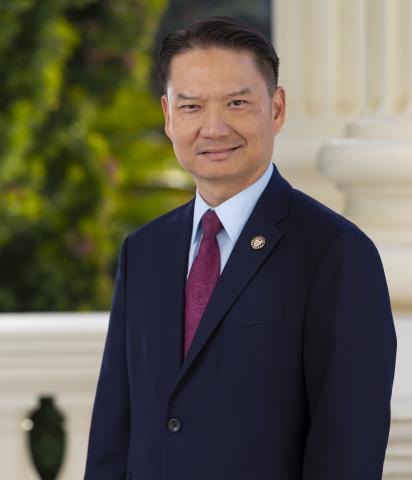
Existing law generally provides for the compensation of victims and derivative victims of specified types of crimes by the California Victim Compensation Board from the Restitution Fund, a continuously appropriated fund, for specified losses suffered as a result of those crimes. Existing law sets forth eligibility requirements and limits on the amount of compensation that the board may award, and requires the application for compensation to be verified under penalty of perjury. This bill would create a pilot program, the Trauma Healing and Resilience Investment for Victimized and Exposed Youth Act (T.H.R.I.V.E.) , to be administered by the State Department of Health Care Services, upon appropriation by the Legislature, for the administration of grants to the County of Los Angeles to establish and administer a program to pay for mental health and counseling services for youth survivors of gun violence, as defined, who request those services and who reside in that county. The bill would require policies and procedures for distributing funds to meet certain requirements, including, among other things, allowing youth survivors of gun violence, or their parents or guardians for survivors who are minors, to attest to their experiences of gun violence without requiring external documentation of the gun violence incident. The bill would create the Trauma Healing and Resilience Investment for Victimized and Exposed Youth Fund to be used by the department for the purposes of this program, upon appropriation by the Legislature. The bill would make client information and records of mental health services provided to these provisions confidential. The bill would make implementation of these provisions contingent upon appropriation by the Legislature. The bill would repeal these provisions on January 1, 2032. Existing constitutional provisions require that a statute that limits the right of access to the meetings of public bodies or the writings of public officials and agencies be adopted with findings demonstrating the interest protected by the limitation and the need for protecting that interest. This bill would make legislative findings to that effect.
Existing law establishes various healing arts boards within the Department of Consumer Affairs, including the Medical Board of California and the Dental Board of California, that license and regulate various healing arts licensees. Existing law, including the Medical Practice Act and the Dental Practice Act, deem certain violations by licensees to be unprofessional conduct subject to discipline by the licensee's licensing board. Existing law requires a physician and surgeon or dentist to refund to a patient any amount paid by the patient for services rendered that was subsequently paid to the physician and surgeon or dentist by a third-party payor and that constitutes a duplicate payment, as prescribed. Existing law requires that the above-described duplicate payment refund be paid, if requested by the patient, either within 30 days of that request or, if the duplicate payment has not been received, within 30 days of receipt of the duplicate payment by the physician and surgeon or dentist. Existing law requires, if the patient does not request a refund, a physician and surgeon or dentist who knows, or should have known, of the receipt of the duplicate payment to notify the patient, as prescribed, and to refund the payment within 30 days of that notification, except as specified. Existing law makes a violation of the above requirements unprofessional conduct subject to disciplinary proceedings as described above. This bill would reduce the duration for a physician and surgeon or dentist to refund a duplicate payment following patient request or patient notification to 21 days.
Existing law, the Speech-Language Pathologists and Audiologists and Hearing Aid Dispensers Licensure Act, until January 1, 2027, establishes the Speech-Language Pathology and Audiology and Hearing Aid Dispensers Board within the Department of Consumer Affairs for the licensure and regulation of speech-language pathologists, speech-language pathology aides, speech-language pathology assistants, audiologists, dispensing audiologists, and hearing aid dispensers. Existing law, until January 1, 2027, authorizes the board to appoint a person designated as the executive officer to perform duties delegated by the board and vested in them in the act. Existing law makes a violation of the act a misdemeanor. This bill would extend the operation of the board and authorization to appoint an executive officer until January 1, 2031. Existing law specifies that a person holds themselves out to the public as a speech-language pathologist or audiologist by using specified titles. This bill would specify a person also holds themselves out to the public as a speech-language pathologist or audiologist by using a business name with those titles. Existing law requires a supervising speech-language pathologist or supervising audiologist to submit to the board a description of the proposed professional responsibilities of an applicant who is issued a temporary license as a speech-language pathologist or audiologist, as applicable, working under their supervision. This bill would delete that requirement. Existing law requires a speech-language pathologist or audiologist supervising speech-language pathology or audiology aides to register with the board the name of each aide working under their supervision. This bill would prohibit a speech-language pathology or audiology aide from advertising or representing that they hold a license as a speech-language pathologist, speech-language pathology assistant, or audiologist. The bill would prohibit a speech-language pathology or audiology aide, a professional experience license holder, or a speech-language pathology assistant from being the sole proprietor of, or managing or independently operating, a business that engages in the practice of speech-language pathology or audiology. Existing law grants to the board the full authority to investigate and evaluate each applicant applying for a license to practice speech-language pathology or audiology, to determine the admission of the applicant to the examination, or to issue a license. Existing law requires the board to perform all examination functions, to determine the subject matter and scope of the examinations, and to keep recordings of any oral examination for at least 2 years. This bill would delete those provisions and would instead require an applicant to pass an examination approved by the board, which may be conducted by the board or by an organization specified by the board. Existing law requires the board to issue, suspend, and revoke licenses and approvals to practice speech-language pathology and audiology. This bill would also require the board to issue, suspend, and revoke registrations, and would make various provisions in the act applicable to registrants, including requiring registrants to pay a fee not to exceed $25 for issuance of a registration status. Existing law establishes requirements for licensure as a speech-language pathologist or audiologist, including possession of at least a master's degree in speech-language pathology or audiology from an educational institution approved by the board or qualifications deemed equivalent by the board. This bill would expand the list of degrees that would satisfy that requirement to include at least a master's degree in communication disorders, communication sciences and disorders, communicative disorders, or speech, language, or hearing sciences. Existing law, until January 1, 2027, deems a person who holds one of specified clinical competence certificates issued by certain entities to have met certain educational and experience requirements for licensure as a speech-language pathologist or audiologist, as specified. This bill would extend the operation of that provision until January 1, 2031. Existing law establishes continuing education requirements for licensees and requires continuing professional development services to be obtained from accredited institutions of higher learning or organizations approved as continuing education providers, as specified. This bill would revise the list of authorized continuing education providers to include organizations approved as continuing education providers by the California Academy of Audiology, the California Speech-Language-Hearing Association, or the American Medical Association, and continuing professional development services obtained by a federal, state, or local governmental entity. This bill would require the board, upon payment of a $75 fee, to issue a retired license to a licensed speech-language pathologist, speech-language pathology assistant, audiologist, hearing aid dispenser, or dispensing audiologist who holds a license that is current and active or a license that is inactive, and the license is not suspended, revoked, surrendered, or subject to disciplinary action, as specified, subject to satisfaction of specified requirements. Existing law authorizes the board to suspend, revoke, or impose terms and conditions upon the license of any licensee for specified acts, including violating or attempting to violate any provisions of the act. This bill would make those provisions applicable to registrants. Existing law authorizes a person whose license has been revoked or suspended, or who has been placed on probation, to petition the board for reinstatement or modification of penalty, as specified. This bill would make those provisions applicable to a person whose license has been surrendered, as specified. Existing law requires the board to adopt regulations, in collaboration with the State Department of Education, the Commission on Teacher Credentialing, and the Advisory Commission on Special Education, that set forth standards and requirements for the adequate supervision of speech-language pathology assistants, including minimum continuing professional development requirements. This bill would prohibit coursework from a master's degree that would qualify an applicant for licensure as a speech-language pathologist from being used, as specified, to satisfy those continuing professional development requirements. Existing law establishes educational requirements for applicants for approval as a speech-language pathology assistant, and specifies that a person who has successfully graduated from a board-approved bachelor's degree program in speech-language pathology or communication disorders is deemed to have satisfied those requirements. This bill would expand the list of degrees that would satisfy those requirements to include a bachelor's degree in communication disorders, speech-language and hearing sciences, communication sciences and disorders, or communicative disorders. Existing law prohibits provisions regulating hearing aid dispensers from being construed to limit the use of a speech aide or other personnel employed by a public school working under the supervision of a speech-language pathologist. This bill would specify that construction applies so long as the speech aide or other personnel is not performing the responsibilities, duties, and functions of a speech-language pathology assistant. This bill would prohibit a person who is not registered as a speech-language pathology assistant from using the title "SLP assistant" or the letters "SLPA," and would prohibit a speech-language pathology assistant from advertising or otherwise representing that they hold a license as a speech-language pathologist. Existing law authorizes hearing aids to be sold by catalog or direct mail, subject to satisfaction of specified requirements. The bill would authorize hearing aids to be sold online. Existing law makes it unlawful for an individual to engage in the practice of fitting or selling hearing aids without a license, except as specified. This bill would specify that some of those provisions apply to hearing aid dispensers instead of licensees, and would change some of those provisions so they apply to an address or addresses instead of a place of business. Relative to the regulation of hearing aid dispensers, existing law requires a licensee to apply for and procure a duplicate license if the licensee maintains more than one place of business, as specified. Existing law authorizes a hearing aid dispenser to engage on a temporary basis in the practice of fitting or selling hearing aids at the primary or branch location of another licensee's business without obtaining a duplicate license if certain requirements are satisfied. This bill would instead require a hearing aid dispenser engaged in the practice of fitting or selling hearing aids at more than one place of business to apply for and procure a branch office license, as specified. The bill would define "temporary basis" for purposes of the provisions described above. Existing law imposes certain restrictions and requirements on licensed hearing aid dispensers related to the scope of their duties, including prohibiting a licensed hearing aid dispenser from selling a hearing aid to a person 16 years of age or younger, except as specified, and exempts from those restrictions and requirements a licensed dispensing audiologist, as specified. This bill would expand the list of restrictions and requirements applicable to licensed hearing aid dispensers that licensed dispensing audiologists are exempt from to include, among other things, provisions prohibiting a licensed hearing aid dispenser from making or seeking referrals for testing, fitting, or dispensing of hearing aids in connection with the conduction of hearing screenings, as specified. Existing law establishes a fee of $100 for an initial temporary license, and a fee of $100 for renewal of a temporary license for hearing aid dispensers. This bill would instead establish that fee for an initial temporary or trainee licensee, and a fee of $100 for renewal of a trainee license. The bill would revise and recast certain provisions related to temporary licenses. The bill would also change some provisions related to hearing aid dispensers so they apply to an address or addresses instead of a place of business. Existing law provides for the licensure and regulation of dispensing audiologists by the board. This bill would revise and recast certain of those provisions and would require a dispensing audiologist to submit documentation to the board that they have satisfied specified continuing education requirements. The bill would provide that a dispensing audiologist license expires on its assigned renewal date, unless licensee applies to the board for renewal, as specified, and would establish requirements for the renewal of an expired license. The bill would specify that a suspended dispensing audiologist license is subject to expiration and shall be renewed, as provided, but renewal does not entitle the holder of the license to engaging in the fitting or selling of hearing aids until it is reinstated. The bill would specify that a license that has been revoked is subject to expiration and shall not be renewed, and would establish requirements for reinstatement. Existing law prohibits a licensed audiologist from selling hearing aids to a person 16 years of age or younger, except if specified conditions are satisfied. This bill would delete that provision. Existing law defines certain terms for the purposes of the Act, including, among others, "hearing aid dispenser" to mean a person engaged in the practice of fitting or selling hearing aids to an individual with impaired hearing. The bill would make other definitional, technical, and conforming changes, including defining "hearing aid dispenser" as a person who is issued a permanent license pursuant to these provisions, revising the definitions of "license" and "licensee." By imposing additional requirements and prohibitions on persons subject to the act, a violation of which is a crime, the bill would expand the scope of a crime thereby imposing a state-mandated local program. The California Constitution requires the state to reimburse local agencies and school districts for certain costs mandated by the state. Statutory provisions establish procedures for making that reimbursement. This bill would provide that no reimbursement is required by this act for a specified reason.
This bill proclaims September 2026 as Suicide Prevention Awareness Month in California to raise visibility for mental health resources and reduce stigma. The resolution highlights the severity of suicide as a public health issue, citing statistics on death rates and the increased risk faced by specific groups such as LGBTQIA+ youth and veterans. It encourages residents to openly discuss mental well-being and directs attention to existing support services like the 988 lifeline and local crisis centers.
Existing law requires that, as a condition of parole, a prisoner who has a severe mental health disorder be treated by the State Department of State Hospitals if the prisoner meets certain requirements, including, among others, that the severe mental health disorder was one of the causes of, or was an aggravating factor in, the commission of a specified crime for which the prisoner was sentenced to prison, and that prior to release on parole, the prisoner has been evaluated, as specified, and the chief psychiatrist of the Department of Corrections and Rehabilitation has certified that the prisoner has a severe mental health disorder, that the disorder is not in remission or cannot be kept in remission without treatment, that the severe mental health disorder was one of the causes or was an aggravating factor in the prisoner's criminal behavior, that the prisoner has been in treatment for the severe mental health disorder for 90 days or more within the year prior to the prisoner's parole release day, and that by reason of the prisoner's severe mental health disorder, the prisoner represents a substantial danger of physical harm to others. This bill would instead require the chief psychiatrist of the Department of Corrections and Rehabilitation to certify that the prisoner meets three of the following criteria: a severe mental health disorder, the disorder is not in remission or cannot be kept in remission without treatment, the severe mental health disorder was one of the causes or was an aggravating factor in the prisoner's criminal behavior, the prisoner has been in treatment for the severe mental health disorder for 90 days or more within the year prior to the prisoner's parole release day, and by reason of the prisoner's severe mental health disorder, the prisoner represents a substantial danger of physical harm to others. The bill would include sexual harassment and battery under physical harm.
(1) The Dental Practice Act establishes the Dental Board of California to license and regulate the practice of dentistry. Existing law requires the board to license and regulate dental auxiliaries, including, among others, dental assistants, as defined, and sets forth duties and functions that those dental auxiliaries are authorized to perform. Existing law requires an unlicensed dental assistant not enrolled in a board-approved program for registered dental assisting or an alternative dental assisting program to complete an infection control certification course, as specified. In this regard, existing law allows the unlicensed dental assistant to complete a board-approved 8-hour course, with 6 hours being didactic instruction and 2 hours being laboratory instruction, as specified. This bill would allow an unlicensed dental assistant to complete the Dental Assisting National Board's Infection Control examination instead of completing an infection control course. The bill would also revise the requirements for those infection control courses to allow an unlicensed dental assistant to complete one of specified courses approved by the board or a course with at least 4 hours of didactic instruction and at least 2 hours of laboratory instruction using video or a series of video training tools, as specified. Existing law makes the employer of a dental assistant responsible for ensuring that the dental assistant has successfully completed a board-approved 8-hour course in infection control before performing any basic supportive dental procedures involving potential exposure to blood, saliva, or other potentially infectious material. This bill would instead require the employer to ensure the dental assistant has successfully completed a course or examination in infection control, as described above, before performing those procedures. (2) Existing law establishes the Licensed Physicians from Mexico Program under which the Medical Board of California is required to issue a physician and surgeon's license to a licensed physician from Mexico who meets specific education, language, experience, and other requirements. Existing law limits the number of program applicants and the dates they may apply. This bill would make changes to those application deadlines, requiring applicants for the program to submit an application to the board between October 1, 2025, and July 1, 2026, and authorizing the board to accept up to 15 applications after July 1, 2026, and before January 1, 2028. (3) The Veterinary Medicine Practice Act establishes the California Veterinary Medical Board to license and regulate veterinarians, veterinarian technicians, and the practice of veterinary medicine. Under existing law, the board is composed of 9 members, of which 4 are licensed veterinarians, 2 are registered veterinary technicians, and 3 are public members. Existing law requires the Governor to appoint the 4 veterinarian members, one registered veterinary technician member, and one public member to the board. Under existing law, the Senate Committee on Rules and the Speaker of the Assembly each appoint a public member. The act also specifies the educational requirements, among other requirements, to become a registered veterinary technician. This bill would require the Governor to appoint the additional registered veterinary technician member to the board and would make nonsubstantive changes to provisions relating to the board. The bill would modify the educational requirements to become a registered veterinary technician to include education accredited by a California public school, as specified. (4) The Private Investigator Act provides for the licensure and regulation of private investigators by the Director of Consumer Affairs and requires an agreement to provide a service under the act to be in writing and contain, among other things, the approximate start and completion dates of the work to be provided. Under this bill, a master agreement for frequently contracted services over a specified period of time would be exempt from the above-described requirement to include the approximate start and completion dates of the work, if the agreement includes the beginning and termination dates. (5) This bill would declare that it is to take effect immediately as an urgency statute.
Tags
Licensing
This Senate Resolution designates the week of May 10 to May 16, 2026, as Hospital Week in California to honor the state's hospitals and their staff. The measure recognizes the vital role hospitals play in providing care, training medical professionals, and supporting the local economy across rural, suburban, and urban areas. By officially acknowledging these institutions, the resolution aims to highlight their importance during National Hospital Week without changing any laws or policies.
Existing law, the Knox-Keene Health Care Service Plan Act of 1975, provides for the licensure and regulation of health care service plans by the Department of Managed Health Care and makes a willful violation of the act's requirements a crime. Existing law provides for the regulation of health insurers by the Department of Insurance. Existing law requires health care service plans and health insurers, as specified, within 6 months after the relevant department issues specified guidance, or no later than March 1, 2025, to require all of their staff who are in direct contact with enrollees or insureds in the delivery of care or enrollee or insured services to complete evidence-based cultural competency training for the purpose of providing trans-inclusive health care for individuals who identify as transgender, gender diverse, or intersex. This bill would prohibit a subscriber, enrollee, policyholder, or insured from being excluded from enrollment or participation in, being denied the benefits of, or being subjected to discrimination by, any health care service plan or health insurer licensed in this state, on the basis of race, color, national origin, age, disability, or sex. The bill would define discrimination on the basis of sex for those purposes to include, among other things, sex characteristics, including intersex traits, pregnancy, and gender identity. The bill would prohibit a health care service plan or health insurer from taking specified actions relating to providing access to health programs and activities, including, but not limited to, denying or limiting health care services to an individual based upon the individual's sex assigned at birth, gender identity, or gender otherwise recorded. The bill would prohibit a health care service plan or health insurer, in specified circumstances, from taking various actions, including, but not limited to, denying, canceling, limiting, or refusing to issue or renew health care service plan enrollment, health insurance coverage, or other health-related coverage, or denying or limiting coverage of a claim, or imposing additional cost sharing or other limitations or restrictions on coverage, on the basis of race, color, national origin, sex, age, disability, as specified. Because a violation of the bill's requirements by a health care service plan would be a crime, the bill would impose a state-mandated local program. The California Constitution requires the state to reimburse local agencies and school districts for certain costs mandated by the state. Statutory provisions establish procedures for making that reimbursement. This bill would provide that no reimbursement is required by this act for a specified reason.
Existing law, the Knox-Keene Health Care Service Plan Act of 1975, provides for the licensure and regulation of health care service plans by the Department of Managed Health Care, and makes a willful violation of the act a crime. Existing law provides for the regulation of health insurers by the Department of Insurance. Existing law requires coverage by health care service plans and health insurers for various screening and treatment services with respect to cancer. This bill would require a large group health care service plan contract or health insurance policy that is issued, amended, or renewed on and after January 1, 2027, to provide coverage for scalp cooling, when prescribed by a health care provider to reduce the incidence or severity of alopecia before, during, or after chemotherapy in which alopecia-inducing chemotherapeutic agents are used. The bill would define scalp cooling for these purposes. Because a violation of these provisions with respect to a health care service plan would be a crime, this bill would impose a state-mandated local program. Existing law also provides for the Medi-Cal program, which is administered by the State Department of Health Care Services, under which qualified low-income individuals receive health care services pursuant to a schedule of benefits, including various cancer screenings and benefits relating to cancer treatment. Subject to the extent that federal financial participation is available and not otherwise jeopardized, and any necessary federal approvals have been obtained, this bill would expand the Medi-Cal schedule of benefits to include scalp cooling, when prescribed by a health care provider to reduce the incidence or severity of alopecia before, during, or after chemotherapy in which alopecia-inducing chemotherapeutic agents are used. The bill would subject scalp cooling to utilization controls and medical necessity. The California Constitution requires the state to reimburse local agencies and school districts for certain costs mandated by the state. Statutory provisions establish procedures for making that reimbursement. This bill would provide that no reimbursement is required by this act for a specified reason.
Existing law establishes the Medi-Cal program, which is administered by the State Department of Health Care Services and under which qualified low-income individuals receive health care services. The Medi-Cal program is, in part, governed and funded by federal Medicaid program provisions. Under existing law, to the extent that federal financial participation is available, federally qualified health center (FQHC) services and rural health clinic (RHC) services are covered Medi-Cal benefits. Under existing law, FQHCs and RHCs receive a per-visit prospective payment system (PPS) rate for each visit. Existing law provides different methods by which an FQHC or RHC may establish a PPS. This bill would authorize an FQHC or RHC that has multiple PPS rates to elect to consolidate those rates into a single PPS rate to be applied uniformly for all FQHC and RHC services.