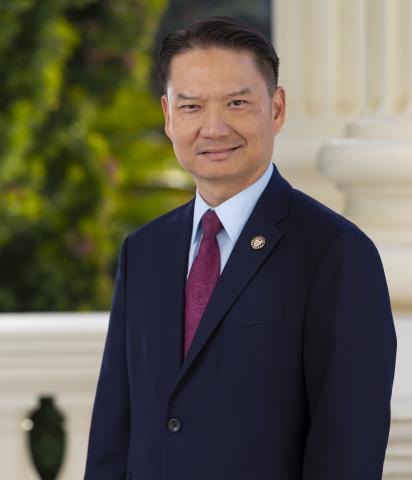
Existing law, the Medical Practice Act, establishes the Medical Board of California to license and regulate the practice of medicine. Existing law establishes within the act the Licensed Physicians from Mexico Program, which authorizes the board to issue a limited number of nonrenewable 3-year physician's and surgeon's licenses to physicians from Mexico who are licensed, certified, or recertified and in good standing in their medical specialty in Mexico and who meet specified other requirements. This bill would establish the Doctors from El Salvador Program for the purpose of permitting licensed physicians from El Salvador to practice medicine in California for up to 3 years. The bill would require the program to be developed in consultation with representatives from a community health clinic in California that has an established partnership and framework with specified universities in El Salvador and would require the program to, among other things, recruit and vet candidates and assist candidates for the program in El Salvador to meet all program requirements. The bill would require the board to issue a nonrenewable 3-year physician and surgeon's license to a person who is licensed, certified, or recertified, and in good standing in the applicable medical specialty in El Salvador and who meets other requirements of the program. This bill would require a licensee in the program to practice only in the nonprofit community health center that offered the licensee employment and the corresponding hospital. The bill would require a federally qualified health center employing a licensee in the program to take certain actions, including creating and maintaining medical quality assurance protocols for those licensees. The bill would also require the federally qualified health centers to work with a California medical school or residency program to conduct 10 secondary reviews of randomly selected patient encounters with each of those licensees every 6 months, as specified. The bill would also require the faculty from the medical school or residency program and federally qualified health center chief medical officers to jointly develop 2 quality assurance seminars to be attended by the licensees. This bill would require an evaluation of the program to be conducted 12 months after the program has commenced by one of specified universities in El Salvador and an unspecified medical school in southern California, except that if the evaluation does not begin within 18 months of commencement of the program, the bill would require the Director of Consumer Affairs to select an independent consultant to conduct the evaluation. The bill would require progress reports to be provided to the Legislature on achievable time intervals beginning in the 2nd year of implementation of the program. The bill would require the board to coordinate with the community health center, as specified, to ensure that the number of program participants that are issued a license does not exceed a certain number of licensees, based on the year in which the applicant applies. The bill would establish various fees to be deposited in the Contingent Fund of the Medical Board of California or the CURES Fund, as specified. This bill would make legislative findings and declarations as to the necessity of a special statute.
This Senate Resolution designates the week of May 10 to May 16, 2026, as Hospital Week in California to honor the state's hospitals and their staff. The measure recognizes the vital role hospitals play in providing care, training medical professionals, and supporting the local economy across rural, suburban, and urban areas. By officially acknowledging these institutions, the resolution aims to highlight their importance during National Hospital Week without changing any laws or policies.
This bill designates April 2026 as Parkinson's Disease Awareness Month in California. It directly affects state officials and the public by formally recognizing the importance of raising awareness for this specific health condition. The primary mechanism is a legislative proclamation that appears in the state statutes to mark the month. This action serves as an official acknowledgment of the disease without changing laws or funding.
This Senate Resolution designates May 2026 as Amyotrophic Lateral Sclerosis Awareness Month in California to highlight the challenges faced by individuals with ALS, also known as Lou Gehrig's disease. The measure calls on the public and government officials to support research funding, advocate for better access to medical equipment, and stand in solidarity with patients and their families. While the resolution does not change laws or allocate specific funds, it serves to raise awareness about the disease's impact and the need for continued clinical trials and treatment development.
Senate Resolution 103 designates the first full week in May 2026 as Tardive Dyskinesia Awareness Week in California. This proclamation aims to raise public and medical awareness about tardive dyskinesia, a movement disorder that can occur in people taking antipsychotic medications for mental health conditions. The resolution emphasizes the importance of early detection and routine screening for this condition, which affects a significant portion of patients who may be undiagnosed. By highlighting these issues, the bill encourages healthcare providers and patients to prioritize regular check-ups and education regarding the risks and symptoms associated with long-term antipsychotic use.
This measure would designate the week of March 15, 2026, to March 21, 2026, inclusive, as Family Physician Week, recognize the invaluable contributions of family physicians to California's health care system, and encourage continued investment in primary care to strengthen the family medicine workforce.
Senate Resolution 89 designates March 17, 2026, as Profound Autism Day in California to raise awareness for individuals with severe autism who require 24-hour care. The resolution highlights the historical context of autism classification and notes that current research and support systems often overlook those with the most intensive needs. By recognizing this specific day, the Senate aims to encourage increased research, improved services, and greater dignity for people living with profound autism.
This measure would designate February 28, 2026, as Rare Disease Day and, with respect to rare diseases and disorders, would recognize the importance of improving awareness, encouraging accurate and early diagnosis, and supporting national and global efforts to develop effective treatments, diagnostics, and cures.
Senate Resolution 79 designates the week of March 8 through March 14, 2026, as Sleep Health Awareness Week in California. This symbolic measure aims to highlight the importance of adequate sleep for public health and encourages healthcare providers, educators, and parents to promote better sleep habits. The resolution also supports the goals of the National Sleep Foundation's annual awareness campaign and calls on citizens to discuss their sleep with medical professionals.
This Senate Resolution designates March 2026 as Colorectal Cancer Awareness Month in California to promote education and early detection of the disease. The bill highlights the importance of screening, noting that timely tests can prevent colorectal cancer, which is a leading cause of death and disproportionately affects certain demographic groups. By officially recognizing this month, the Senate aims to encourage the public to learn about the risks and benefits of getting screened. The resolution also directs the Secretary of the Senate to send copies of the document to the sponsoring legislator for distribution.