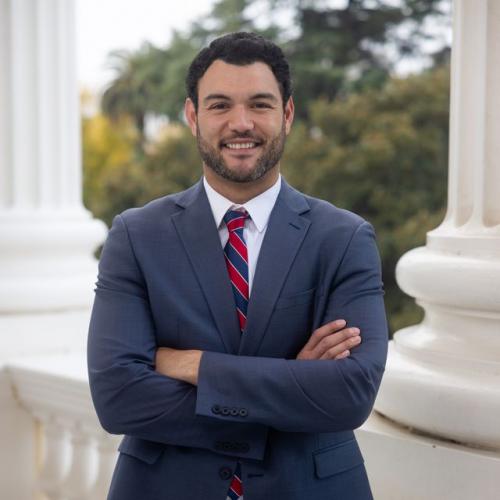
This measure would proclaim that the State of California celebrates the numerous contributions of public and private sector nuclear fusion organizations within California for advancing fusion energy research and development, applauds recent scientific advances in magnetic fusion energy and inertial confinement at public research facilities in San Diego and Livermore, recognizes the vast potential of fusion energy for addressing key climate and national security goals and the contributions of California's private fusion industry, commends the University of California's Office of the President for its leadership in establishing the Pacific CREST Fusion initiative, and supports developing the fusion energy ecosystem with the goal of siting a first-of-a-kind fusion pilot plant in California by the 2040s.
Existing law requires the Department of Forestry and Fire Protection to do certain things with respect to fire prevention, including organizing fire crews and patrols. This bill would require, upon appropriation by the Legislature, the Department of Forestry and Fire Protection, the Office of Emergency Services, and the Department of Toxic Substances Control, in consultation with specified entities, to form a workgroup related to exposure to toxic heavy metals after a wildfire. The bill would require the workgroup to do certain things, including establishing best practices and recommendations for wildfire-impacted communities, first responders, and other personnel engaged in wildfire response and cleanup to avoid exposure to heavy metals after a wildfire, including outreach. The bill would authorize the Department of Forestry and Fire Protection to contract with public universities, research institutions, and other technical experts to support the work of the workgroup. The bill would require the Department of Forestry and Fire Protection, the Office of Emergency Services, and the Department of Toxic Substances Control to report their findings to the Legislature not more than 3 years after the convening of the first meeting of the workgroup.
(1) The California Integrated Waste Management Act of 1989, which is administered by the Department of Resources Recycling and Recovery, establishes an integrated waste management program. The act requires each state agency to divert at least 50% of all solid waste through source reduction, recycling, and composting activities. "State agency" is defined, for purposes of these requirements, to include the California Community Colleges. The act requires each state agency to develop and adopt an integrated waste management plan to reduce solid waste, reuse materials whenever possible, recycle recyclable materials, and procure products with recycled content in all state agency offices and facilities, including any leased locations, as provided. The act requires each state agency to submit an annual report to the department summarizing its progress in reducing solid waste by at least 50%, as provided. This bill would require a state agency to include in its integrated waste management plan descriptions of actions to be taken to source reduce certain materials, as specified. The bill would require, on or before July 15, 2027, each state agency to submit an adopted integrated waste management plan to the department for review and approval, and would, on or before January 1, 2028, require the department to complete its review of the plans, as specified. The bill would require a state agency's annual report to include summaries of the state agency's compliance with the requirement to reduce solid waste by 50% and the requirements relating to the adoption of an integrated waste management plan. By imposing new duties on community colleges, the bill would impose a state-mandated local program. This bill would require the department to provide advice to help state agencies and facilities reduce solid waste by at least 50%. The bill would, on or before January 1, 2027, require the department to publish on its internet website a list of products available for purchase by state agencies that would reduce the overall amount of plastic or paper waste generated. (2) Existing law requires plastic beverage containers sold by a beverage manufacturer, as specified, to contain a specified average percentage of postconsumer recycled plastic. Between January 1, 2025, and December 31, 2029, inclusive, existing law requires that percentage to be no less than 25% postconsumer recycled plastic per year, and on and after January 1, 2030, no less than 50% postconsumer recycled plastic per year. This bill would require, on and after January 1, 2026, reportable purchases by state agencies of plastic beverage containers to be of plastic beverage containers with no less than those above-referenced percentages of postconsumer recycled plastic per year. (3) The California Constitution requires the state to reimburse local agencies and school districts for certain costs mandated by the state. Statutory provisions establish procedures for making that reimbursement. This bill would provide that, if the Commission on State Mandates determines that the bill contains costs mandated by the state, reimbursement for those costs shall be made pursuant to the statutory provisions noted above.
The California Beverage Container Recycling and Litter Reduction Act, a violation of which is a crime, requires a distributor of beverage containers, as defined, to pay to the Department of Resources Recycling and Recovery a monthly redemption payment for every beverage container sold or transferred, as provided. The act requires the department to deposit those amounts into the California Beverage Container Recycling Fund. The fund is continuously appropriated to, among other things, pay refund values and administrative fees to processors that receive empty beverage containers from recyclers. The act specifies that a beverage container that is a box, bladder, or pouch, or similar container, containing wine or distilled spirits has a redemption payment and refund value of $0.25. This bill would reduce the redemption payment and refund value for one of those wine or distilled spirit beverage containers, if it has a capacity of less than 24 fluid ounces, from $0.25 to $0.10, beginning January 1, 2026. By expanding the scope of a crime, the bill would impose a state-mandated local program. The California Constitution requires the state to reimburse local agencies and school districts for certain costs mandated by the state. Statutory provisions establish procedures for making that reimbursement. This bill would provide that no reimbursement is required by this act for a specified reason.
The California Environmental Quality Act (CEQA) requires a lead agency, as defined, to prepare, or cause to be prepared, and certify the completion of an environmental impact report (EIR) on a project that it proposes to carry out or approve that may have a significant effect on the environment or to adopt a negative declaration if it finds that the project will not have that effect. CEQA also requires a lead agency to prepare a mitigated negative declaration for a project that may have a significant effect on the environment if revisions in the project would avoid or mitigate that effect and there is no substantial evidence that the project, as revised, would have a significant effect on the environment. CEQA authorizes the preparation and certification of an EIR for a program, plan, policy, or ordinance, commonly known as a "program EIR," and requires a lead agency to examine later activities in the program in light of the program EIR to determine whether an additional environmental document is required to be prepared. This bill would require, on or before January 1, 2027, the State Board of Forestry and Fire Protection to update the California Vegetation Treatment Program Final Program Environmental Impact Report (FPEIR) to, among other things, expand the area that is treatable landscape under the FPEIR to portions of the state suitable for vegetation treatment consistent with the FPEIR, regardless of fire suppression responsibility designation, and recognize cultural burning conducted pursuant to a specified law as a covered treatment activity. The bill would authorize a public agency to partner with a federally recognized California Native American tribe to conduct a project under the FPEIR in the agency's jurisdiction.
Existing law, the California Emergency Services Act, authorizes the Governor to declare a state of emergency during conditions of disaster or extreme peril to persons or property. Existing law authorizes the Governor, during a state of emergency, to suspend any regulatory statute, or statute prescribing the procedure for conduct of state business, or the orders, rules, or regulations of any state agency, if the Governor determines and declares that strict compliance with any statute, order, rule, or regulation would in any way prevent, hinder, or delay the mitigation of the effects of the emergency. Under the authority of the California Emergency Services Act, on March 1, 2025, Governor Gavin Newsom issued a proclamation of a state of emergency that suspends applicable state statutes, rules, regulations, and requirements that fall within the jurisdiction of boards, departments, and offices within the California Environmental Protection Agency or the Natural Resources Agency to the extent necessary for expediting critical fuels reduction projects, as provided. The proclamation requires an individual or entity desiring to conduct a critical fuels reduction project to request the secretary of the appropriate agency to make a determination that the proposed project is eligible for the suspension and requires the California Environmental Protection Agency and the Natural Resources Agency to maintain on their respective internet website a list of all suspensions approved. This bill would, on or before January 31, 2026, require the California Environmental Protection Agency and the Natural Resources Agency to each report to the Legislature information on the implementation of the above-described proclamation of emergency, as provided. The California Environmental Quality Act (CEQA) requires a lead agency, as defined, to prepare, or cause to be prepared, and certify the completion of an environmental impact report on a project that it proposes to carry out or approve that may have a significant effect on the environment or to adopt a negative declaration if it finds that the project will not have that effect. CEQA also requires a lead agency to prepare a mitigated negative declaration for a project that may have a significant effect on the environment if revisions in the project would avoid or mitigate that effect and there is no substantial evidence that the project, as revised, would have a significant effect on the environment. CEQA exempts from its requirements certain projects. This bill would, until January 1, 2028, exempt from CEQA critical fuels reduction projects conducted in communities located in very high fire hazard severity zones, as provided. The bill would require the lead agency to hold a noticed public meeting to hear and respond to public comments before determining that a project is exempt and would require the lead agency to provide notice of the public meeting on its internet website at least 30 days before the public meeting. The bill would require the lead agency, if it determines that a project is not subject to CEQA and approves or carries out that project, to file a notice of exemption with the Office of Land Use and Climate Innovation and with the clerk of the county in which the project will be located. Because a lead agency would be required to determine whether a project qualifies for this exemption, the bill would impose a state-mandated local program. The California Constitution requires the state to reimburse local agencies and school districts for certain costs mandated by the state. Statutory provisions establish procedures for making that reimbursement. This bill would provide that no reimbursement is required by this act for a specified reason.
The California Urban Forestry Act of 1978 has a stated purpose of the promotion of the use of urban forest resources for the purpose of increasing integrated projects with multiple benefits in urban communities, including, but not limited to, the benefit of expanded urban forest canopy and community greening. This bill would also include school greening, as defined, as a benefit of the act. The act requires the Department of Forestry and Fire Protection to implement a program in urban forestry to encourage better tree management and planning in urban areas to increase integrated, multiple benefit projects by assisting urban areas with innovative solutions to problems including, among other things, improved capture of storm water and dry weather runoff, addressing water shortages. This bill would provide improving school greening as a problem to be addressed by the program. The act requires the department to complete a statewide strategic plan, as specified, and to submit the plan to the Legislature on or before June 30, 2025. This bill would require the plan to be submitted to the Legislature on or before June 30, 2026. The act requires the department to provide technical assistance to urban areas with respect to, among other things, improvement and enhancement of local water capture for urban forest maintenance, and requires the department to provide advice and guidance to cities, counties, districts, and other specified entities on, among other things, best practices and metrics for maintaining urban forest health. This bill would require the department to also provide technical assistance to urban areas with respect to improvement of public schools to create tree-shaded, natural school grounds, as specified, and to provide advice and guidance on use of trees in urban areas to promote community resilience and adaptation. The act authorizes the Director of Forestry and Fire Protection to make grants to provide assistance for specified projects, including, but not limited to, tree planting projects and other categories of projects recommended by the director, as provided. This bill would include, as part of that assistance, funding for school greening to optimize tree canopy cover and nature-based learning. The bill would authorize the director to authorize a negotiated indirect cost rate agreement within an approved project that is funded with state or federal dollars. The bill would also make conforming changes.
(1) The California Integrated Waste Management Act of 1989, administered by the Department of Resources Recycling and Recovery, generally regulates the disposal, management, and recycling of solid waste. The act establishes stewardship programs for various products, including, among others, carpet. The act includes a product stewardship for carpet program and a successor carpet producer responsibility program, and requires the product stewardship for carpet program to become inoperative upon the completion of certain conditions related to the implementation of the successor carpet producer responsibility program. Existing law, the product stewardship for carpet program, requires a manufacturer of carpets sold in this state, individually or through a carpet stewardship organization, to submit a carpet stewardship plan to the department, which is required to include specified elements, including achieving specified carpet recycling rates and a funding mechanism that provides sufficient funding to carry out the plan. Existing law authorizes the department to administratively impose a civil penalty of $10,000 per day on any person in violation of the program or $25,000 per day if the violation is intentional, knowing, or negligent, as specified. This bill would instead authorize the department to impose administrative, rather than civil, penalties in those amounts, and to impose an administrative penalty of $25,000 per day if the violation is intentional or knowing. Existing law requires a carpet stewardship organization to include nonvoting board members with representation from, among others, a retailer that sells carpet. This bill would instead require the stewardship organization to create a governing board for the stewardship program, as specified. Existing law requires a manufacturer of carpets sold in this state, individually or through a carpet stewardship organization, to submit to the department an annual report describing its activities to achieve the purposes of the program, as provided. Existing law authorizes a carpet stewardship organization to award grants and subsidies to incentivize the recycling of carpet materials that have the highest recyclability. This bill would require a carpet stewardship organization to include in its annual report specified information related to the grants and subsidies provided pursuant to the program, as specified. (2) Existing law, the successor carpet producer responsibility program, requires producers of covered products to form and join a single producer responsibility organization (PRO) for the collection and recycling of a covered product. Existing law defines a "covered product" as carpet, as defined, and requires the PRO to develop a producer responsibility plan for the collection, transportation, recycling, and the safe and proper management of covered products in the state. Existing law requires, no later than January 1, 2029, a person who removes a covered product as part of the installation of a covered product to transport, or contract to transport, all of the removed covered product to an approved collection site, as provided. Under existing law, an approved collection site is a solid waste facility that has agreed to be a collection site for the PRO. This bill would exempt a covered product from this transport requirement if certain conditions are met, including that it is returned to the producer. The bill would expand approved collection sites to include certain carpet recycling centers, municipal facilities, and retailers. Existing law requires the governing board of a PRO to include 4 nonvoting members, including, but not limited to, a nonvoting member representing a nonprofit organization established to promote a circular economy and to address environmental issues. Existing law requires the PRO to submit an annual report to the department on or before July 1 of each year, as provided. Existing law requires a producer to publish on its internet website, for each of its covered products, an environmental product declaration that identifies a covered product's components, as provided. This bill would instead require one voting and 5 nonvoting members, as specified. The bill would require the annual report to be submitted on or before September 1 of each year, instead of July 1 of each year. The bill would instead require a producer to publish on its internet website, for each of its covered products, the components that constitute more than 1% of the product's weight and any component that is a hazardous chemical, as specified. Existing law requires the PRO to submit to the department an annual report, as specified, and to make the report publicly available on the PRO's internet website. Existing law requires the PRO to provide annual grants to apprenticeship programs for training carpet installers in proper carpet recycling techniques, as provided. This bill would require the PRO to include in its annual report specified information related to the grants and incentive payments provided pursuant to the program, as specified. Existing law requires a producer responsibility plan, among other things, to explain how producers will use standardized stamping or some other means to provide a visual mark on the back of a covered product that is a synthetic material to allow expeditious sorting of the carpet, as provided. Existing law requires the department to adopt regulations to implement the program with an effective date no earlier than December 31, 2026. This bill would instead require a producer responsibility plan to explain how producers will use standardized stamping or some other means to provide a visual mark on the back of a covered product that provides the name of the producer, the date of manufacture, and a listing of the types of face fibers and backing materials contained in the product. The bill would instead require the department to adopt the regulations no later than December 31, 2026. Existing law requires a producer responsibility plan in effect as of January 1, 2025, to continue in effect, as provided, until it expires or is revoked, except that the PRO is required to submit an amendment to conform the producer responsibility plan to certain requirements. This bill would eliminate the requirement to submit an amendment to the producer responsibility plan.
Under existing law, the Department of Toxic Substances Control generally regulates the management and handling of hazardous waste and hazardous materials. Existing law authorizes certain entities to operate household hazardous waste collection facilities, as defined, under permits issued by the department. A violation of the hazardous waste control laws is a crime. This bill would, until January 1, 2029, require the department to evaluate opportunities to increase safety and convenience related to the management and disposal of vape pens confiscated from students by a school, as provided, and identify any recommendations that require future legislative action. The bill would authorize a household hazardous waste collection facility to conduct physical treatment activities involving the disassembly of household hazardous waste to separate batteries, valves, electronic components and other parts containing liquids or gases, including, but not limited to, the disassembly of vape pens, in a manner that does not result in the unauthorized release of hazardous materials. Existing law authorizes a public agency, or its contractor, to conduct a materials exchange program at a household hazardous waste collection facility to make reusable household hazardous products or materials available to recipients, as a part of its household hazardous waste collection program, if the public agency, or its contractor, complies with specified requirements. The bill would prohibit a public agency, or its contractor, from including vape pens in a materials exchange program. Because a violation of these provisions would be a crime, the bill would impose a state-mandated local program. The California Constitution requires the state to reimburse local agencies and school districts for certain costs mandated by the state. Statutory provisions establish procedures for making that reimbursement. This bill would provide that no reimbursement is required by this act for a specified reason.
The California Global Warming Solutions Act of 2006 establishes the State Air Resources Board as the state agency responsible for monitoring and regulating sources emitting greenhouse gases. The act authorizes the state board to include the use of market-based compliance mechanisms in regulating those emissions. The implementing regulations adopted by the state board provide for the direct allocation of greenhouse gas allowances to electrical corporations pursuant to a market-based compliance mechanism. Existing law vests the Public Utilities Commission (PUC) with regulatory authority over public utilities, including electrical corporations. Existing law requires the PUC to continue a program of assistance to low-income electric and gas customers with annual household incomes that are no greater than 200% of the federal poverty guidelines, as specified, which is referred to as the California Alternate Rates for Energy (CARE) program. Existing law also requires the PUC to continue a program of assistance to residential customers of the state's 3 largest electrical corporations consisting of households of 3 or more persons with total household annual gross income levels between 200% and 250% of the federal poverty guideline level, which is referred to as the Family Electric Rate Assistance (FERA) program. Existing law, except as provided, requires revenues received by an electrical corporation as a result of the direct allocation of greenhouse gas allowances to be credited directly to residential, small business, and emissions-intensive trade-exposed retail customers of the electrical corporation, commonly known as the California Climate Credit. This bill would exclude residential customers from receiving the California Climate Credit if they are not enrolled in the CARE or FERA program and their total electricity bills for the previous year were less than $300. Under existing law, a violation of the Public Utilities Act, or of an order, decision, rule, direction, demand, or requirement of the commission, is a crime. Because the provisions of this bill would be part of the Public Utilities Act, and a violation of a commission action implementing its requirements would be a crime, the bill would impose a state-mandated local program. The California Constitution requires the state to reimburse local agencies and school districts for certain costs mandated by the state. Statutory provisions establish procedures for making that reimbursement. This bill would provide that no reimbursement is required by this act for a specified reason.