Issue · Budget & Taxes

Budget & Taxes (Business Taxes)

Every budget & taxes bill, vote, and legislator stance in California, automatically classified by Maddy, our AI policy reader.

Total bills
6
2025-2026 Regular Session
Top supporter
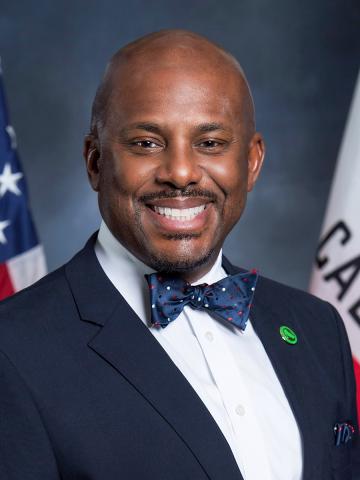
Mike Gipson
100% support rate
Top opponent
Carl DeMaio
0% support rate
Ranked legislators
10
5 support · 5 oppose
Key legislators

Who's moving business taxes in California

Legislators moving business taxes in California
Legislator Party Stance Support rate Decisive votes
Mike Gipson
Mike Gipson House · District 65
D
Strong +
100% 12
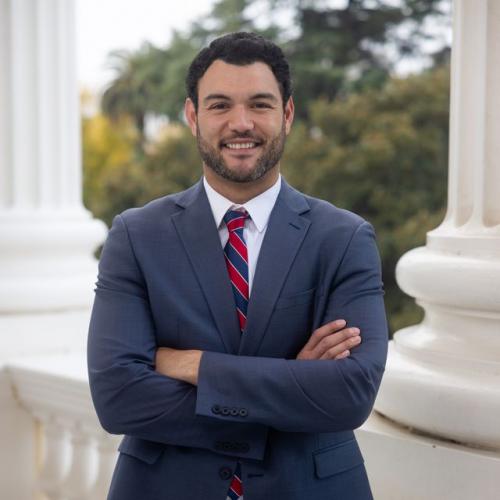
Sharon Quirk-Silva
Sharon Quirk-Silva House · District 67
D
Strong +
100% 12
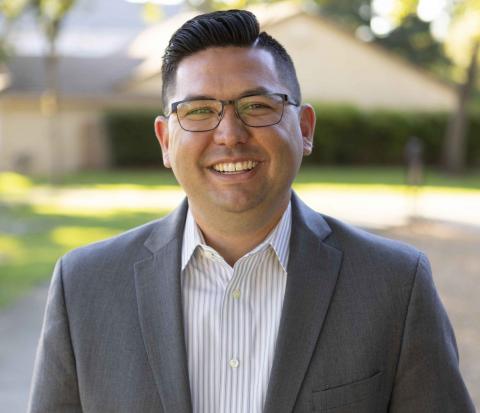
Tina McKinnor
Tina McKinnor House · District 61
D
Strong +
100% 12
Gail Pellerin
Gail Pellerin House · District 28
D
Strong +
100% 10
Jessica Caloza
Jessica Caloza House · District 52
D
Strong +
100% 10
Carl DeMaio
Carl DeMaio House · District 75
R
Strong −
0% 12
David Tangipa
David Tangipa House · District 8
R
Strong −
0% 9
Joshua Hoover
Joshua Hoover House · District 7
R
Strong −
0% 8
Kelly Seyarto
Kelly Seyarto Senate · District 32
R
Strong −
0% 8
Megan Dahle
Megan Dahle Senate · District 1
R
Strong −
0% 8
Showing 6 of 6 bills

All budget & taxes bills

in committee · California · Assembly Apr 27, 2026

AB 2673: Personal Income Tax Law: Corporation Tax Law: credit: childcare.

The Personal Income Tax Law and the Corporation Tax Law allow various credits against the taxes imposed by those laws. This bill would allow a credit against those taxes for each taxable year beginning on or after January 1, 2027, and before January 1, 2032, in an amount equal to 50% of qualified contributions to promote childcare, up to $100,000, as specified. Existing law requires any bill authorizing a new tax expenditure, as defined, to include tax credits, to contain, among other things, specific goals, purposes, and objectives that the tax credit will achieve, detailed performance indicators, and data collection requirements. This bill would include findings and reporting requirements in compliance with this requirement. This bill would take effect immediately as a tax levy.
in committee · California · Assembly Apr 27, 2026

AB 1611: Taxation: capital gains and losses: single-family rental homes.

The Personal Income Tax Law and the Corporation Tax Law, in modified conformity with federal income tax laws, exclude the recognition of any gain or loss on the exchange of property held for productive use in a trade or business or for investment, if that property is exchanged solely for property of a like kind that is to be held either for productive use in a trade or business or for investment, unless an exception applies. This bill would, under both the Personal Income Tax Law and Corporation Tax Law, prohibit the application of the above-described law to gain from the exchange of single-family residential rental real property, as defined, in this state if the taxpayer owns, as defined, 50 or more single-family residential rental real properties at the time of the sale. The bill would apply to exchanges completed on or after January 1, 2026, for purposes of taxable years commencing on or after January 1, 2026. This bill would include a change in state statute that would result in a taxpayer paying a higher tax within the meaning of Section 3 of Article XIIIA of the California Constitution, and thus would require for passage the approval of 23 of the membership of each house of the Legislature. This bill would take effect immediately as a tax levy.
failed · California · Assembly Feb 2, 2026

AB 814: Personal Income Tax Law: exclusions: law enforcement retirement.

The Personal Income Tax Law, in conformity with federal income tax law, generally defines "gross income" as income from whatever source derived, except as specifically excluded, and provides various exclusions from gross income. This bill, for taxable years beginning on or after January 1, 2025, and before January 1, 2030, would exclude from gross income qualified payments received by a taxpayer during the taxable year. The bill would define qualified payments to mean either amounts received from a pension plan the taxpayer is the beneficiary of based on services performed as a peace officer, as defined, or amounts received as the beneficiary of an annuity plan set up for the surviving spouse or dependent of a person that lost their life in services as a peace officer, as specified. Existing law requires any bill authorizing a new tax expenditure to contain, among other things, specific goals that the tax expenditure will achieve, detailed performance indicators, and data collection requirements. This bill also would include additional information required for any bill authorizing a new tax expenditure. The bill would require the Franchise Tax Board to provide any data requested by the Legislative Analyst's Office to write the report, as provided, and would make taxpayer information received by the Legislative Analyst's Office subject to specified law limiting the collection and use of that information, the violation of which is a crime. By expanding the scope of a crime, this bill would impose a state-mandated local program. The California Constitution requires the state to reimburse local agencies and school districts for certain costs mandated by the state. Statutory provisions establish procedures for making that reimbursement. This bill would provide that no reimbursement is required by this act for a specified reason. This bill would take effect immediately as a tax levy.
failed · California · Assembly Feb 2, 2026

AB 895: Personal Income Tax Law: Corporation Tax Law: credits: fast food restaurants.

The Personal Income Tax Law and the Corporation Tax Law allow various credits against the taxes imposed by those laws. This bill, for taxable years beginning on or after January 1, 2026, and before January 1, 2031, would allow a credit against those taxes to qualified taxpayers, defined to mean certain fast food restaurant franchisees or independent operators, in the amount of $12,000 per qualified fast food restaurant, as defined. Existing law requires any bill authorizing a new tax expenditure to contain, among other things, specific goals that the tax expenditure will achieve, detailed performance indicators, and data collection requirements. This bill also would include additional information required for any bill authorizing a new tax expenditure. This bill would take effect immediately as a tax levy.
failed · California · Assembly Feb 2, 2026

AB 386: Personal Income Tax Law: Corporation Tax Law: credits: student loan payments.

(1) The Personal Income Tax Law and the Corporation Tax Law allow various credits against the taxes imposed by those laws. This bill, for taxable years beginning on or after January 1, 2027, and before January 1, 2032, would allow a credit against those taxes to a qualified taxpayer for student loan payments, as defined, made by the qualified taxpayer on behalf of a qualified full-time employee, as defined, not to exceed $3,000 per employee during the taxable year. The bill would define qualified taxpayer for this purpose to mean a taxpayer whose employees do not perform jobs described by specified federal law. The bill would limit the aggregate amount of credits allocated to $25,000,000 per year, and would require the Franchise Tax Board, in coordination with the Student Aid Commission, to allocate the credit through tentative credit reservations, as described. (2) The Personal Income Tax Law, in modified conformity with federal income tax law, generally defines "gross income" as income from whatever source derived, except as specifically excluded, and provides various exclusions from gross income. This bill, for taxable years beginning on or after January 1, 2027, and before January 1, 2032, would provide an exclusion from gross income for student loan payments made by a qualifying employer, as defined, on behalf of a qualified taxpayer, as defined, that is a full-time employee. (3) Existing law requires a bill authorizing a new tax expenditure to contain, among other things, specific goals the tax expenditure will achieve, detailed performance indicators, and data collection requirements. This bill would include additional information required for any bill authorizing a new tax expenditure. (4) This bill would take effect immediately as a tax levy.
passed both · California · Senate Aug 28, 2026

SB 58: Air quality: standard: hydrogen sulfide.

Existing law generally designates the State Air Resources Board as the state agency with the primary responsibility for the control of vehicular air pollution, and designates air pollution control districts and air quality management districts with the primary responsibility for the control of air pollution from all sources other than vehicular sources. Existing law requires the state board to inventory sources of air pollution within the air basins of the state, determine the kinds and quantity of air pollutants, and monitor air pollutants in cooperation with districts and other agencies. Existing law requires the state board to adopt standards of ambient air quality for each air basin in consideration of the public health, safety, and welfare, including, but not limited to, health, illness, irritation to the senses, aesthetic value, interference with visibility, and effects on the economy. Existing law authorizes these standards to vary from one air basin to another. This bill would require the state board, in consultation with specified entities, to develop, as provided, a response framework that establishes best practices and guidance for addressing fugitive and natural sources of hydrogen sulfide gas and for community preparation and response to hydrogen sulfide exposure events originating from these sources. The bill would require the state board, in developing the response framework, to conduct at least 3 public workshops, including at least one located in the Tijuana River Valley region, at least one located in the Salton Sea region, and at least one selected in consultation with a community that has experienced significant hydrogen sulfide exposure. The bill would require the Office of Environmental Health Hazard Assessment to update the acute and chronic reference exposure levels for hydrogen sulfide and to develop additional health guidance values for hydrogen sulfide, if the need is identified by the state board, in consultation with the office, during development of the response framework.