Issue · Budget & Taxes

Budget & Taxes (Government Spending)

Every budget & taxes bill, vote, and legislator stance in California, automatically classified by Maddy, our AI policy reader.

Total bills
89
2025-2026 Regular Session
Top supporter
Juan Carrillo
100% support rate
Top opponent
Ali Macedo
0% support rate
Ranked legislators
10
5 support · 5 oppose
Key legislators

Who's moving government spending in California

Legislators moving government spending in California
Legislator Party Stance Support rate Votes
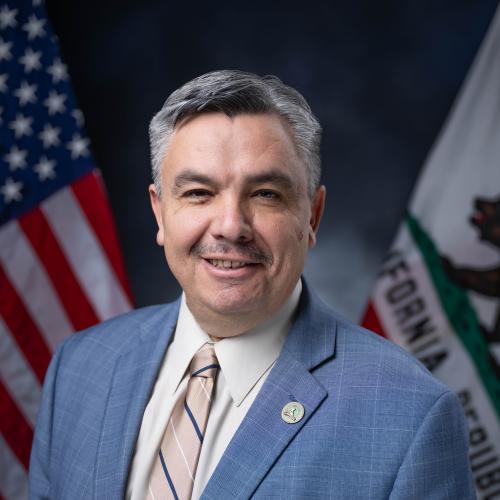
Juan Carrillo
Juan Carrillo House · District 39
D
Strong +
100% 13
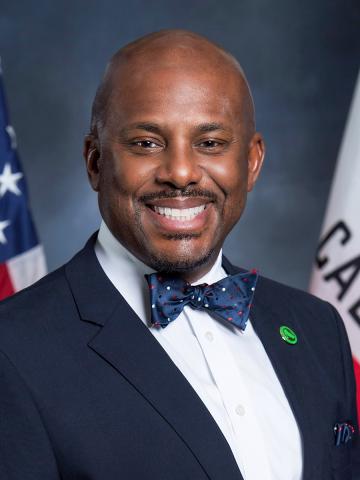
Mike Gipson
Mike Gipson House · District 65
D
Strong +
100% 12
Sharon Quirk-Silva
Sharon Quirk-Silva House · District 67
D
Strong +
100% 12
Tina McKinnor
Tina McKinnor House · District 61
D
Strong +
100% 12
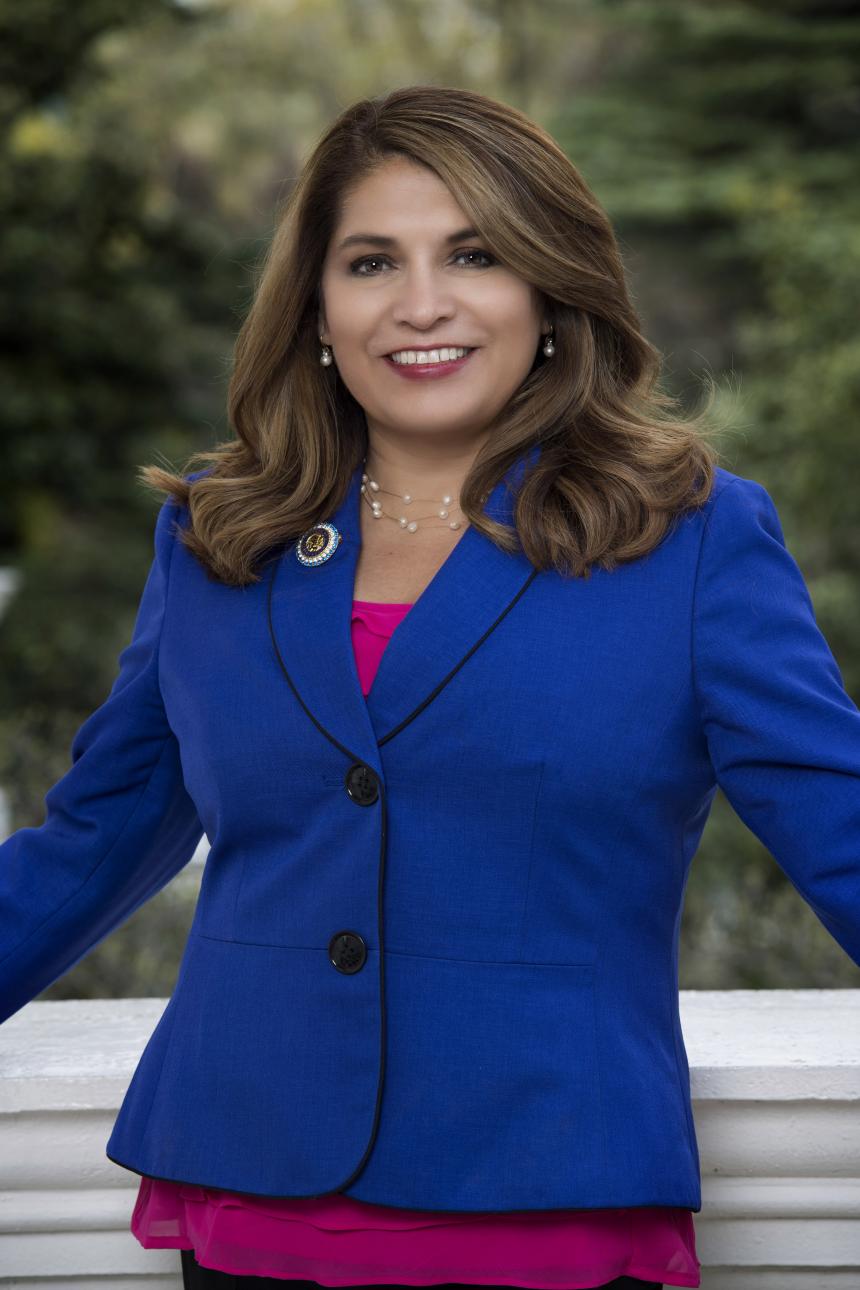
Blanca Pacheco
Blanca Pacheco House · District 64
D
Strong +
100% 10
Ali Macedo
Ali Macedo House · District 33
R
Strong −
0% 9
David Tangipa
David Tangipa House · District 8
R
Strong −
0% 9
Diane Dixon
Diane Dixon House · District 72
R
Strong −
0% 9
Joshua Hoover
Joshua Hoover House · District 7
R
Strong −
0% 9
Kelly Seyarto
Kelly Seyarto Senate · District 32
R
Strong −
0% 9
Showing 61–70 of 89 bills

All budget & taxes bills

failed · California · Assembly Jun 5, 2025

AB 1435: Personal Income Tax Law: Corporation Tax Law: credits: cleanup costs.

The Personal Income Tax Law and the Corporation Tax Law allow various credits against the taxes imposed by those laws. This bill, for taxable years beginning on or after January 1, 2026, and before January 1, 2031, would allow a credit against those taxes to a qualified taxpayer, as defined, for qualified cleanup expenses. The bill would define qualified cleanup expenses for this purpose to mean costs directly related to the one-time removal and disposal of unauthorized encampments, illegal dumping, and abandoned property, as provided. The bill would require a taxpayer to certify, under penalty of perjury, that the costs reflected in documentation are directly related to qualified cleanup expenses. The bill would make related findings. By expanding the crime of perjury, this bill would impose a state-mandated local program. Existing law requires any bill authorizing a new tax expenditure to contain, among other things, specific goals, purposes, and objectives that the tax expenditure will achieve, detailed performance indicators, and data collection requirements. This bill also would include additional information required for any bill authorizing a new tax expenditure. The California Constitution requires the state to reimburse local agencies and school districts for certain costs mandated by the state. Statutory provisions establish procedures for making that reimbursement. This bill would provide that no reimbursement is required by this act for a specified reason. This bill would take effect immediately as a tax levy.
passed both · California · Assembly Aug 25, 2026

AB 1265: Income taxes: credits: rehabilitation of certified historic structures.

The Personal Income Tax Law and the Corporation Tax Law allow a credit against the taxes imposed by those laws, for taxable years beginning on or after January 1, 2021, and before January 1, 2027, for rehabilitation of certified historic structures, as defined, and, under the Personal Income Tax Law, for a qualified residence, as defined. Existing law allows an increased credit of 25% of the qualified rehabilitation expenditures with respect to a certified historic structure meeting any of certain criteria, including a rehabilitated structure that includes affordable housing for lower income households. Existing law requires a taxpayer to receive an allocation from the California Tax Credit Allocation Committee (CTCAC) to be eligible for the credit. Existing law limits the aggregate amount of money that can be allocated for these credits per calendar year. Existing law requires, on an annual basis beginning January 1, 2021, until January 1, 2027, the Legislative Analyst to collaborate with the CTCAC and the State Office of Historic Preservation to review the effectiveness of these tax credits, as described. This bill would require the Legislative Analyst to submit a review of the effectiveness of the tax credits for taxable years beginning on or after January 1, 2025, and before January 1, 2027, to the Legislature, as specified. This bill, for taxable years beginning on or after January 1, 2027, and before January 1, 2032, would enact a similar credit against the taxes imposed by the Personal Income Tax Law and the Corporation Tax Law for the rehabilitation of certified historic structures, as provided. The bill, for tax credits allocated for those taxable years, would remove the above-described increased credit of 25% and would remove the credit for a qualified residence. The bill would also remove the limit on the amount of money that can be allocated per calendar year, and would instead require the limit to be set by the Legislature in the annual Budget Act or another measure. The bill would provide additional requirements relating to the manner in which the credits are allocated. Existing law requires any bill authorizing a new tax expenditure, as defined, to include exclusions from income, to contain, among other things, specific goals, purposes, and objectives that the tax credit will achieve, detailed performance indicators, and data collection requirements. This bill would include findings and reporting requirements in compliance with this requirement. This bill would take effect immediately as a tax levy.
passed both · California · Senate Aug 28, 2026

SB 661: Airports: financial assistance.

The State Aeronautics Act establishes the Aeronautics Account in the State Transportation Fund, and continuously appropriates the moneys in the account for expenditure for airport purposes by the Division of Aeronautics within the Department of Transportation and the California Transportation Commission. Existing sales and use tax laws impose taxes on retailers measured by the gross receipts from the sale of tangible personal property sold at retail in this state, or on the storage, use, or other consumption in this state of tangible personal property purchased from a retailer for storage, use, or other consumption in this state, including taxes imposed on the sale, storage, use, or other consumption of jet fuels. Existing law requires revenues from these taxes to be transmitted to the Treasurer and deposited into the Retail Sales Tax Fund. Existing federal law requires that any revenue from sales and use taxes imposed on aviation fuel be used for the operation costs of airports, the local airport system, or other local facilities that are directly and substantially related to the air transportation of passengers or property, except as provided. This bill would require the Controller, on or before September 1 of each year, to transfer an amount calculated to represent the sales and use tax revenues derived with respect to the sale, storage, use, or other consumption of jet fuel, as provided, from the Retail Sales Tax Fund to the account for allocation to airports and aviation-related purposes, as provided. The bill would require all public and private use airports where jet fuel is sold or consumed to report fuel flowage statistics to the Division of Aeronautics, as provided, and would require the division to determine the revenue allocation for each airport that reports fuel flowage statistics. By adding new reporting requirements for county-owned and city-owned airports, the bill would impose a state-mandated local program. From the above-described sales and use tax revenues deposited into the account, this bill would require the division, after deducting its administrative costs, as provided, to allocate 75% of those revenues to public and private use airports based on their reported fuel flowage statistics, as provided, 15% of those revenues for general aviation airports, as provided, 1% to award grants for aviation education, as provided, and 9% for existing grant programs that serve nonhub and small hub airports. From the above-described 75% of revenues deposited into the account, the bill would apportion, until January 1, 2032, $500,000 annually to award grants to rural, nonhub commercial airports and general aviation airports, as provided. By increasing the sources of funding for and expanding the purposes for which money may be used from a continuously appropriated fund, the Aeronautics Account, this bill would make an appropriation. The California Constitution requires the state to reimburse local agencies and school districts for certain costs mandated by the state. Statutory provisions establish procedures for making that reimbursement. This bill would provide that, if the Commission on State Mandates determines that the bill contains costs mandated by the state, reimbursement for those costs shall be made pursuant to the statutory provisions noted above.
passed · California · Senate Jul 15, 2025

SB 56: Property taxation: disabled veterans' exemption: household income.

The California Constitution provides that all property is taxable, and requires that it be assessed at the same percentage of fair market value, unless otherwise provided by the California Constitution or federal law. The California Constitution and existing property tax law provide various exemptions from taxation, including, among others, a disabled veterans' exemption. Under existing law, the disabled veterans' exemption exempts from taxation part of the full value of property that constitutes the principal place of residence of a veteran, the veteran's spouse, or the veteran and veteran's spouse jointly, and the unmarried surviving spouse of a veteran, as provided, if the veteran incurred specified injuries or died while on active duty in military service, as described. Existing law exempts that part of the full value of the residence that does not exceed $100,000, or $150,000 if the household income of the claimant does not exceed $40,000, as adjusted for inflation, as specified. This bill would, until January 1, 2036, exclude service-connected disability payments from the definition of "household income" for purposes of the disabled veterans' exemption. The bill would also correct an erroneous cross-reference in the above-described provisions. By imposing additional duties on local tax officials, the bill would impose a state-mandated local program. Existing law requires any bill authorizing a new tax expenditure to contain, among other things, specific goals, purposes, and objectives that the tax expenditure will achieve, detailed performance indicators, and data collection requirements. This bill would include additional information required for any bill authorizing a new tax expenditure. The California Constitution requires the state to reimburse local agencies and school districts for certain costs mandated by the state. Statutory provisions establish procedures for making that reimbursement. This bill would provide that, if the Commission on State Mandates determines that the bill contains costs mandated by the state, reimbursement for those costs shall be made pursuant to the statutory provisions noted above. Existing law requires the state to reimburse local agencies annually for certain property tax revenues lost as a result of any exemption or classification of property for purposes of ad valorem property taxation. This bill would provide that, notwithstanding those provisions, no appropriation is made and the state shall not reimburse local agencies for property tax revenues lost by them pursuant to the bill. This bill would take effect immediately as a tax levy.
passed both · California · Senate Aug 27, 2026

SB 296: Property taxation: exemption: disabled veteran homeowners.

The California Constitution provides that all property is taxable and requires that it be assessed at the same percentage of fair market value, unless otherwise provided by the California Constitution or federal law. The California Constitution and existing property tax law provide various exemptions from taxation, including, among others, a disabled veterans' exemption and a veterans' organization exemption. This bill would exempt from taxation, as provided, 50% of that part of the full value of the property that does not exceed $1,000,000 that is owned by, and that constitutes the principal place of residence of, a veteran, the veteran's spouse, or the veteran and the veteran's spouse jointly, if, among other things, the veteran is 100% disabled. The bill would provide an unmarried surviving spouse a property exemption in the same amount that they would have been entitled to if the veteran were alive and if certain conditions are met. In the case of a disabled veteran or unmarried surviving spouse whose household income does not exceed a specified amount for the relevant assessment year, as prescribed, the bill would exempt 100% of that part of the full value of the property that does not exceed $1,000,000 from taxation. The bill would require certain documentation to be provided to the county assessor to receive the exemption and would prohibit any other real property tax exemption from being granted to the claimant if receiving the exemption provided by the provisions of this bill. The bill would make these exemptions applicable for property tax lien dates occurring on or after January 1, 2027, but occurring before January 1, 2032. By imposing additional duties on local tax officials, the bill would impose a state-mandated local program. Existing law requires any bill authorizing a new tax expenditure to contain, among other things, specific goals, purposes, and objectives that the tax expenditure will achieve, detailed performance indicators, and data collection requirements. This bill also would include additional information required for any bill authorizing a new tax expenditure. The California Constitution requires the state to reimburse local agencies and school districts for certain costs mandated by the state. Statutory provisions establish procedures for making that reimbursement. This bill would provide that, if the Commission on State Mandates determines that the bill contains costs mandated by the state, reimbursement for those costs shall be made pursuant to the statutory provisions noted above. Existing law requires the state to reimburse local agencies annually for certain property tax revenues lost as a result of any exemption or classification of property for purposes of ad valorem property taxation. This bill would provide that, notwithstanding those provisions, no appropriation is made and the state shall not reimburse local agencies for property tax revenues lost by them pursuant to the bill. This bill would take effect immediately as a tax levy.
passed · California · Assembly Jun 18, 2025

AB 97: Personal Income Tax Law: Corporation Tax Law: Bobcat Fire: exclusions.

The Personal Income Tax Law and the Corporation Tax Law, in conformity with federal income tax law, generally define "gross income" as income from whatever source derived, except as specifically excluded, and provides various exclusions from gross income. This bill, for taxable years beginning on or after January 1, 2024, and before January 1, 2029, would provide an exclusion from gross income for any qualified taxpayer, as defined, for amounts received in settlement for costs and losses associated with the 2020 Bobcat Fire in the County of Los Angeles, as provided. Existing law requires a bill authorizing a new tax expenditure to contain, among other things, specific goals, purposes, and objectives the tax expenditure will achieve, detailed performance indicators, and data collection requirements. This bill would include additional information required for any bill authorizing a new tax expenditure. This bill would make findings and declarations related to a gift of public funds. This bill would declare that it is to take effect immediately as an urgency statute.
Sub-Topics Government Spending
failed · California · Assembly Feb 2, 2026

AB 547: Personal Income Tax Law: credits: in vitro fertilization.

The Personal Income Tax Law allows various credits against the taxes imposed by that law. This bill, for each taxable year beginning on or after January 1, 2026, and before January 1, 2031, would allow a credit against the taxes imposed under that law to a qualified taxpayer, as defined, for the qualified expenses of in vitro fertilization, as defined, not to exceed $5,000 paid or incurred during the taxable year. Existing law requires any bill authorizing a new tax expenditure to contain, among other things, specific goals that the tax expenditure will achieve, detailed performance indicators, and data collection requirements. This bill also would include additional information required for any bill authorizing a new tax expenditure. This bill would take effect immediately as a tax levy.
failed · California · Assembly Feb 2, 2026

AB 984: Personal income taxes: deductions: CalABLE contributions.

Existing federal law, the Stephen Beck, Jr., Achieving a Better Life Experience Act of 2014 (ABLE Act) , encourages and assists individuals and families to save private funds for the purpose of supporting eligible individuals with disabilities to maintain their health, independence, and quality of life by excluding from gross income distributions used for qualified disability expenses by a beneficiary of a qualified ABLE program established and maintained by a state, as specified. Existing law establishes in this state the Qualified ABLE Program, administered by the California ABLE Act Board, for purposes of implementing the federal ABLE Act. Existing law, the Personal Income Tax Law and the Corporation Tax Law, for taxable years beginning on or after January 1, 2016, conforms to the exclusions from gross income provided under federal income tax law provisions relating to the ABLE Act, as those exclusions read in the federal Consolidated Appropriations Act, 2023. The Personal Income Tax Law, in modified conformity with federal income tax laws, allows various deductions from gross income in computing adjusted gross income under that law, including deductions for payments to individual retirement accounts, alimony payments, and interest on educational loans. This bill, for each taxable year beginning on or after January 1, 2026, and before January 1, 2031, would allow a deduction under the Personal Income Tax Law in computing adjusted gross income in an amount equal to the amount contributed by specified taxpayers during the taxable year to a CalABLE account. Existing law requires a bill authorizing a new tax expenditure to contain, among other things, specific goals the tax expenditure will achieve, detailed performance indicators, and data collection requirements. This bill would include additional information required for any bill authorizing a new tax expenditure. This bill would take effect immediately as a tax levy.
Sub-Topics Government Spending
failed · California · Assembly Feb 2, 2026

AB 231: Income and corporation taxes: credits: work opportunity credit.

The Personal Income Tax Law and the Corporation Tax Law allow various credits against the taxes imposed by those laws. This bill, for taxable years beginning on or after January 1, 2026, and before January 1, 2031, would allow a credit against those taxes to a qualified taxpayer in an amount equal to 40% of the qualified wages paid or incurred to a qualified employee employed during the taxable year. The bill would define a qualified employee for this purpose to mean an individual that, among other things, has been convicted of a felony, as provided, and has a hiring date not more than one year after the date the individual was convicted or was released from prison. Existing law requires any bill authorizing a new tax expenditure to contain, among other things, specific goals that the tax expenditure will achieve, detailed performance indicators, and data collection requirements. This bill would include additional information required for any bill authorizing a new income tax expenditure. This bill would take effect immediately as a tax levy.
passed · California · Assembly Aug 13, 2026

AB 53: Native American tribes: fish and wildlife: conservation and mitigation lands.

(1) Existing law requires the Wildlife Conservation Board to establish and administer, through the Department of Fish and Wildlife, the California Riparian Habitat Conservation Program with the purpose and goal of protecting, preserving, and restoring riparian habitats throughout the state, as specified. Existing law authorizes the board to authorize the department to award grants and loans for the purposes of the program to specified entities. This bill would authorize the board to authorize the department to make those awards to federally recognized tribes. (2) Existing law establishes the Inland Wetlands Conservation Program under the board with the purpose and goal of carrying out the programs of the Central Valley Habitat Joint Venture. Existing law authorizes the board to make grants or loans for the purpose of wetland and associated upland habitat acquisition, restoration, or enhancement to specified entities. This bill would authorize the board to make those grants or loans to federally recognized tribes. (3) Existing law authorizes the department to enter into contracts or other agreements with nonprofit conservation groups or resource conservation districts for the management and operation of department-managed lands. This bill would authorize the department to also enter into those contracts or other agreements with federally recognized tribes.
Sub-Topics Government Spending
Showing 61 to 70 of 89 bills
Previous 1 6 7 8 9 Next