

Maddy summarySenate Bill 9, known as the "Make Arkansas Healthy Again Act," prohibits the manufacturing, selling, delivering, distributing, holding, or offering for sale of food products that contain certain unspecified substances within Arkansas. This legislation directly affects food manufacturers, distributors, and retailers operating in the state. An amendment to the bill changed the effective date of these prohibitions from January 1, 2027, to January 1, 2028. (The specific "certain substances" are not detailed in the provided text.)
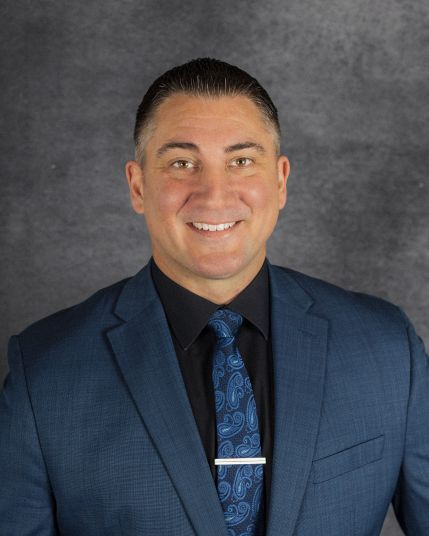
Sen. Clint Penzo
Sponsored bills
Maddy summarySB 402, now Act 725, prohibits public school districts and educational service cooperatives from requiring or taking certain actions related to employee organizations and professional associations. The specific actions that are prohibited are not detailed in the provided bill text, which is an amendment. This amendment primarily expanded the scope of the bill to include educational service cooperatives in addition to public school districts.
Maddy summarySB 467 modifies the definition of "healthcare provider" as it relates to student athlete concussion education. The bill expands this definition to specifically include chiropractors and chiropractic physicians. This means that these professionals are now recognized alongside other healthcare providers, such as physicians and athletic trainers, concerning concussion education for student athletes in Arkansas.
Maddy summarySenate Bill 599, now Act 744, aims to eliminate interlocutory decrees of adoption and amend the Revised Uniform Adoption Act in Arkansas. This bill directly affects individuals and families involved in the adoption process by changing the legal procedures. While the bill's intent is to streamline the adoption framework, the provided text does not detail the specific mechanisms or provisions for how these changes are implemented within the act.
Maddy summarySenate Bill 311, known as the End Organ and Genomic Harvesting Act, introduces restrictions on genetic technologies and organ transplant coverage in Arkansas related to "foreign adversaries." Starting October 1, 2025, medical and research facilities are prohibited from acquiring new genetic sequencers or analysis technologies from foreign adversaries and must store genetic sequencing data outside of these countries. Facilities are also required to annually report on their ongoing use of existing foreign adversary equipment. Additionally, health benefit plans in the state will not cover certain human organ transplants or post-transplant care if linked to foreign adversaries, though care to save a life after a prohibited transplant remains covered. This act primarily affects medical and research facilities, healthcare insurers, and individuals receiving related medical services.
Maddy summaryHouse Bill 1529 creates a new criminal offense and a civil cause of action related to "deepfake visual material." It makes it illegal to unlawfully create or distribute such material, directly affecting individuals involved in these actions. Additionally, the bill allows individuals who are victims of unlawfully created deepfake visual material to file a lawsuit to seek compensation. This legislation provides both criminal penalties and a civil remedy for the misuse of deepfake technology.
Maddy summaryHouse Bill 1185, now Act 799, adopts the Dietitian Licensure Compact within Arkansas. This legislation allows licensed dietitians from Arkansas and other compact member states to practice in each other's jurisdictions without needing to obtain a separate license in each state. This aims to streamline the licensing process for dietitians and expand access to their services across state lines.
Maddy summaryHB 1853 amends Arkansas law concerning the duties of licensed real estate agents to their clients. It specifically clarifies the obligations that apply in a "dual agency" situation, where a single agent represents both the buyer and the seller in a real estate transaction. Under this bill, clients who consent to dual agency may now contractually waive the agent's primary duty of absolute fidelity. The bill also allows for the contractual limitation of an agent's duty to keep client information confidential in a dual agency relationship, unless disclosure is legally required or authorized by the client. This impacts real estate licensees and their clients by defining the scope of agency duties when an agent works with multiple parties in a single transaction.
Maddy summaryHB 1918 amends state law concerning legal tender, providing new options for financial transactions. It authorizes the establishment of a bullion depository, a facility designed to securely store precious metals such as gold and silver. Additionally, the bill permits the creation of an electronic system where digital transactions are backed by these stored precious metals. This offers individuals and businesses alternative methods for holding and exchanging value.
Maddy summaryHouse Bill 1336, as amended, sets a specific fee for obtaining copies of basic accident reports. It establishes that individuals directly involved in an accident will be charged ten dollars ($10.00) for a copy of their basic accident report. This bill primarily affects those who need to obtain a copy of an accident report in which they were involved.