

Maddy summarySB 409 prohibits financial services providers from refusing to do business with or terminating relationships with agricultural producers solely based on their status as such. It defines "agricultural producer" to include those growing crops, raising animals, or producing livestock/dairy products. The bill requires Arkansas' Treasurer to publish a list of financial providers found to discriminate against agricultural producers, after giving them 45 days' notice and a 30-day window to prove they are not discriminating. This list will be posted online, with the process involving an ESG Oversight Committee and requiring agricultural producers to consent to sharing financial data if they report discrimination.
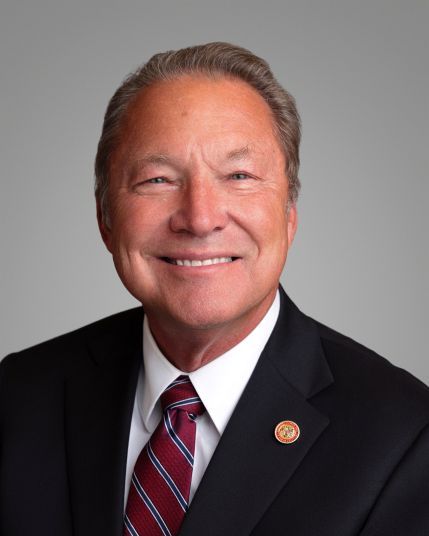
Rep. Roger Lynch
Sponsored bills
Maddy summarySB 317 prohibits Arkansas public institutions of higher education from engaging in specific activities with "prohibited foreign parties." It directly affects universities and colleges receiving state funding by banning them from conducting agricultural research under contract or selling agricultural products (including seeds) with such entities. The bill defines "prohibited foreign parties" but does not specify which entities qualify. This policy change restricts certain financial and research transactions between Arkansas colleges and designated foreign entities, without altering broader academic collaboration rules. The bill passed as Act 351 on March 20, 2025.
Maddy summarySB 307, now Act 373, creates the "Generating Arkansas Jobs Act of 2025" to support energy infrastructure investments. It requires the Arkansas Public Service Commission to consider strategic investments in natural gas and electric generation when setting utility rates, allowing companies to recover costs for approved projects. The bill mandates refunds to customers for imprudently incurred costs and sets new requirements for utility infrastructure projects to ensure grid reliability during extreme weather. It directly affects investor-owned electric and natural gas utilities operating in Arkansas by changing how they recover infrastructure costs through rate cases. The legislation declares an emergency to expedite these energy infrastructure developments.
Maddy summaryThis bill adds nitrogen gas as an additional method of execution for individuals sentenced to death in Arkansas, alongside the existing lethal injection option. It requires prison officials to notify death row inmates of the chosen execution method (nitrogen gas or lethal injection) at least seven days in advance. The bill also includes confidentiality provisions preventing public disclosure of execution protocols, drug sources, and personnel involved under Arkansas' public records laws. This change applies to all future capital punishment cases in Arkansas, following its passage into law as Act 302.
Maddy summaryHB 1319, which was withdrawn by its author on March 17, 2025, would have created a state sales tax exemption for disabled veterans, their unremarried spouses, and surviving spouses of disabled veterans in Arkansas. The bill would have allowed these individuals to exclude up to $5,000 annually in sales tax on tangible personal property and certain digital products purchased at physical stores within the state. To claim the exemption, veterans would have needed an identification card from the Arkansas Department of Veterans Affairs, while surviving spouses would have required certification from the U.S. Department of Veterans Affairs. The exemption would not apply to local sales taxes or the compensating use tax.
Maddy summaryHB 1279 amends Arkansas' 1969 Egg Marketing Act to allow grocery stores and other retailers to repackage eggs (e.g., repackaging bulk cartons into smaller portions) if they meet specific criteria. This directly affects egg retailers by changing packaging rules that previously restricted such activity. The key provision permits repackaging under defined conditions, streamlining operations for retailers without requiring new egg production. The bill became law as Act 285 on March 12, 2025, after passing through the legislative process.
Maddy summaryHB 1049 (now Act 238) amends Arkansas criminal law to establish a new offense for "unlawful squattering." The bill makes it a criminal violation for a person to occupy property without the owner's permission, specifically targeting individuals who enter or remain on property after being asked to leave. This directly affects individuals occupying vacant or abandoned properties without legal right, such as vacant homes or land. The key provision creates a specific criminal charge (likely a misdemeanor) for this conduct, distinct from general trespass laws, and specifies that the offense applies after the owner or their agent has issued a verbal or written demand to vacate.
Maddy summaryHR 1052 is a symbolic House Resolution commending Arkansas farmers, ranchers, and foresters for their economic contributions. It recognizes their role in supporting 240,000 jobs, generating $24 billion annually for the state, and supplying food/fiber globally. The resolution contains no new laws, funding, or policy changes - it solely expresses the Arkansas House’s appreciation through formal words of recognition. It directly affects no individuals or entities beyond acknowledging these groups’ existing contributions. As a non-binding resolution, it has no legal effect but serves as a ceremonial gesture.
Maddy summaryThis House Resolution (HR 1028) formally recognizes National FFA Week (February 15-22, 2025) in Arkansas. It acknowledges the work of the National FFA Organization and Arkansas FFA Association - highlighting their 17,503 members and role in agricultural education - without creating new laws or funding. The resolution serves as a ceremonial acknowledgment, directing the House to send a copy to both FFA organizations. It has no policy impact beyond symbolic recognition.
Maddy summaryHB 1278 requires surveyors to notify the owner and follow all visitor protocols - including biosecurity measures - before entering a commercial poultry farm for surveying purposes. It specifically applies to farms with poultry houses exceeding 5,000 square feet, directly affecting surveyors working near such facilities and poultry farm owners. The bill mandates these steps to protect farm biosecurity without creating new protocols, only requiring surveyors to comply with existing farm rules. This law, now Act 99, aims to prevent potential contamination risks during survey activities.