

Maddy summaryHB 1183 creates a registration system for dialysis patient care technicians in Arkansas, requiring them to register with a state board. It directly affects technicians who provide patient care during dialysis treatments, establishing standards for maintaining registration. The law allows the board to suspend or revoke registration for fraud, unprofessional conduct, using false names, violating the law, or failing to meet requirements. This replaces previous terminology (like "certificate") with "registration" to clarify the process.
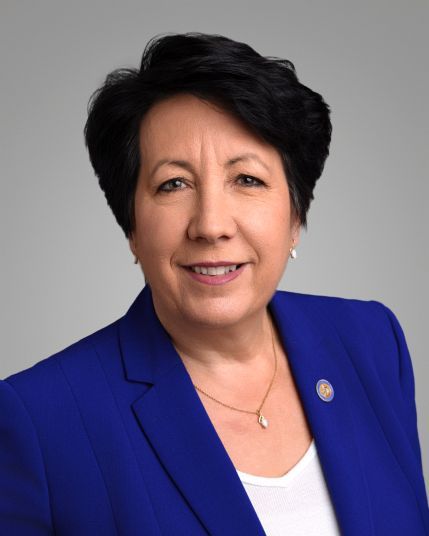
Rep. Mary Bentley
Sponsored bills
Maddy summaryHB 1368 amends the list of musicians honored on Arkansas Music Appreciation Day by adding specific names to the official roster. The bill directly affects the state's commemorative designation for music professionals recognized annually. It is a procedural update to the existing holiday framework, not a policy change with broader implications. The bill became law as Act 203 on February 27, 2025, after passing both chambers.
Maddy summaryThis House Resolution (HR 1028) formally recognizes National FFA Week (February 15-22, 2025) in Arkansas. It acknowledges the work of the National FFA Organization and Arkansas FFA Association - highlighting their 17,503 members and role in agricultural education - without creating new laws or funding. The resolution serves as a ceremonial acknowledgment, directing the House to send a copy to both FFA organizations. It has no policy impact beyond symbolic recognition.
Maddy summaryHB 1181 (now Act 138) is a technical amendment to clarify that certified nurse midwives only need a valid license to obtain hospital admitting privileges, removing the redundant phrase "accredited" from existing law. This change directly affects certified nurse midwives seeking hospital privileges by aligning the legal requirement with standard licensing practices. The bill does not create new policy or expand scope of practice - it simply corrects outdated language in the statute. As a procedural amendment, it was enacted without substantive debate and became law on February 25, 2025.
Maddy summarySB 213, now Act 140, creates Arkansas' "Healthy Moms, Healthy Babies Act" to improve maternal health through Medicaid reforms. It requires the Arkansas Medicaid Program to cover specific services separately (not as bundled payments), including prenatal visits, blood pressure monitoring devices with training, remote ultrasounds, and doula/community health worker home visits for prenatal/postpartum care. The law also mandates depression screening for pregnant women and allows immediate enrollment for pregnant applicants while awaiting full processing. These changes directly affect pregnant and postpartum Medicaid enrollees in Arkansas, aiming to expand access to critical health services.
Maddy summaryHB 1437 prohibits Level 3 or Level 4 sex offenders from entering water parks, swimming areas, or children's playgrounds within 100 feet of Arkansas State Parks or public parks. It directly affects individuals required to register under Arkansas' Sex Offender Registration Act who have been assessed as Level 3 or 4 offenders. The bill expands prior restrictions by adding swimming areas and playgrounds to the prohibited zones, with violations classified as Class D felonies. This law amends Arkansas Code § 5-14-134 to cover all public parks and state parks, not just local government-owned facilities.
Maddy summaryHB 1292 amends residency requirements for adopting minors by changing the rule for infants under six months old. Specifically, it removes the prior requirement that adoptive parents must have resided in the state for a certain period before filing an adoption petition, replacing it with a new provision stating the child must be "less than six (6) months of age at the time the petition was filed." This change directly affects adoptive parents seeking to adopt infants under six months, streamlining the process for this age group. The bill became law as Act 139 on February 25, 2025, after passing both legislative chambers.
Maddy summarySB 59 requires all public schools to provide one free breakfast daily to every student upon request, without checking if they qualify for federally funded free or reduced-price meals. This policy directly affects all public school students in the state, eliminating eligibility barriers for breakfast access. The bill includes an emergency clause, allowing it to take effect immediately upon enactment. It changes school meal procedures by mandating universal breakfast availability as a standard practice, not tied to existing federal program eligibility. The bill became law as Act 123 on February 24, 2025.
Maddy summaryHB 1048 (now Act 125) allows small-scale dairy farmers to sell unpasteurized goat, sheep, and whole milk directly to consumers beyond just on their farm. The law clarifies that incidental sales - such as at farmer's markets or via farm delivery - no longer require the milk to be sold solely on the premises where it's produced. This directly affects farmers who produce raw milk and consumers who purchase it, removing previous restrictions on sales locations. The bill also permits advertising these sales, making the process more flexible for small producers. The change became effective February 20, 2025, after passing both legislative chambers.
Maddy summaryHB 1427, now Act 124, creates Arkansas' "Healthy Moms, Healthy Babies Act" to improve maternal health through Medicaid reforms. It requires the Arkansas Medicaid Program to reimburse for specific services including depression screening during pregnancy, separate coverage for prenatal, delivery, and postpartum care (such as office visits, blood work, and remote glucose monitoring), and self-measured blood pressure monitoring equipment. The bill also mandates reimbursement for remote ultrasounds, home visits by doulas and community health workers, and establishes presumptive eligibility to immediately enroll pregnant women in Medicaid while their full applications are processed. These provisions directly affect pregnant and postpartum women enrolled in Arkansas Medicaid, aiming to expand access to preventative and specialized care.