

Maddy summarySB 409 prohibits financial services providers from refusing to do business with or terminating relationships with agricultural producers solely based on their status as such. It defines "agricultural producer" to include those growing crops, raising animals, or producing livestock/dairy products. The bill requires Arkansas' Treasurer to publish a list of financial providers found to discriminate against agricultural producers, after giving them 45 days' notice and a 30-day window to prove they are not discriminating. This list will be posted online, with the process involving an ESG Oversight Committee and requiring agricultural producers to consent to sharing financial data if they report discrimination.
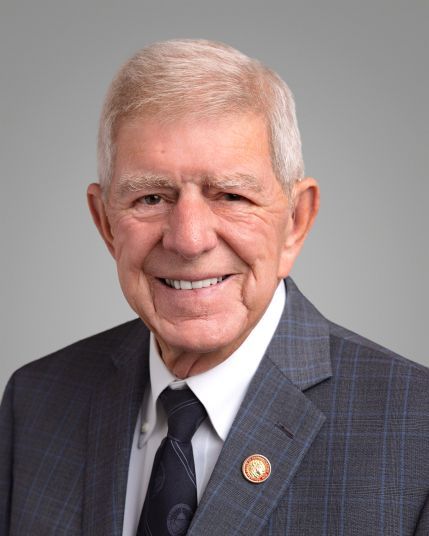
Rep. Dwight Tosh
Sponsored bills
Maddy summaryHB 1652, now Act 393, changes rules for self-service storage facilities by making unsigned rental agreements legally enforceable and establishing a clear process for ending such agreements. It directly affects storage facility operators and renters who may have entered into verbal or incomplete written contracts. Key provisions require facilities to honor unsigned agreements (preventing disputes over missing signatures) and provide a standardized procedure for both parties to terminate agreements without lengthy legal steps. The law applies to all self-service storage facilities in the state and became effective after passing both legislative chambers and the Governor's office.
Maddy summaryHB 1610 is a technical amendment to Arkansas' Human Life Protection Act and Unborn Child Protection Act, clarifying existing medical exception language. It removes redundant phrases like "in the judgment of the physician" and replaces them with simpler terms such as "judgment" throughout the statutes. This change streamlines how medical professionals can cite exceptions for abortions when the mother's health is at risk, directly affecting healthcare providers and patients navigating the current abortion restrictions. The bill, now Act 387, became law on March 20, 2025, without altering the core prohibitions on abortion.
Maddy summarySB 317 prohibits Arkansas public institutions of higher education from engaging in specific activities with "prohibited foreign parties." It directly affects universities and colleges receiving state funding by banning them from conducting agricultural research under contract or selling agricultural products (including seeds) with such entities. The bill defines "prohibited foreign parties" but does not specify which entities qualify. This policy change restricts certain financial and research transactions between Arkansas colleges and designated foreign entities, without altering broader academic collaboration rules. The bill passed as Act 351 on March 20, 2025.
Maddy summarySenate Bill 263 (now Act 330) increases the amount of the homestead property tax credit available to Arkansas homeowners. This policy change directly benefits qualifying homeowners who own and occupy their primary residence, reducing their annual property tax bill. The bill amends the existing tax credit structure to provide a higher dollar amount for eligible taxpayers. It became law after passing the Arkansas legislature and being delivered to the Governor on March 13, 2025. The change represents a concrete adjustment to tax relief for qualified homeowners without altering eligibility requirements.
Maddy summaryHB 1600 clarifies terminology in laws affecting municipal law enforcement officers by replacing "full-time certified" with "full-time" throughout existing provisions. It also adds a definition for "presumptive illness list" as chronic or fatal illnesses for municipal police departments. The bill does not change leave benefits or compensation but standardizes how these policies are described in law. It directly affects all full-time municipal law enforcement officers in the state. The bill passed as Act 317 on March 18, 2025.
Maddy summaryHB 1049 (now Act 238) amends Arkansas criminal law to establish a new offense for "unlawful squattering." The bill makes it a criminal violation for a person to occupy property without the owner's permission, specifically targeting individuals who enter or remain on property after being asked to leave. This directly affects individuals occupying vacant or abandoned properties without legal right, such as vacant homes or land. The key provision creates a specific criminal charge (likely a misdemeanor) for this conduct, distinct from general trespass laws, and specifies that the offense applies after the owner or their agent has issued a verbal or written demand to vacate.
Maddy summaryHB 1368 amends the list of musicians honored on Arkansas Music Appreciation Day by adding specific names to the official roster. The bill directly affects the state's commemorative designation for music professionals recognized annually. It is a procedural update to the existing holiday framework, not a policy change with broader implications. The bill became law as Act 203 on February 27, 2025, after passing both chambers.
Maddy summaryHB 1437 prohibits Level 3 or Level 4 sex offenders from entering water parks, swimming areas, or children's playgrounds within 100 feet of Arkansas State Parks or public parks. It directly affects individuals required to register under Arkansas' Sex Offender Registration Act who have been assessed as Level 3 or 4 offenders. The bill expands prior restrictions by adding swimming areas and playgrounds to the prohibited zones, with violations classified as Class D felonies. This law amends Arkansas Code § 5-14-134 to cover all public parks and state parks, not just local government-owned facilities.
Maddy summarySB 59 requires all public schools to provide one free breakfast daily to every student upon request, without checking if they qualify for federally funded free or reduced-price meals. This policy directly affects all public school students in the state, eliminating eligibility barriers for breakfast access. The bill includes an emergency clause, allowing it to take effect immediately upon enactment. It changes school meal procedures by mandating universal breakfast availability as a standard practice, not tied to existing federal program eligibility. The bill became law as Act 123 on February 24, 2025.