

Maddy summaryHR 1075 is a commemorative resolution designating March 12, 2025, as "Stars of Life Day" in Arkansas to honor specific emergency medical services (EMS) professionals recognized as "Arkansas EMS Stars of Life." The resolution, adopted by the Arkansas House of Representatives, formally acknowledges these individuals' contributions to lifesaving care and the EMS field. Upon adoption, copies of the resolution will be presented to each honoree by the Chief Clerk of the House. This is a non-binding recognition effort with no new policy or funding provisions.
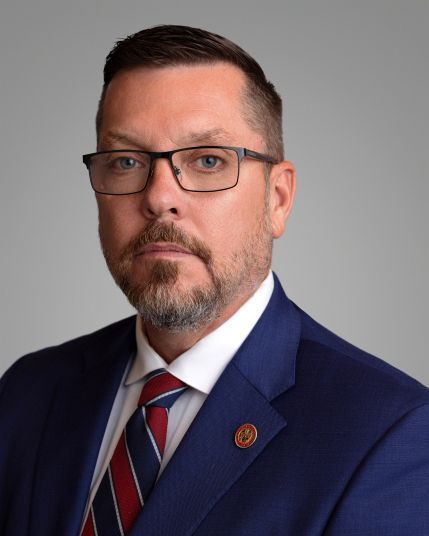
Rep. Bart Schulz
Sponsored bills
Maddy summarySB 317 prohibits Arkansas public institutions of higher education from engaging in specific activities with "prohibited foreign parties." It directly affects universities and colleges receiving state funding by banning them from conducting agricultural research under contract or selling agricultural products (including seeds) with such entities. The bill defines "prohibited foreign parties" but does not specify which entities qualify. This policy change restricts certain financial and research transactions between Arkansas colleges and designated foreign entities, without altering broader academic collaboration rules. The bill passed as Act 351 on March 20, 2025.
Maddy summarySenate Bill 263 (now Act 330) increases the amount of the homestead property tax credit available to Arkansas homeowners. This policy change directly benefits qualifying homeowners who own and occupy their primary residence, reducing their annual property tax bill. The bill amends the existing tax credit structure to provide a higher dollar amount for eligible taxpayers. It became law after passing the Arkansas legislature and being delivered to the Governor on March 13, 2025. The change represents a concrete adjustment to tax relief for qualified homeowners without altering eligibility requirements.
Maddy summaryHB 1478 repeals Arkansas' requirement for individuals to register as disease intervention specialists, removing a state-mandated registration system established under Arkansas Code Title 17, Chapter 98. This change eliminates prior standards for education, training, and experience, as well as penalties (including fines up to $200 or 3 months in jail) for practicing without registration. The bill directly affects public health workers specializing in sexually transmitted disease prevention who previously needed state registration, and it ends the State Board of Health's role in administering this program, including collecting fees and overseeing continuing education. The repeal takes effect immediately upon enactment, shifting responsibility away from state oversight for this specific profession.
Maddy summaryHB 1049 (now Act 238) amends Arkansas criminal law to establish a new offense for "unlawful squattering." The bill makes it a criminal violation for a person to occupy property without the owner's permission, specifically targeting individuals who enter or remain on property after being asked to leave. This directly affects individuals occupying vacant or abandoned properties without legal right, such as vacant homes or land. The key provision creates a specific criminal charge (likely a misdemeanor) for this conduct, distinct from general trespass laws, and specifies that the offense applies after the owner or their agent has issued a verbal or written demand to vacate.
Maddy summaryHB 1368 amends the list of musicians honored on Arkansas Music Appreciation Day by adding specific names to the official roster. The bill directly affects the state's commemorative designation for music professionals recognized annually. It is a procedural update to the existing holiday framework, not a policy change with broader implications. The bill became law as Act 203 on February 27, 2025, after passing both chambers.
Maddy summaryThis House Resolution (HR 1028) formally recognizes National FFA Week (February 15-22, 2025) in Arkansas. It acknowledges the work of the National FFA Organization and Arkansas FFA Association - highlighting their 17,503 members and role in agricultural education - without creating new laws or funding. The resolution serves as a ceremonial acknowledgment, directing the House to send a copy to both FFA organizations. It has no policy impact beyond symbolic recognition.
Maddy summarySB 59 requires all public schools to provide one free breakfast daily to every student upon request, without checking if they qualify for federally funded free or reduced-price meals. This policy directly affects all public school students in the state, eliminating eligibility barriers for breakfast access. The bill includes an emergency clause, allowing it to take effect immediately upon enactment. It changes school meal procedures by mandating universal breakfast availability as a standard practice, not tied to existing federal program eligibility. The bill became law as Act 123 on February 24, 2025.
Maddy summaryHB 1278 requires surveyors to notify the owner and follow all visitor protocols - including biosecurity measures - before entering a commercial poultry farm for surveying purposes. It specifically applies to farms with poultry houses exceeding 5,000 square feet, directly affecting surveyors working near such facilities and poultry farm owners. The bill mandates these steps to protect farm biosecurity without creating new protocols, only requiring surveyors to comply with existing farm rules. This law, now Act 99, aims to prevent potential contamination risks during survey activities.
Maddy summaryHB 1204 (now Act 28) amends Arkansas law to clarify that plaintiffs in medical negligence cases can only recover the actual costs they paid for necessary medical care, treatment, or services - or costs legally owed by them or a third party. It directly affects individuals filing medical malpractice claims and healthcare providers by limiting recoverable damages to amounts actually paid or legally responsible. The key provision changes the standard for medical cost recovery from billed rates to verified payments, preventing recovery of unpaid or inflated charges. This law, enacted on February 11, 2025, provides a clearer financial framework for medical negligence claims in Arkansas.