

Maddy summaryArkansas SB 237 updates licensing rules for captive insurance companies, primarily adjusting minimum capital and surplus requirements based on the company type (e.g., increasing the required capital for association captive insurers from $250,000 to $400,000). It introduces a new provisional licensing process allowing temporary licenses under specific conditions, such as when the commissioner determines it serves the public interest. The bill also removes outdated definitions of "Commissioner" and "Department" from the statute. These changes directly affect captive insurers operating in Arkansas, including pure captives, sponsored captives, and association captives, by modifying their financial obligations and licensing pathways.
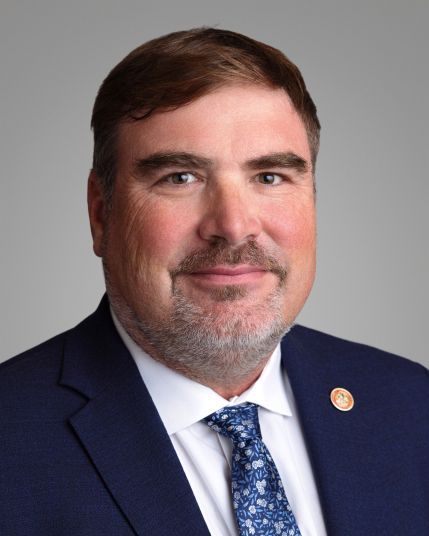
Rep. Trey Steimel
Sponsored bills
Maddy summaryThis resolution designates March 29, 2025, as Vietnam War Veterans Day and March 2025 as Vietnam Era Veterans Month in Arkansas. It formally recognizes the sacrifices and contributions of Vietnam War veterans through state-level ceremonial observance. The resolution does not create new laws, programs, or benefits - it serves solely as a symbolic gesture of appreciation. It affects Arkansas residents by establishing official dates for state-level recognition of veterans' service.
Maddy summaryHB 1303 (now Act 546) creates a state income tax credit for businesses producing sustainable aviation fuel in Arkansas. The credit allows eligible producers to reduce their state income tax liability by up to the full amount of tax they owe in a given year. It directly affects aviation fuel producers who meet the bill's sustainability criteria, providing financial incentive to develop and use cleaner fuel alternatives. The law, enacted April 10, 2025, establishes this credit as part of Arkansas' efforts to support sustainable energy infrastructure.
Maddy summaryThis resolution formally commends the Salem High School football team for winning the Class 3A state championship in 2024. It recognizes their victory over Bismarck (42-34) in the finals, their school-record 12 wins, and key achievements like their offensive and defensive statistics. The resolution, adopted by the Arkansas House of Representatives, directs that a copy be provided to head coach Josh Watson. As a ceremonial resolution, it has no legal effect beyond symbolic recognition of the team's accomplishments.
Maddy summarySB 218 amends Arkansas' Small Business Innovation Research (SBIR) Matching Grant Program to clarify how state funding matches federal SBIR grants. It directly affects Arkansas small businesses that receive federal Phase I or Phase II SBIR grants, requiring them to stay in-state during the project, use an Arkansas-based project manager, and focus on targeted sectors like biotechnology or advanced manufacturing. The bill limits state matching grants to 50% of federal awards - $50,000 for Phase I or $100,000 for Phase II - and mandates at least 51% of grant funds be spent within Arkansas. Applications must follow specific processes defined by the Arkansas Economic Development Commission’s Division of Science and Technology.
Maddy summarySB 409 prohibits financial services providers from refusing to do business with or terminating relationships with agricultural producers solely based on their status as such. It defines "agricultural producer" to include those growing crops, raising animals, or producing livestock/dairy products. The bill requires Arkansas' Treasurer to publish a list of financial providers found to discriminate against agricultural producers, after giving them 45 days' notice and a 30-day window to prove they are not discriminating. This list will be posted online, with the process involving an ESG Oversight Committee and requiring agricultural producers to consent to sharing financial data if they report discrimination.
Maddy summarySB 276 clarifies that surplus lines insurance (specialty coverage from non-admitted insurers) qualifies as valid proof of financial responsibility for motor vehicle insurance in Arkansas. The bill amends several statutes to explicitly include surplus lines coverage in definitions of acceptable insurance policies and "insurer" under state law. This directly affects vehicle owners needing to prove insurance coverage and insurers offering surplus lines policies, removing ambiguity about their validity for compliance. The key mechanism updates legal definitions to ensure surplus lines coverage meets state requirements for motor vehicle liability insurance, without changing coverage standards.
Maddy summaryHB 1595 amends multiple sections of Arkansas' insurance code and repeals the Comprehensive Health Insurance Pool Act (Subchapter 5 of Chapter 79). The bill updates rules for workers' compensation insurance plans (requiring Arkansas-based administration and commissioner approval of delegated functions), clarifies attorney bond requirements for reciprocal insurers, extends hospital examination cycles from 3 to 5 years, and revises service-of-process rules for insurers. It directly affects insurers, workers' compensation administrators, and former participants in the repealed health insurance pool, which previously provided coverage for "uninsurable" Arkansans and those eligible for federal tax credits. The repeal removes the state's alternative health insurance market, shifting focus to updated regulatory frameworks under the Insurance Commissioner.
Maddy summarySB 254 amends Arkansas law to clarify requirements for rural community projects seeking state funding. It expands the definition of "property in kind" to explicitly include labor, equipment, materials, services, and money (beyond just real/personal property). The bill requires communities to contribute one-fourth (25%) of a project's cost through non-tax donations (money or "property in kind"), and prohibits using tax funds for this share. If communities fail to provide this 25%, local governments must cover it using their own funds or "property in kind." This directly affects rural towns and small cities applying for state grants for community projects.
Maddy summaryHB 1212 would amend Arkansas law to allow justices of the peace to also serve as city police officers or school resource officers under specific conditions. The bill adds an exception to existing rules that generally prohibit county officials from holding multiple civil offices, permitting justices of the peace to work in these law enforcement roles outside their local district. This change would directly affect current or future justices of the peace who hold or seek such police positions. The provision applies only to roles described in a separate section of state law (§ 6-10-128) and does not apply to new appointments. The bill was introduced in January 2025 but withdrawn by its author in March 2025.