

Maddy summaryHB 1303 (now Act 546) creates a state income tax credit for businesses producing sustainable aviation fuel in Arkansas. The credit allows eligible producers to reduce their state income tax liability by up to the full amount of tax they owe in a given year. It directly affects aviation fuel producers who meet the bill's sustainability criteria, providing financial incentive to develop and use cleaner fuel alternatives. The law, enacted April 10, 2025, establishes this credit as part of Arkansas' efforts to support sustainable energy infrastructure.
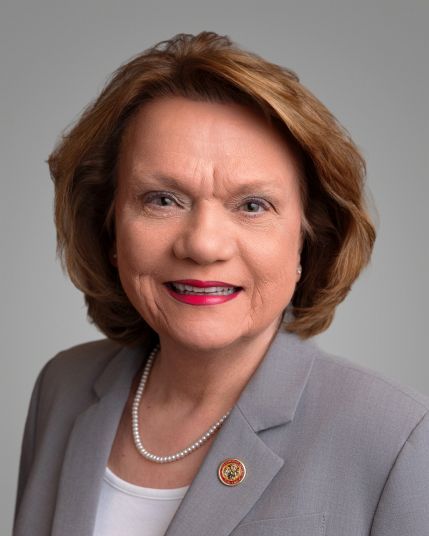
Rep. Carol Dalby
Sponsored bills
Maddy summarySenate Bill 320 amends multiple Arkansas statutes to update references to the Arkansas Juvenile Code of 1989, specifically citing sections §9-27-301 et seq. and §9-35-101 et seq. The bill clarifies how the juvenile code applies to cases involving underage alcohol possession, custody transfers, and juvenile delinquency proceedings. It ensures consistent legal references across statutes without changing substantive law. This affects juvenile courts, law enforcement, and child welfare agencies when handling cases under the juvenile code.
Maddy summaryHB 1597 updates Arkansas law to clarify which officials can administer oaths of office for elected and appointed public officials. It specifies that municipal officers (like city council members) must take oaths before designated judges, county clerks, or other authorized personnel, while state officials (such as the Governor and Supreme Court justices) have defined options including state court judges or clerks. The bill directly affects all local and state officials required to take oaths upon assuming office. It modifies existing code sections to provide precise, accessible pathways for oath administration without changing substantive policy. This is a procedural update focused on streamlining the swearing-in process.
Maddy summarySB 345 (now Act 421) simplifies permitting for hotels, restaurants, and large-event venues by removing a tax requirement that previously applied to private club operations. The bill streamlines the process for these businesses to obtain necessary permits, reducing administrative hurdles and associated costs. It directly affects hospitality and event businesses that must navigate permitting systems for private club services. The key change eliminates a specific tax obligation, aiming to boost tourism and economic development through more efficient operations.
Maddy summaryHB 1609 increases penalties for human traffickers who recruit victims from high-risk locations. It mandates a 10-year prison sentence (up from standard penalties) if traffickers target individuals at facilities like youth shelters, correctional facilities, foster homes, childcare institutions, or juvenile detention centers. The bill directly affects traffickers who exploit vulnerable populations in these specific settings. It creates a clear legal mechanism to impose harsher sentences based on the victim’s location at the time of recruitment. The bill became law as Act 366 on March 20, 2025.
Maddy summaryHR 1084 is a ceremonial resolution passed by the Arkansas House of Representatives to honor Martha Jarrow, Director of Member Services, for her dedicated service to the House and state. The resolution recognizes her leadership in developing staff training programs, improving legislative communication, and fostering a collaborative workplace environment. Adopted on March 20, 2025, it formally acknowledges her contributions and will be presented to her by the House Chief Clerk.
Maddy summaryHB 1661 shifts the funding responsibility for state district court judges' salaries from cities and counties to the state, eliminating local governments' obligation to pay these salaries. It creates a "county administration of justice fund" that uses court filing fees and costs to maintain funding for county justice programs (like public defenders, prosecutors, and county jails) at levels based on 1994-1995 data, with limited annual adjustments tied to inflation. The bill directly affects all 70 state district courts (as of 2025) and county-level judicial services. It ensures county funding for these programs continues without local salary payments, aligning with Arkansas' transition to a unified state court system.
Maddy summaryHB 1643 amends Arkansas law to allow current or former employers to share confirmed reports of sexual abuse or harassment by an employee with a prospective employer, but only after the employee provides written consent. This directly affects current and former employees (who must consent) and prospective employers (who may receive this information). The key provision adds "a substantiated allegation of sexual abuse or harassment" to the list of employment details employers may disclose, alongside standard information like job duties and separation reasons. The law requires explicit written permission from the employee before such sensitive information can be shared, aiming to balance employer transparency with individual privacy rights.
Maddy summaryHB 1644 clarifies that retired Arkansas judges can serve as special judges immediately upon retirement, removing any prior waiting period. This amendment to Arkansas Code § 16-10-902 (subsection c) directly affects retired judges seeking special judicial appointments. The bill retroactively applies to January 1, 2025, and declares an emergency due to high demand for special judges amid limited availability. It ensures retired judges can be appointed without delay to address court staffing needs. The law became Act 370 after passage in March 2025.
Maddy summarySB 328 amends Arkansas law to raise the age threshold for "child" in computer crimes from 17 to 18 years old. It changes the legal standard for prosecuting individuals who distribute or view sexually explicit material involving minors, requiring defendants to genuinely believe the depicted person was 18 or older to claim an affirmative defense. The bill also clarifies that courts must determine a depicted person's age using specific methods, such as personal inspection, examination of the material, or expert testimony, to prove the person was under 18. This law directly affects prosecutors, defendants, and courts handling cases involving online sexual exploitation of minors. The bill became law as Act 361 on March 20, 2025.