

Maddy summaryThe Tech Diplomacy Training Act requires all U.S. Foreign Service officers to complete mandatory training on science, technology, engineering, and mathematics topics, including artificial intelligence and emerging communications technologies. This training will be administered through the George P. Shultz National Foreign Affairs Training Center and must cover how these technologies impact diplomacy, how adversaries use them, and how the United States can leverage them as diplomatic tools. New officers must complete the full curriculum during their initial training, while existing officers have 18 months to finish the comprehensive program or 270 days to complete a condensed version. The requirement applies to all Foreign Service officers and operates alongside existing training requirements without replacing them.
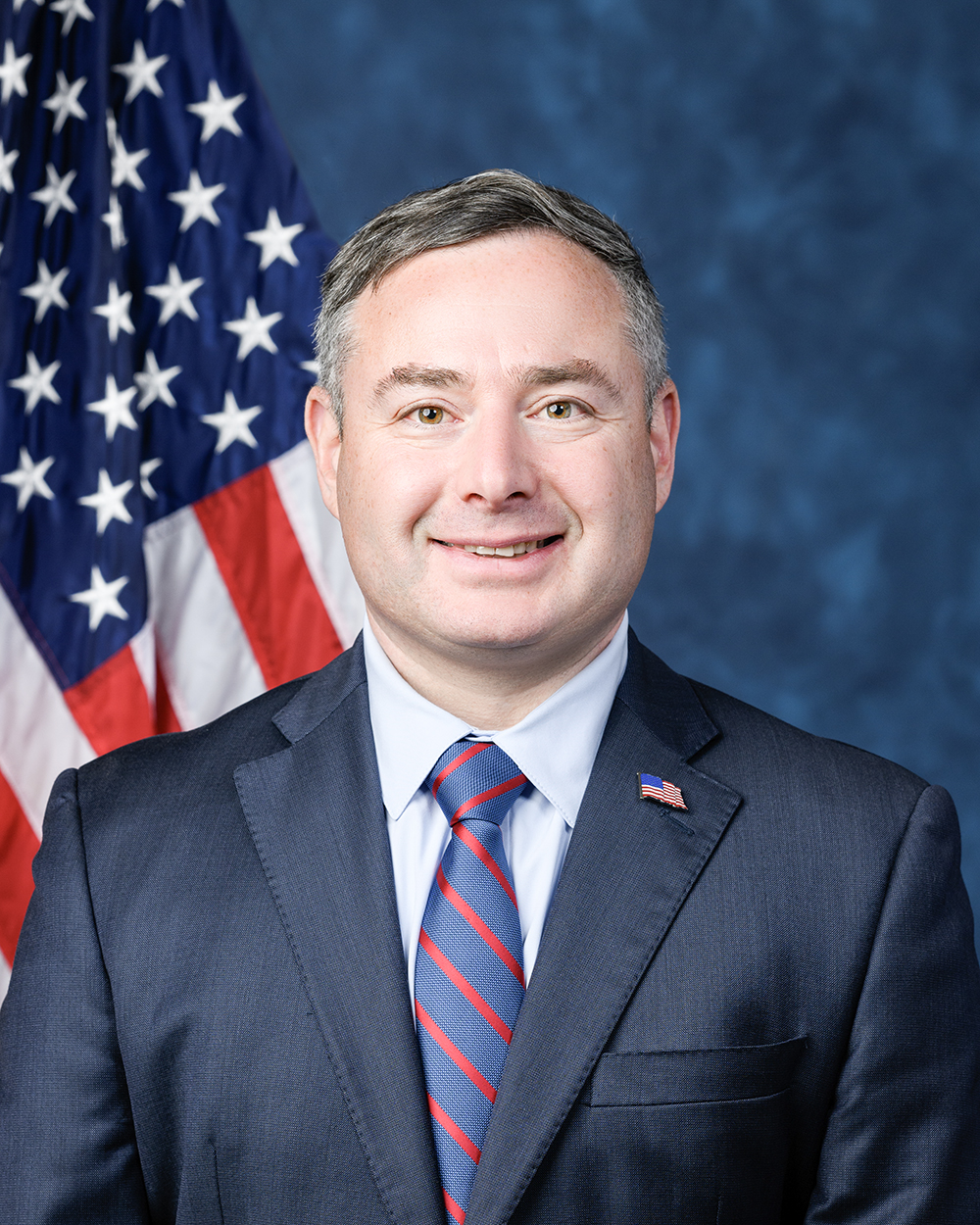
Rep. Eugene Simon Vindman
Sponsored bills
Lulu’s Law This bill requires the Federal Communications Commission to issue an order explicitly permitting the transmission of wireless emergency alerts to mobile phones in the event of a shark attack. (Under current regulations, authorized government authorities are permitted to send wireless emergency alerts regarding public safety emergencies, including severe weather, missing children, and other threats to life or property.)
Maddy summaryThis bill, titled the Agricultural Conservation Mentorship Act, amends the Food Security Act of 1985 to update the Experienced Services Program. It adds a new category of eligible activities that allows the program to support cooperative initiatives aimed at improving higher education teaching programs, specifically including paid work-based learning opportunities at colleges and universities. The legislation also clarifies definitions for institutions of higher education, land-grant colleges and universities, and work-based learning by referencing existing laws. These changes expand the scope of services the program can provide to better support agricultural education and training within higher education institutions.
Maddy summaryThis bill reauthorizes federal funding for grants and fellowships that support education in food and agricultural sciences. It directly affects universities, colleges, and training programs that teach these subjects by providing $60 million annually from 2026 through 2035. The legislation specifically prioritizes teaching projects that include paid work-based learning to help train more professionals in food and agricultural sciences and rural economic development. It amends the existing Food and Agriculture Act of 1977 to update funding priorities and ensure continued financial support for these educational initiatives.
Maddy summaryThe Enhanced Cybersecurity for SNAP Act of 2026 requires states to transition from magnetic stripe to chip-enabled EBT cards within 4-5 years, with specific deadlines for new cards and reissuing existing cards. It mandates states to provide multiple user interfaces for managing EBT accounts - including mobile-friendly web portals, text messaging, voice services, and nondigital options - all available 99% of the time in required languages. The bill requires states to provide real-time transaction notifications, access to historical transactions for the past year, and fraud reporting capabilities to SNAP recipients, while prohibiting PIN/password requirements that conflict with federal cybersecurity standards. It eliminates fees for replacing cards due to malfunction, fraud, or required upgrades and requires states to replace damaged or lost cards within 3 business days. Additionally, the bill includes a grant program to help retailers upgrade to chip-compatible payment terminals in areas with limited grocery access.
Representing our Seniors at VA Act of 2025 This bill expands the membership of the Geriatrics and Gerontology Advisory Committee within the Veterans Health Administration by requiring the addition of one representative from the National Association of State Veterans Homes who holds a professional license in nursing home administration. Additionally, the committee must consult with the National Association of Veterans State Homes with respect to matters concerning the association.
Maddy summaryThe STOP Suicide Act establishes a new grant program to fund stabilization services for individuals experiencing acute suicidal thoughts. These grants will be awarded competitively to eligible entities such as community health centers, crisis centers, schools, and tribal organizations to support evidence-based interventions that reduce immediate suicide risk. The program authorizes up to $30 million annually from 2027 to 2031 and requires recipients to submit plans for sustaining services after grant funding ends. Grants may support outpatient care, virtual services, and peer support in the least restrictive settings appropriate for each individual's needs.
Maddy summaryHRES 971 is a non-binding resolution condemning China's economic and military actions against Japan following Japanese officials' comments about Taiwan. It specifically addresses China's travel advisory (causing $1.2 billion in tourism losses), a ban on Japanese seafood imports, and military drills near Japanese territory. The resolution reaffirms U.S. support for the U.S.-Japan alliance under their mutual security treaty and calls on China to cease coercion. It emphasizes U.S. commitment to upholding a "free and open Indo-Pacific" based on international law. This resolution directly affects Japan's economy and security, with no new legal obligations but serving as a formal U.S. policy statement.
Maddy summaryThe SHADOW Act creates a new State Department Coordinator to lead U.S. efforts against hybrid warfare threats from China and Russia, particularly in Europe. The Coordinator will assess threats like cyberattacks and disinformation campaigns, coordinate with NATO allies and partners (including Japan and Australia), and help protect critical infrastructure sectors. The bill requires the Coordinator to submit a strategy within 60 days and annual reports for three years detailing threat assessments and coordination progress. It also mandates a specific report within 180 days identifying Chinese entities supporting Russia’s defense industry.
Maddy summaryThis bill creates a presumption that certain illnesses are connected to military service for veterans who were stationed at the Pentagon Reservation between September 11 and November 19, 2001. It directly affects those veterans by allowing them to automatically qualify for disability benefits for covered diseases without needing to prove a direct link to their service. The bill specifies that illnesses like asthma, cancer, heart disease, skin conditions, and other respiratory or cardiovascular ailments diagnosed after service will be presumed service-connected. This applies to veterans assigned to the Pentagon during the immediate post-9/11 period, streamlining access to benefits under the existing veterans' health care system.