

Maddy summaryThis resolution honors the late Mark Brnovich, a former Arizona Attorney General who passed away in January 2026. It formally expresses the state legislature's regret over his death and extends condolences to his family and friends. The document does not create new laws or policies but serves as a ceremonial tribute to his public service career. It acknowledges his contributions as a prosecutor and government official without altering any legal provisions.
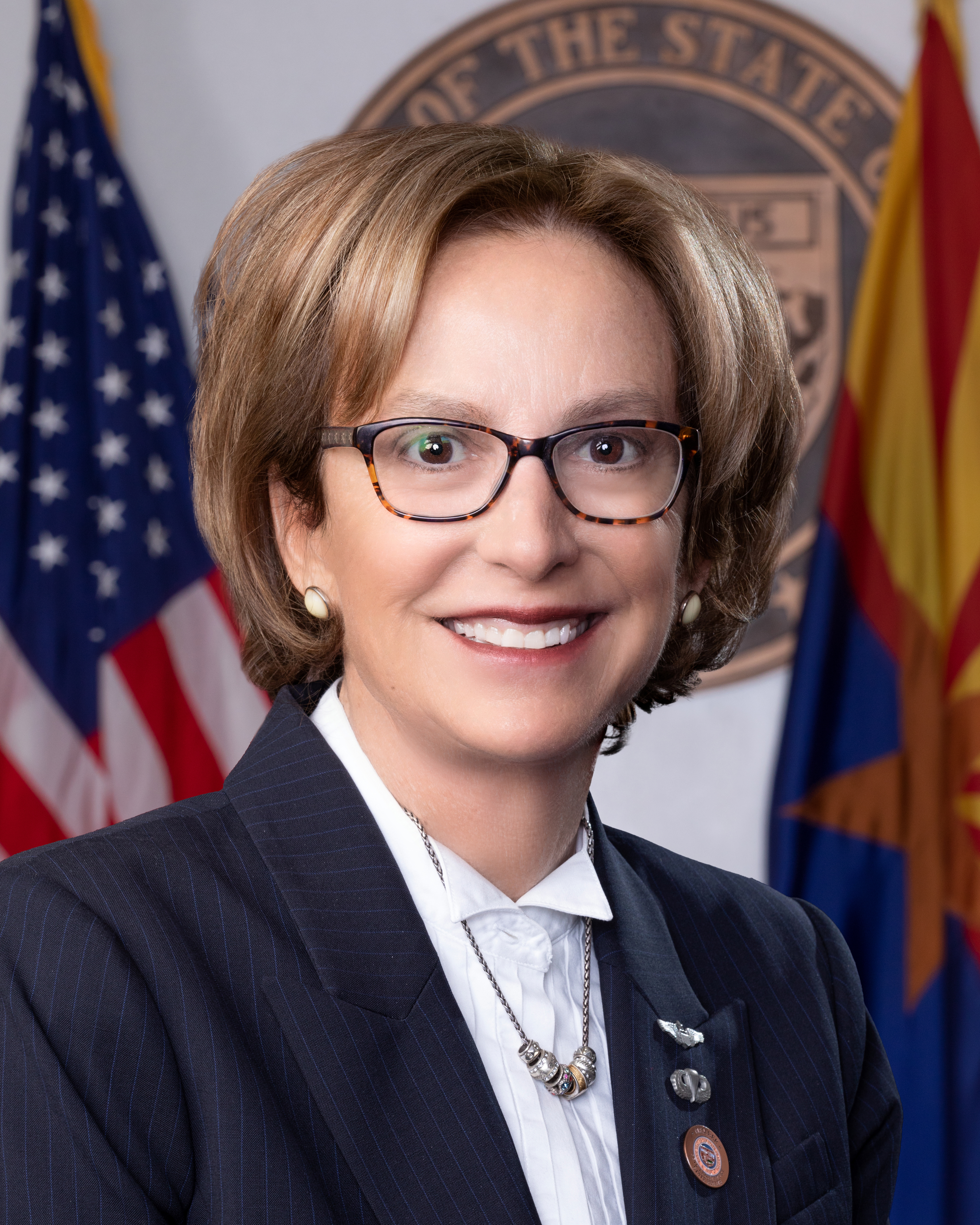
Sen. Wendy Rogers
Sponsored bills
Maddy summaryThis bill (SCM 1001) is a ceremonial resolution requesting Arizona's State Route 260 be renamed "Donald J. Trump Highway" and requiring the Arizona Department of Transportation to install and maintain corresponding signage. It does not change laws, allocate funding, or affect policy - it is purely a commemorative naming action. The resolution cites multiple policy achievements of Donald J. Trump during his presidency as justification, but the bill itself only directs a highway name change. No other provisions or mechanisms are included beyond the renaming and signage requirements.
Maddy summaryArizona's SB 1045 prohibits cities and counties from banning or taxing individuals who run blockchain technology nodes (home-based computers validating transactions) in their residences. The bill explicitly prevents local governments from imposing restrictions or fees on residential blockchain operations, stating such regulation is a statewide concern. It defines key terms like "computational power" (using hardware/software for tasks like blockchain processing) and "running a node" (validating transactions). The law directly affects residential users of blockchain technology, ensuring they cannot face local barriers or costs for this activity.
Maddy summarySB 1044 would exempt virtual currency from property taxation in Arizona, directly affecting owners of digital assets like cryptocurrencies who hold them as property. The bill defines virtual currency as a digital medium of exchange, unit of account, and store of value - excluding U.S. dollars or foreign currencies - and specifies it would be tax-exempt under state property tax rules. However, the exemption would only take effect if Arizona voters approve a constitutional amendment at the next general election, as required by the bill’s conditional enactment clause. This proposal does not alter current tax treatment but seeks to establish a new exemption for virtual currency assets.
Maddy summarySB 1153 creates a new special license plate design featuring the Grand Canyon for Arizona vehicle owners. Vehicle owners can request this plate by paying a fee established by the Arizona Department of Transportation, similar to other special plates. The bill amends state law to add this plate to the list of available special plates, which are issued in addition to standard license plates. This change does not affect standard plate requirements or fees for regular registration.
Maddy summarySB 1152 requires applicants for Arizona state or local public benefits (such as healthcare or food assistance) to provide specific documents proving lawful U.S. presence, including Arizona driver licenses, birth certificates, or immigration documents. It specifically prohibits individuals with pending asylum applications from receiving benefits until an immigration judge grants asylum. The bill establishes penalties for agency employees who fail to report immigration violations (class 2 misdemeanor) and allows any Arizona resident to sue agencies for noncompliance. Key provisions include requiring sworn affidavits about document accuracy and exempting certain groups like tribal members from standard documentation under federal guidance. This bill directly affects non-citizens applying for public benefits and changes eligibility requirements under Arizona law.
Maddy summarySB 1051 requires hospitals that accept state health program payments to add a question on patient registration forms asking about immigration status (citizen, lawfully present, not lawfully present, or declined to answer). The form must include a clear statement that responses won’t affect care or be shared with immigration authorities. Hospitals must submit quarterly reports to the state health department tracking these status categories for all admissions and emergency visits. The department then compiles an annual report for lawmakers, detailing total patient visits by category and analyzing costs of care provided to undocumented patients, including impacts on hospital funding and service capacity.
Maddy summarySB 1556 amends Arizona property law to prevent individuals claiming ownership through forged deeds or fraudulent powers of attorney from using a five-year ownership rule. It specifically bars anyone claiming property based on a fake deed or forged document from benefiting from the provision that otherwise grants legal ownership after five years of claiming and paying taxes. This directly affects people attempting to gain legal title through fraudulent means, ensuring only legitimate claims with valid deeds qualify. The bill clarifies that the five-year ownership protection does not apply to claims derived from forged documents.
Maddy summarySB 1707 allocates $5 million from Arizona's state general fund for fiscal year 2026-2027 to the Department of Public Safety specifically for artificial intelligence tools related to border security. The bill allows the Department to distribute these funds to local law enforcement agencies to support border security efforts using AI technology. It directly affects Arizona's state and local police agencies by providing funding for AI-related border security tools. The bill does not create new laws or policies but authorizes the use of state funds for this specific purpose. This is a funding measure, not a substantive policy change.
Maddy summarySB 1047 requires Arizona's National Guard to remain within state boundaries for active combat duty unless authorized by specific federal actions. It prohibits deployment for combat without a formal U.S. congressional declaration of war or authorization under the Constitution's power to "execute laws," "repel invasion," or "suppress insurrection." The bill defines "active duty combat" as participating in armed conflicts, performing hazardous duties in foreign states related to conflicts, or using instruments of war. The governor must ensure compliance with these requirements before any deployment.