

Maddy summarySB 1052 amends Arizona voter registration rules to make it easier for people temporarily absent from the state to register and vote. It allows these voters to submit a sworn affidavit or use a federal mail-in form (per the Uniformed and Overseas Citizens Absentee Voting Act) to register, with deadlines extended to 7:00 p.m. on election day. The bill specifically affects military personnel, overseas residents, and U.S. citizens who have never lived in the U.S. but have a parent registered to vote in Arizona. These changes aim to simplify registration for voters with temporary relocations without altering core residency requirements.
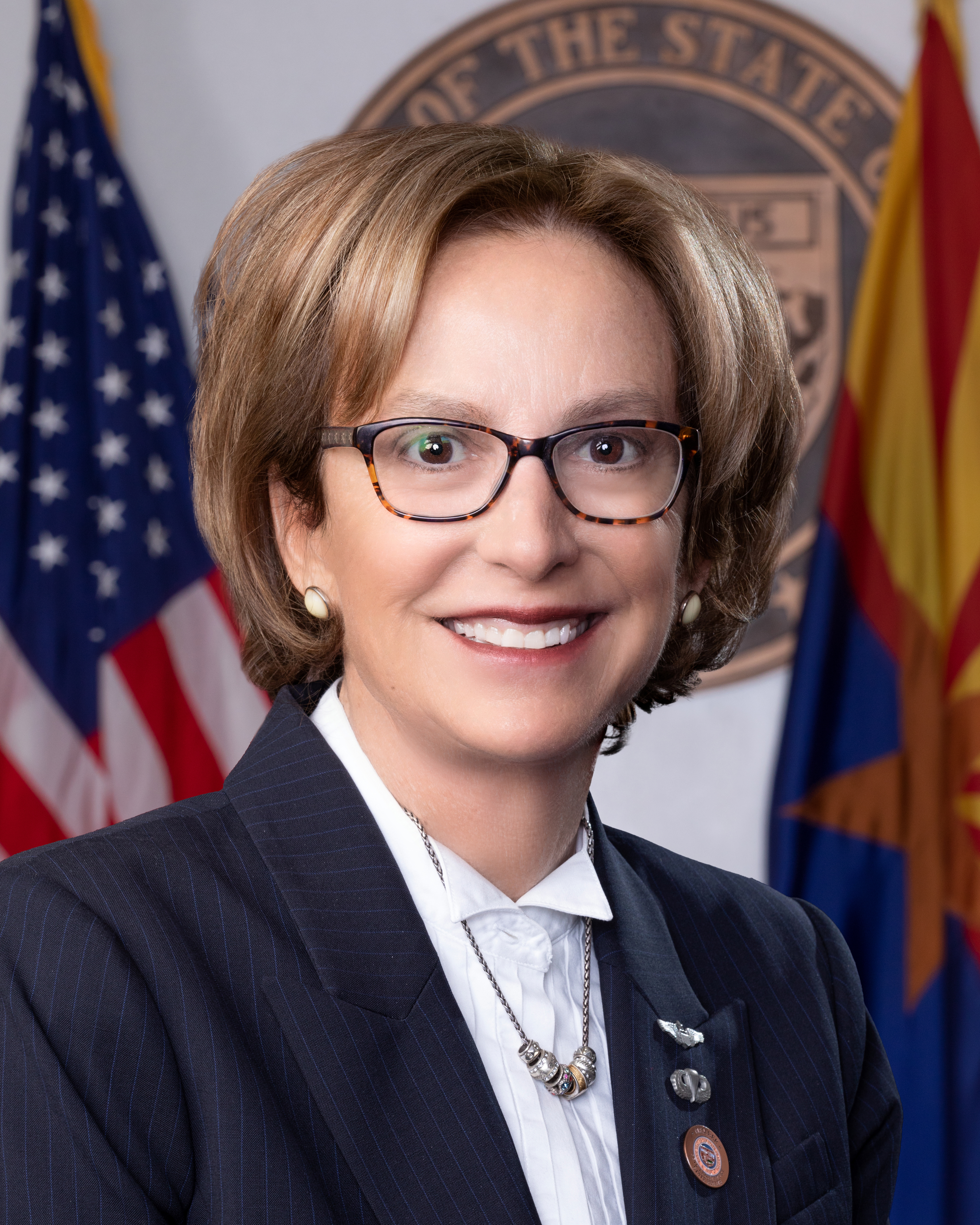
Sen. Wendy Rogers
Sponsored bills
Maddy summarySB 1064 establishes security requirements for voting equipment in Arizona elections, prohibiting internet access, remote connectivity, and unauthorized data access in all voting machines, tabulating devices, and counting center equipment. The bill mandates tamper-proof seals on accessible ports, detailed chain-of-custody logs for equipment handling, and nonstop video recording at counting centers that must be posted online. Violations of these rules are classified as class 1 misdemeanors. These provisions apply to all voting equipment used in federal, state, and county elections, aiming to prevent tampering and ensure election integrity.
Maddy summarySB 1051 expands exemptions for non-licensed individuals to design certain commercial space alterations in Arizona. It allows non-registered engineers to make interior nonstructural changes to commercial units under 3,000 square feet and single storage additions under 1,500 square feet without requiring a licensed engineer's approval. The bill specifically targets small-scale, low-risk modifications to reduce regulatory hurdles for property owners and small businesses. These changes apply only to projects meeting the defined size limits and not involving structural elements like bearing walls.
Maddy summarySB 1024 allows Arizona state agencies to accept cryptocurrency payments for fines, taxes, fees, and other charges by entering agreements with cryptocurrency service providers. These agreements must specify terms for accepting or declining crypto, how payments will be processed (in crypto or U.S. dollars), and who covers transaction fees. Individuals using cryptocurrency remain liable for the full amount until the state receives final payment from the service provider. The bill amends state statutes to include cryptocurrency as a payment method, effective December 31, 2025.
Maddy summarySB 1586 creates strict liability for healthcare providers who perform gender transition procedures on minors in Arizona. It requires providers to cover all costs of subsequent detransition procedures (reversing gender transition care) for 25 years after treatment begins, and allows minors to sue for medical expenses, damages, and attorney fees up to age 26. The bill prohibits providers from using contracts to waive this liability, stating such waivers violate public policy. The legislation was passed by the Arizona legislature in May 2025 but was vetoed by the governor on May 12, 2025, preventing it from becoming law.
Maddy summarySB 1268 requires Arizona hospitals to add a question on patient admission forms asking whether individuals are U.S. citizens, lawfully present, or not lawfully present in the U.S. Patients must be informed their response won't affect care or be shared with immigration authorities. Hospitals must submit quarterly reports to the state on admission numbers by immigration status category, and the state must annually report to lawmakers on costs of uncompensated care for undocumented patients and its impact on hospital services. The bill was passed by the legislature in May 2025 but was vetoed by the governor on May 12, 2025, so it did not become law.
Maddy summarySB 1014 repeals Arizona's prohibition on "muffling devices" (silencers) and specific short-barreled firearms, removing these items from the state's list of prohibited weapons. The bill eliminates restrictions on rifles with barrels under 16 inches, shotguns under 18 inches, and firearms modified to be under 26 inches overall. It clarifies that federal law compliance remains valid for these items, meaning gun owners can legally possess them if they meet federal requirements. This change directly affects firearm owners and dealers previously restricted by these definitions. The bill was passed by the legislature but vetoed by the governor in May 2025.
Maddy summarySB 1591 modifies Arizona's concealed weapons permit process by exempting state residents from application fees while requiring non-residents to pay a reasonable fee. It outlines specific eligibility requirements, including age, residency, criminal history checks, and proof of firearm competency, and specifies that permits are valid for five years (with extensions for military members deployed overseas). The bill also details procedures for permit suspension upon arrest for qualifying offenses and civil penalties for failing to present a permit during a law enforcement stop. The legislation was passed by the Arizona legislature on May 6, 2025, but was vetoed by the Governor on May 12, 2025, preventing it from becoming law.
Maddy summarySB 1725 (fentanyl; nine grams) would have imposed mandatory minimum sentences for selling fentanyl in quantities of 209 grams or more, correcting the misleading title. It set a 5- to 15-year prison term for first offenses and 10- to 20 years for repeat offenses involving this amount. The bill also required a $2,000 minimum fine (or three times the drug's value), 360 hours of community service with substance abuse programs, and mandatory drug testing for probation. It directly affected individuals convicted of large-scale fentanyl distribution. The bill passed the Arizona legislature in May 2025 but was vetoed by the governor on May 12, 2025, and did not become law.
Maddy summarySB 1143 prohibits government entities from maintaining records of privately owned firearms or their owners and bans payment networks from requiring or using merchant category codes to identify firearm retailers. It specifically prevents covered entities (like banks or payment processors) from assigning or requiring codes that distinguish gun stores from other businesses. The law applies to all government agencies, payment card networks, and firearm retailers operating in Arizona. The bill, titled the "Second Amendment Financial Privacy Act," was passed by the legislature in May 2025 but vetoed by the governor.