

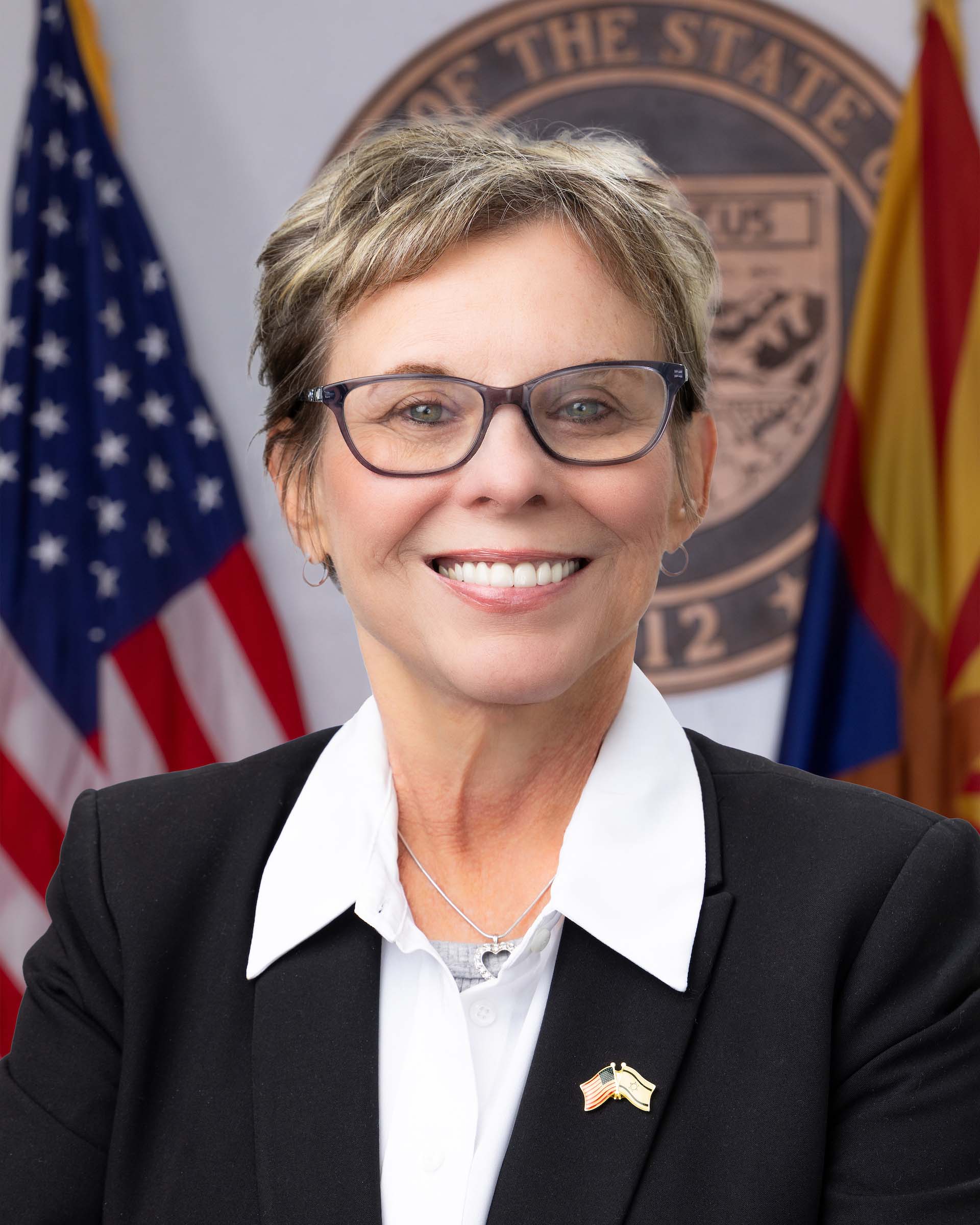
Maddy summaryArizona's SB 1602 increases monthly stipends for kinship foster parents caring for children in state custody. The bill raises the stipend to $400 per child monthly for 2026-2027, $500 for 2027-2028, and $600 starting in 2029. This directly affects relatives or individuals with significant relationships who provide foster care for children removed from their homes. The increase applies to the existing stipend program under Arizona law, supplementing other financial benefits like full foster care payments or Temporary Assistance for Needy Families. The bill amends Section 8-514.03 of Arizona Revised Statutes to implement these specific, time-bound payment amounts.
Sponsored bills
Maddy summarySB 1173 requires operators of specific behavioral health facilities in Arizona to obtain a valid fingerprint clearance card by January 1, 2027, as a condition of licensure. This applies to outpatient behavioral health centers, inpatient facilities, residential facilities, counseling centers, substance abuse transitional programs, and specialized behavioral health transitional facilities. The bill mandates that all applicants, licensees, and facility owners must be U.S. citizens or lawfully present in the U.S. to qualify for the required clearance card. The requirement references existing fingerprinting procedures under Arizona Revised Statutes § 41-1758.07. The bill does not alter existing definitions or create new exemptions beyond the specified facility types.
Maddy summaryHB 2207 appropriates $300,000 from Arizona's state general fund annually for the state Department of Corrections' braille transcription program, which provides braille materials to inmates. The bill requires the department to submit annual reports by October 15 each year, detailing the number of Arizona inmates and out-of-state inmates served. This increases the program's funding from $200,000 to $300,000 per year, with the legislature intending this as ongoing annual support. The program directly serves incarcerated individuals who require braille materials for education or communication.
Maddy summarySB 1115 prohibits Arizona Health Care Cost Containment System (AHCCCS) employees from working remotely as their primary arrangement. The bill directly affects all AHCCCS employees by requiring them to report to the agency's physical worksite regularly, rather than working from home or other remote locations. It defines "work remotely" as having a primary worksite outside the agency's location and mandates that employees not be expected to work remotely on a regular basis. This policy change applies specifically to AHCCCS, Arizona's Medicaid program, and amends the state statutes governing the agency.
Maddy summarySB 1628 requires Arizona health insurance companies to annually report detailed data on claims denials to the state department by July 1, starting in 2027. This includes the total number of denied claims, top denied services (like medical procedures or mental health care), and reasons for denials. The state department must then compile this data into a public report by October 31, making it accessible online for at least three years. The bill aims to increase transparency around insurance practices affecting healthcare providers and patients, without changing how insurers process claims directly.
Maddy summarySB 1234 requires courts in Arizona to appoint attorneys for children in specific juvenile court cases, including delinquency cases involving detention, dependency proceedings, and termination of parental rights. It mandates that attorneys be appointed before the first hearing in delinquency cases and ensures representation for indigent parents seeking counsel. The bill also requires courts to appoint a guardian ad litem (who must be an attorney) in abuse or neglect cases to protect the child’s best interests, and sets deadlines for attorneys to meet with juveniles before key hearings. Counties may fund these appointments, and public defenders may serve in certain cases with court authorization. This law directly affects juveniles, parents, and court staff by standardizing legal representation in critical child welfare and justice proceedings.
Maddy summarySB 1169 appropriates $10 million from Arizona's general fund and $18.768 million in funding authority for the Arizona Health Care Cost Containment System Administration to support graduate medical education programs. The bill directly affects hospitals operating residency programs by providing funds to cover their direct and indirect costs, including start-up expenses for new programs. These funds are intended to address Arizona's physician shortage by supplementing, but not replacing, existing local payments to hospitals. The appropriation is exempt from standard state budget lapse rules to ensure continued funding for this purpose.
Maddy summarySB 1632 requires Arizona's Department of Economic Security (DES) to give vendors 14 business days to fix problems in their credentialing applications if denied, rather than immediately rejecting them. This applies to vendors seeking to contract with DES to provide services to people using state programs. After vendors correct the issues, DES must re-evaluate their application. If still denied, vendors can appeal through established procedures under Article 3 of the chapter. The bill clarifies that "credentialing" means verifying vendors' qualifications to work with DES programs.
Maddy summarySB 1116 requires that appeals for behavioral health claims under Arizona's Medicaid program (AHCCCS) subject to a capped fee-for-service payment schedule must be reviewed by an individual with relevant clinical experience. This applies specifically to disputes over payments for behavioral health services where providers are paid under a fixed, capped rate system. The bill directly affects behavioral health providers and patients involved in payment appeals within AHCCCS. It mandates clinical expertise in the review process rather than non-clinical review, aiming to improve the accuracy of payment decisions for these services.
Maddy summarySB 1347 requires Arizona health insurance providers (including hospital service corporations, health care organizations, and disability insurers) to cover fertility preservation services for cancer patients of reproductive age whose medically necessary treatment may cause infertility, effective January 1, 2027. Insurers cannot require preauthorization for these services and must apply standard deductibles, copayments, and coverage limits. Religious employers may request exemptions if coverage conflicts with their beliefs, but must provide written notice to subscribers. The law does not prevent individuals from purchasing supplemental insurance for these services.