

Maddy summarySB 1479 requires most individuals to present valid photo ID when recording property deeds or contracts at county offices, with exemptions for title agents, banks, attorneys, and government entities. It mandates that all real estate sales include a detailed affidavit at the time of recording, listing sale price, property details, buyer/seller information, and financing terms. The bill also creates a voluntary system for property owners to receive electronic notifications (via email or text) about changes to ownership or mailing addresses by January 2027. Additionally, it increases penalties for false property documents, requiring at least $5,000 in damages (or triple actual losses) for forgers and $1,000 for those refusing to correct errors after a written request.
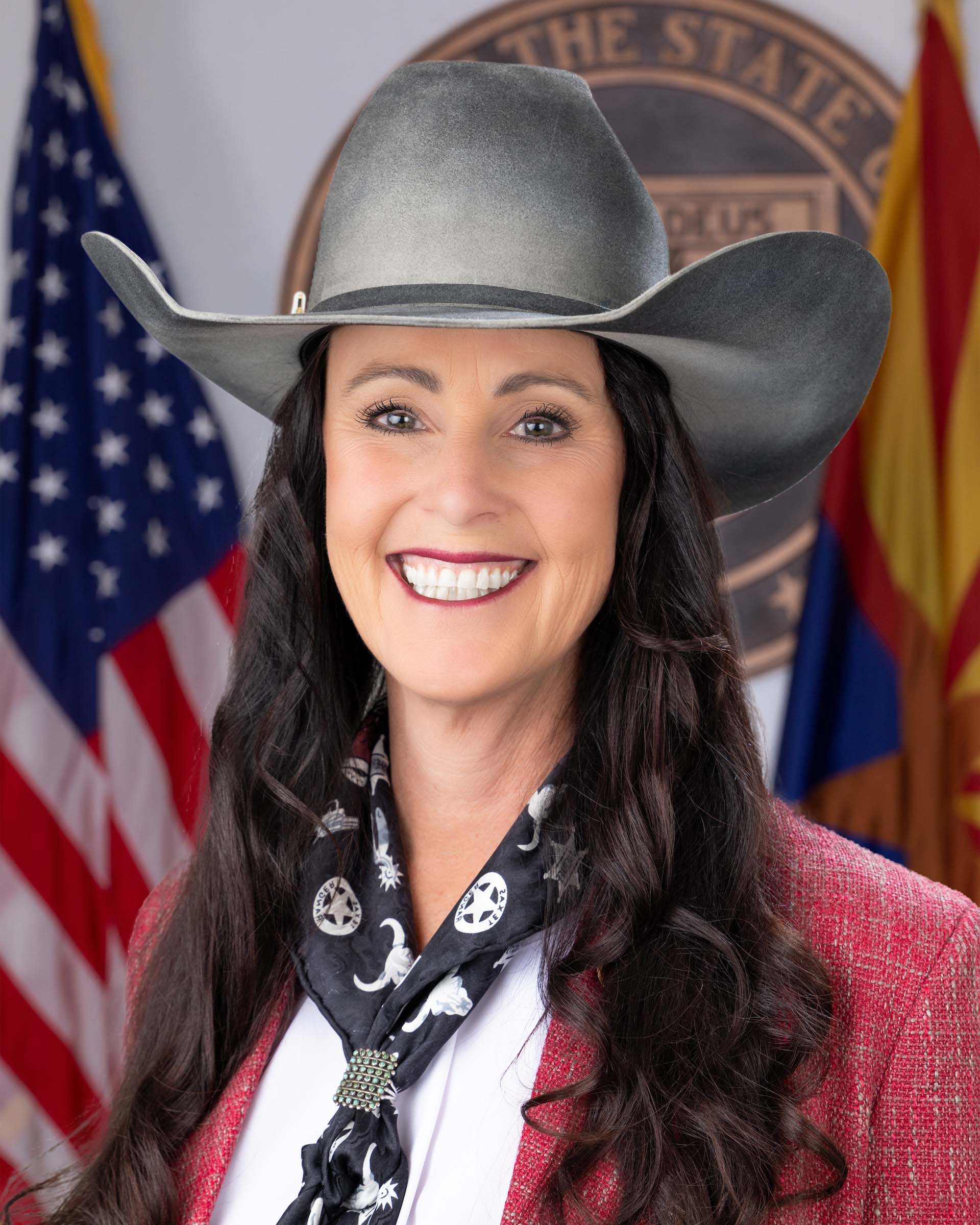
Sen. Janae Shamp
Sponsored bills
Maddy summarySB 1020 creates a new special license plate design for the Arizona Space Commission. The bill amends Arizona law to add Section 28-2470.40, establishing this specific plate as an option for vehicle owners. Purchasers would pay a fee (details not specified in the text), with proceeds supporting the Arizona Space Commission. This is a procedural change creating a new plate type, not affecting other plate regulations or substantive policies.
Maddy summaryThis bill is a Senate resolution honoring the life and service of Lieutenant Colonel Salvatore Carpitano, an Italian Air Force officer who passed away in January 2026. It formally recognizes his contributions as an F-35 instructor pilot at Luke Air Force Base, where he trained pilots from the United States, Italy, and Norway. The resolution expresses the Arizona Senate's condolences to his family and acknowledges his role in strengthening international military cooperation. It does not create new laws or policies but serves as a commemorative tribute to his distinguished career and personal character.
Maddy summarySB 1207 appropriates $150,000 from Arizona's state general fund for the 2026-2027 fiscal year to the Arizona Department of Transportation. The funds will support a study examining financing options for new development to improve transportation infrastructure along U.S. Route 60 and State Route 303. This study focuses on identifying potential funding mechanisms to support future regional and statewide transportation projects in these corridors. The bill does not fund construction but aims to inform future planning decisions.
Maddy summarySB 1709 requires Arizona courts to impose a mandatory $65 monthly fee for adults on probation (unless the court determines they cannot pay), with fees collected to fund adult probation services. It adds provisions allowing remote reporting for probationers to accommodate work, family care, or treatment needs, and establishes a process for transferring probation supervision between counties under specific conditions. The bill also clarifies that probation fees must be paid to county treasurers for the adult probation services fund, not to courts directly. It directly affects individuals placed on probation in Arizona, particularly those in supervised probation programs, by adding this financial obligation and modifying reporting requirements. The bill does not change probation revocation rules for dangerous crimes involving children, as its title suggests, but focuses on administrative and fee-related procedures.
Maddy summarySB 1402 adds a specific requirement for individuals convicted of "dangerous crimes against children" (as defined in Arizona law) who must register as a level 3 offender. It mandates that courts require GPS or electronic monitoring for the entire probation period for these offenders, rather than allowing standard probation terms. The bill also permits courts to charge a fee to cover the monitoring costs, which would be deposited into the adult probation services fund. This provision directly affects convicted offenders classified as level 3 sex offenders for child-related crimes who are placed on probation. The law does not change standard probation lengths but adds this monitoring requirement for a specific category of offenders.
Maddy summarySB 1213 requires Arizona law enforcement to verify the immigration status of individuals arrested for any offense when there is reasonable suspicion they are undocumented, using federal verification methods. It mandates that courts immediately notify U.S. Immigration and Customs Enforcement (ICE) or U.S. Customs and Border Protection (CBP) when an undocumented immigrant is released from jail or fined for a crime. The bill also allows secure transport of undocumented immigrants to federal custody, requiring judicial authorization for transport outside Arizona. Additionally, it presumes lawful presence for individuals presenting Arizona driver's licenses, tribal IDs, or other specified identification.
Maddy summarySB 1010 renames Arizona's Loop 202 highway as the "Charlie Kirk Highway" in honor of Charlie Kirk. The bill requires the Arizona Department of Transportation to update all official documents, records, and signage to include this new name while maintaining existing designations. It affects public records and highway signage for Loop 202, with no changes to the highway's physical structure or function. This is a ceremonial designation with no substantive policy changes.
Maddy summaryArizona's SB 1602 increases monthly stipends for kinship foster parents caring for children in state custody. The bill raises the stipend to $400 per child monthly for 2026-2027, $500 for 2027-2028, and $600 starting in 2029. This directly affects relatives or individuals with significant relationships who provide foster care for children removed from their homes. The increase applies to the existing stipend program under Arizona law, supplementing other financial benefits like full foster care payments or Temporary Assistance for Needy Families. The bill amends Section 8-514.03 of Arizona Revised Statutes to implement these specific, time-bound payment amounts.
Maddy summarySB 1194 prohibits healthcare professionals and institutions in Arizona from denying care, services, or altering care quality based on a patient's vaccination status. It directly affects patients seeking healthcare and requires providers to offer equal care regardless of vaccination history. The bill allows individuals harmed by such discrimination to sue for damages, with violations subject to civil penalties of $500 per incident or three times actual damages, whichever is higher. It explicitly states that public health emergencies, crises, or pandemics cannot override these protections, ensuring vaccination status cannot be used to restrict healthcare access.