

Maddy summaryHB 2132 requires Arizona outpatient surgical centers and hospitals to implement policies ensuring a registered nurse trained in perioperative care (a "circulator" nurse) is physically present in the operating room for the entire duration of every surgical procedure, effective by January 1, 2026. This directly affects healthcare facilities and their surgical teams by mandating specific staffing protocols during operations. The circulator nurse must coordinate patient safety and support the surgical team throughout the procedure, as defined in the bill. The Arizona Department of Health will enforce this requirement during facility inspections and when addressing related complaints.
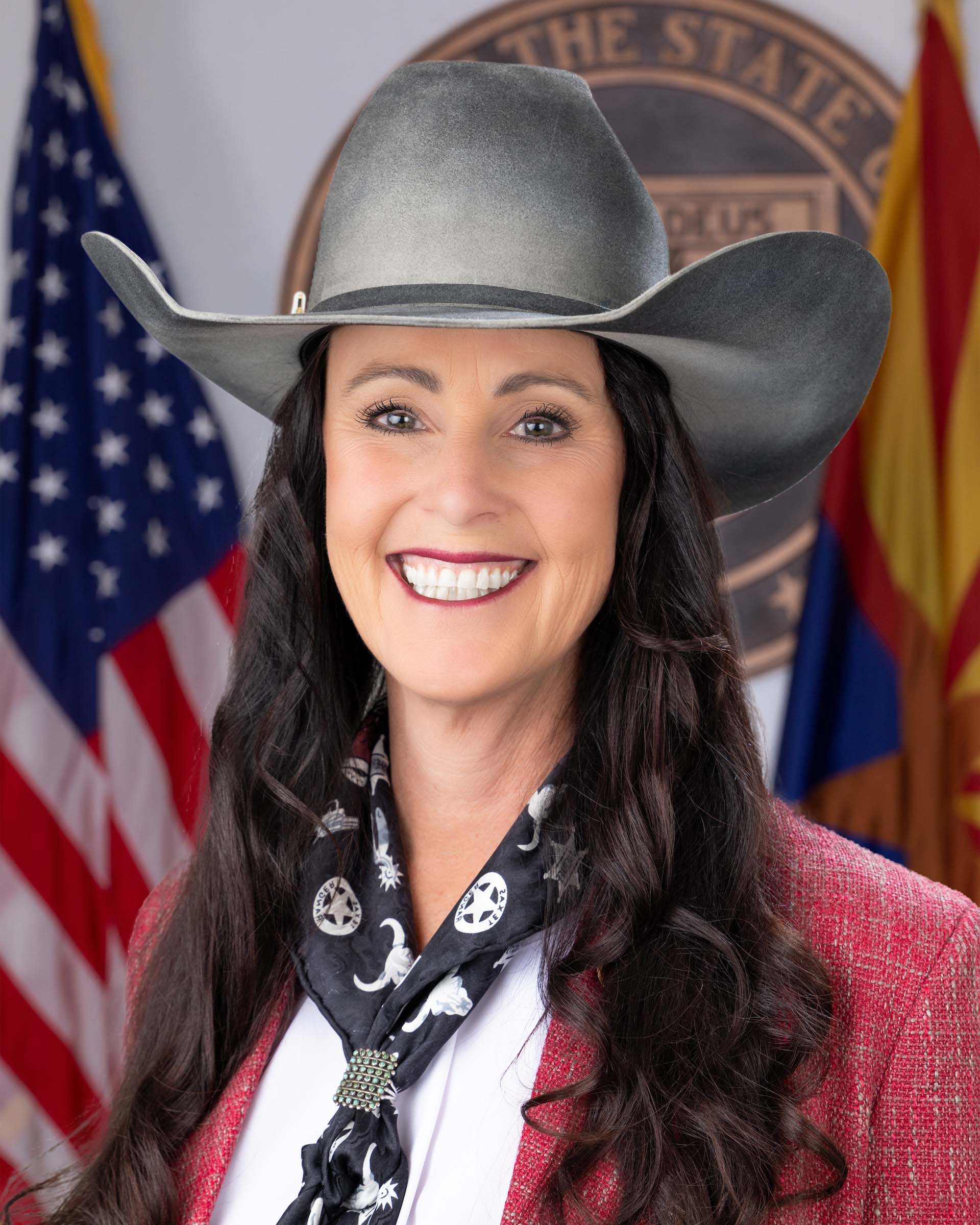
Sen. Janae Shamp
Sponsored bills
Maddy summaryHB 2539 appropriates $9,200,000 from Arizona's state general fund for fiscal year 2025-2026 to the Department of Transportation. The funds are specifically designated to design a new traffic interchange and connecting arterial roadways at State Route 303 and 155th Avenue. This bill directly affects the Department of Transportation and the communities near this intersection by funding the initial design phase of infrastructure improvements. It does not fund construction or alter traffic laws, focusing solely on planning and engineering work.
Maddy summarySB 1080 establishes a joint legislative committee to review Arizona's individual and corporate income tax credit programs. The committee, composed of five House members (appointed by the Speaker) and five Senate members (appointed by the President), must evaluate each credit based on its revenue cost to the state, economic benefits like job creation, and administrative complexity. After reviewing credits annually, the committee recommends whether to keep, amend, or eliminate them and submits findings to lawmakers and the governor by December 15 each year. This process directly affects all existing tax credits, requiring regular assessment of their effectiveness and fiscal impact.
Maddy summarySB 1234 updates the Arizona Revised Statutes to provide clear definitions for terms used by the state board of pharmacy, specifically addressing modern practices like automated prescription-dispensing kiosks and virtual manufacturers. The bill clarifies existing language regarding compounding, controlled substances, and advertising to ensure consistent regulatory standards for pharmacists and pharmacy technicians. By establishing precise meanings for these concepts, the legislation aims to streamline how the board oversees pharmacy operations without changing current laws or creating new penalties. This measure primarily affects the state board of pharmacy and licensed pharmacy professionals by refining the legal framework they operate under.
Maddy summaryThis bill establishes new fees for individuals in Arizona who attend defensive driving schools to avoid traffic penalties. It requires courts to set a specific diversion fee and charge a mandatory $45 surcharge for each person attending such a school. The collected funds are directed to state agencies, including the Department of Public Safety, while an additional administrative fee of up to $15 is also imposed on participants. These financial obligations take effect starting May 31, 2025.
Maddy summaryThis Arizona bill establishes a new process for handling traffic violations captured by photo radar systems, allowing drivers to contest tickets without needing to identify themselves or respond to the initial notice. It mandates that law enforcement agencies, rather than private companies, must review the evidence before issuing a citation and requires specific warnings on notices that failure to respond could lead to additional fees. The legislation also introduces a $100 civil penalty option; if paid within ten days, the violation will not affect the driver's license status or auto insurance rates. Finally, the law changes how legal documents are served in these cases, permitting alternative methods like posting on a property door and explicitly prohibiting license suspension based solely on citations served this way.
Maddy summaryThis bill updates Arizona's laws regarding sexual conduct with minors by clarifying the specific criminal classifications based on the victim's age and the severity of physical injury. It establishes that sexual acts with a child twelve or younger who suffers serious physical injury result in a life sentence without the possibility of parole, while also adjusting penalties for victims aged fifteen and older depending on whether the offender held a position of trust. The legislation directly affects individuals accused of these crimes by defining stricter sentencing guidelines and removing eligibility for early release in the most severe cases. By amending existing statutes, the law aims to provide clearer consequences for different scenarios of sexual misconduct involving minors.
Maddy summaryThis bill establishes specific waiting periods before individuals convicted of sexual offenses can petition to end their lifetime probation, requiring a twenty-year wait for class 2 or 3 felonies and a ten-year wait for class 4, 5, or 6 felonies. It also mandates that probation departments investigate any current or pending criminal charges against the individual before recommending an early termination or modification of their sentence. The legislation prevents courts from granting probation termination if the person has unresolved criminal charges at the time of the request. Although passed by the legislature, the bill was vetoed by the Governor and did not become law.
Maddy summarySB 1159 is a technical correction bill that amends the definitions within the Arizona Revised Statutes regarding dental professionals and practices. The legislation updates the legal descriptions for various roles, such as dental hygienists, assistants, and therapists, to ensure clarity in the state's dental regulations. By refining these terms, the bill aims to provide a more precise framework for how the state board of dental examiners oversees the industry. This change does not alter existing laws or create new requirements but rather clarifies the language used to describe licensed personnel and their duties.
Maddy summaryThis bill establishes a housing trust fund in Arizona to support affordable housing for low- and moderate-income households, with a specific requirement that a portion of the money be used exclusively for rural areas. The fund is financed through unclaimed property, transfers from other state accounts, and investment earnings, which the state treasurer will manage. Money from the fund can be used to build or renovate housing facilities and provide assistance for individuals with serious mental illness, while the director must prioritize projects that help families with children. The bill also mandates annual reports to the legislature detailing how the funds were spent and requires the department to consult with local governments before starting construction projects. Finally, the legislation exempts these funds from certain state appropriation rules and allows up to 10% of the fund to be used for administrative costs.