

Maddy summaryHB 2415 amends Arizona's definition of "dangerous drugs" to explicitly include over 50 specific chemical compounds and entire classes of substances (like synthetic cannabinoids and hallucinogens) that were previously unlisted. This bill directly affects individuals and businesses handling or selling products containing these chemicals, including certain kratom-derived compounds referenced in the title. The key mechanism is adding these substances to the legal definition of prohibited drugs under Section 13-3401 of Arizona Revised Statutes, which would subject them to existing drug laws. Note: The bill's text focuses on chemical definitions, not specifically banning kratom products, though the title references them. This is a procedural definition amendment, not a new enforcement measure.
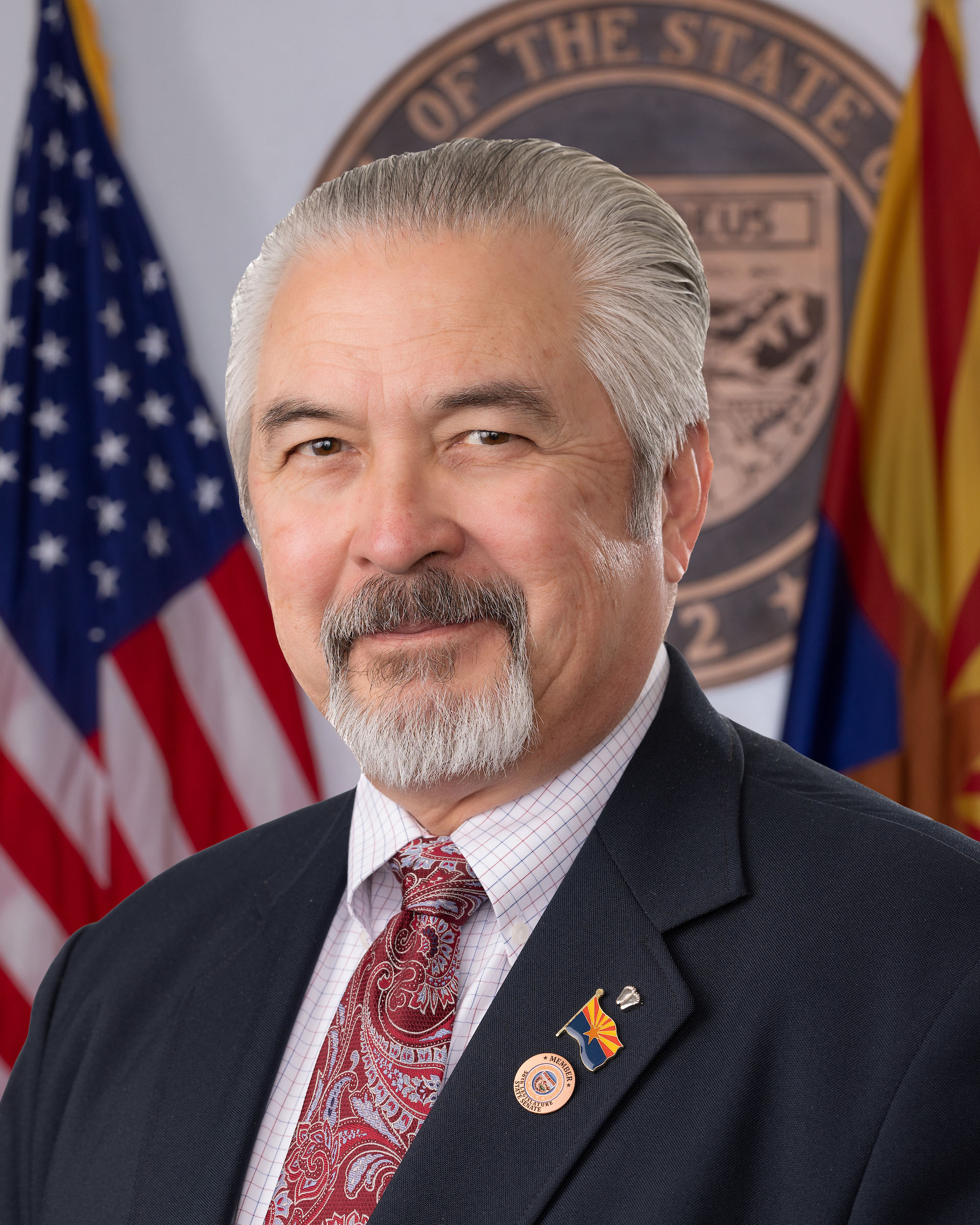
Sen. Frank Carroll
Sponsored bills
Maddy summaryHCR 2047 is a symbolic Arizona legislative resolution recognizing the historical and biblical significance of "Judea and Samaria" as the ancestral homeland of the Jewish people. It formally rejects the term "West Bank" as a political construct and mandates that Arizona state government use "Judea and Samaria" in all official communications and documents regarding the territory. The resolution cites biblical references, historical claims, and legal arguments (including the San Remo Resolution and League of Nations Mandate) to support its position. As a concurrent resolution, it has no legal effect on international borders or U.S. policy but reflects Arizona's official stance on terminology. It does not alter any existing laws or policies related to the region.
Maddy summaryHB 2411 makes it a class 2 felony to knowingly administer or give an abortion-inducing drug to a pregnant woman without her knowledge or consent, with the intent to cause an abortion. The bill defines "abortion-inducing drug" broadly to include off-label uses of medications like mifepristone (RU-486) or misoprostol, while excluding drugs prescribed for other medical purposes (e.g., chemotherapy) or contraceptives used as intended. It explicitly states this law does not prevent prosecution under other laws if the drug causes death or injury. The bill focuses on criminalizing non-consensual administration of such drugs, not on restricting abortion access generally.
Maddy summarySB 1479 requires most individuals to present valid photo ID when recording property deeds or contracts at county offices, with exemptions for title agents, banks, attorneys, and government entities. It mandates that all real estate sales include a detailed affidavit at the time of recording, listing sale price, property details, buyer/seller information, and financing terms. The bill also creates a voluntary system for property owners to receive electronic notifications (via email or text) about changes to ownership or mailing addresses by January 2027. Additionally, it increases penalties for false property documents, requiring at least $5,000 in damages (or triple actual losses) for forgers and $1,000 for those refusing to correct errors after a written request.
Maddy summaryThis bill is a Senate resolution honoring the life and service of Lieutenant Colonel Salvatore Carpitano, an Italian Air Force officer who passed away in January 2026. It formally recognizes his contributions as an F-35 instructor pilot at Luke Air Force Base, where he trained pilots from the United States, Italy, and Norway. The resolution expresses the Arizona Senate's condolences to his family and acknowledges his role in strengthening international military cooperation. It does not create new laws or policies but serves as a commemorative tribute to his distinguished career and personal character.
Maddy summaryHB 4026 creates a state-funded program where Arizona cities, towns, and counties receive payments for public infrastructure improvements (like roads or utilities) supporting new or expanding manufacturing facilities. To qualify, manufacturers must certify minimum capital investments ($50 million for smaller counties, $500 million for larger ones) and sign agreements detailing project costs. Payments are capped at 80% of infrastructure costs or annual state tax revenues from qualifying projects, with a yearly maximum of $75 million total. The program requires local governments to return excess funds if payments exceed the cap and ensures funds are used exclusively for infrastructure tied to the manufacturing facility.
Maddy summarySB 1088 appropriates $2.5 million from Arizona’s state general fund for the Arizona Department of Homeland Security’s cybersecurity programs during fiscal year 2026-2027. Specifically, $500,000 is allocated for generative artificial intelligence cybersecurity programs, and $2 million is designated to modernize the statewide VPN security network using a zero trust network access solution. This funding directly supports the state’s cybersecurity infrastructure and operations under the Department of Homeland Security. The bill does not create new policy but provides targeted financial resources for specific technical upgrades and emerging technology applications.
Maddy summarySB 1207 appropriates $150,000 from Arizona's state general fund for the 2026-2027 fiscal year to the Arizona Department of Transportation. The funds will support a study examining financing options for new development to improve transportation infrastructure along U.S. Route 60 and State Route 303. This study focuses on identifying potential funding mechanisms to support future regional and statewide transportation projects in these corridors. The bill does not fund construction but aims to inform future planning decisions.
Maddy summarySB 1204 allocates $5.5 million from Arizona's state general fund for fiscal year 2026-2027 to the Arizona Department of Transportation. The funds are specifically for designing and conducting an environmental analysis of interchange improvements at U.S. Route 60 and State Route 303. This bill directly affects the Department of Transportation and the communities near this highway intersection by funding the initial planning phase of potential infrastructure upgrades. The appropriation is limited to the design and environmental review stages, not construction.
Maddy summarySB 1616 requires business entities offering dental services in Arizona to register with the state dental board, rather than just individual dentists. It mandates registration applications detailing services, responsible dentists, officers, and record custodians, with fees and triennial renewals. The bill also sets requirements for secure patient record protocols, change notifications, and prohibits majority ownership by dentists with revoked licenses. Key exemptions include sole proprietorships of licensed dentists, certain professional corporations, dental schools, and federally regulated facilities. This primarily affects corporate dental practices, not individual providers or exempt entities.