

Maddy summarySB 1625 requires Arizona schools and districts to publicly share detailed financial data through a new transparency portal and annual website postings. Starting in 2021-2022, charter schools, individual school districts, and district schools must post their previous year's general ledger online by October 1 each year, showing exactly how money is spent (including teacher pay, supplies, and vendor payments) and where it came from (federal, state, local). The portal, developed by a third-party contractor with education finance expertise, will display school-level revenue, spending comparisons, and demographic data to help parents and communities understand funding. This law directly affects all Arizona public schools by mandating clear, standardized financial reporting to improve accountability.
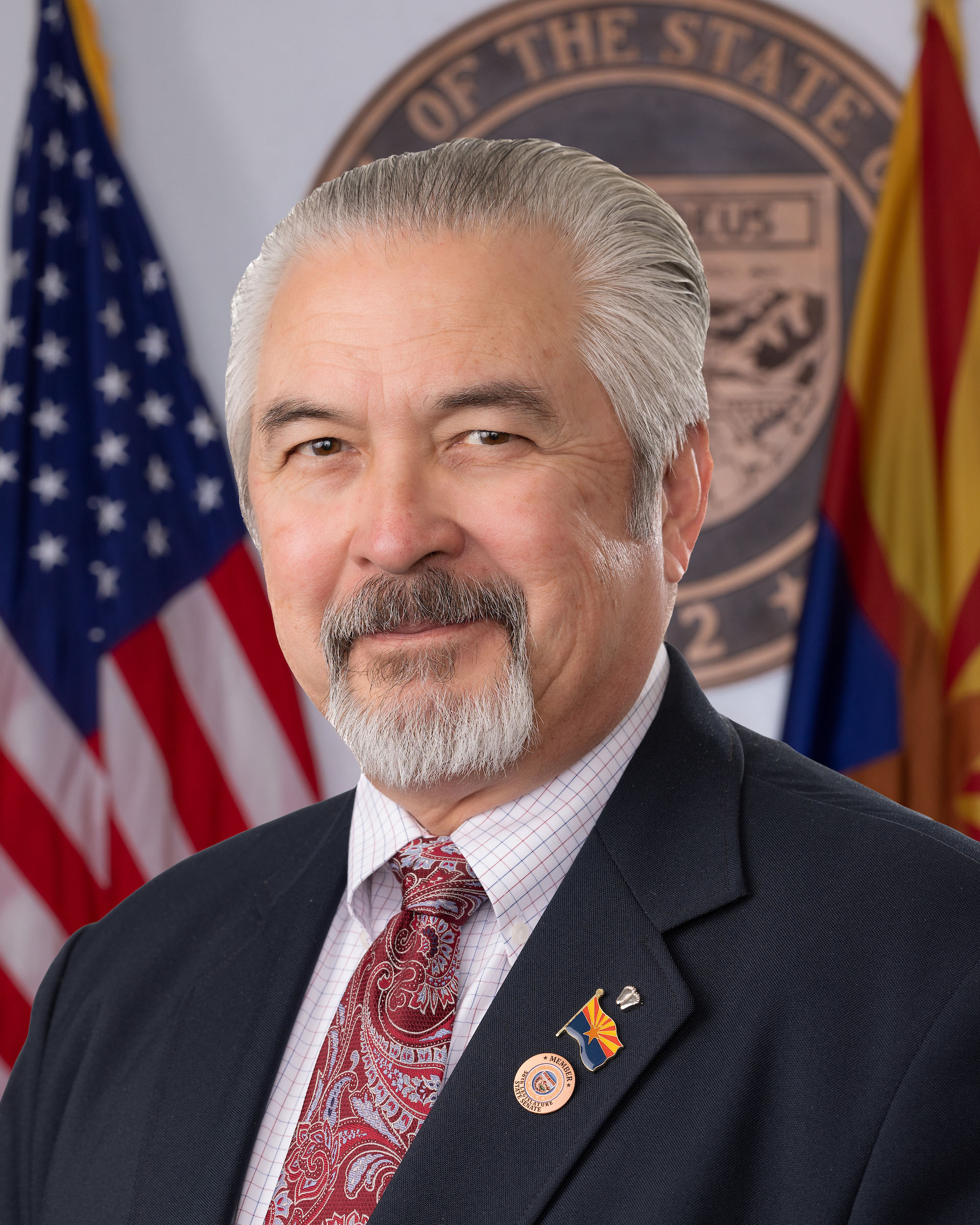
Sen. Frank Carroll
Sponsored bills
Maddy summaryHB 2635 amends Arizona's tax code to add new sales tax exemptions for specific items. It exempts sales of "cash equivalents" (like gift cards, stored-value cards, and prepaid digital payment tools) and "precious metal bullion" (refined gold, silver, etc.) from retail sales tax. The bill defines "cash equivalents" as pre-paid items denominated in money redeemable for goods/services, excluding telecom prepaids, and clarifies that "monetized bullion" (coins used as currency) is exempt. This directly affects retailers selling these items, removing tax liability on such transactions. The bill focuses solely on tax policy, with no provisions related to firearm storage devices as inaccurately suggested in the title.
Maddy summarySB 1699 establishes an Air Quality Permitting Coordination Committee with members from Arizona's Department of Environmental Quality and county air quality departments (Maricopa, Pima, Pinal). The committee must meet quarterly to review permits, ensure consistency across jurisdictions, and share best practices, then submit annual reports starting in 2026. The bill requires the state and counties to adopt standardized general air quality permits for specific industries (like landfills, oil/gas facilities, and aggregate processing) by July 2026 and develop clear guidance on emissions limits and permit eligibility. These changes aim to streamline permitting processes while ensuring uniform standards across Arizona's air quality agencies. The bill expires December 31, 2027.
Maddy summarySB 1334 amends Arizona election law to clarify how counties designate polling places and establish emergency voting centers. It allows county election officials to combine precincts, create voting centers (where voters can cast ballots at any location in the county), and set up emergency voting centers during elections if approved by a recorded vote of the board of supervisors. Emergency centers require specific location/hours notices, permit voter registration updates at the site, and allow temporary location changes if centers become unavailable. The bill also requires counties to notify voters 33 days in advance for polling place changes and specifies that schools may deny polling place requests only for valid reasons like lack of space or safety concerns.
Maddy summarySB 1539 amends Arizona's tax code to exempt clean rooms used in medical facilities from the transaction privilege tax. This change directly affects medical providers, laboratories, and healthcare facilities operating clean rooms for medical purposes. The bill adds clean rooms to the list of tax-exempt durable medical equipment under section 42-5061(A)(13), which already covers items like prosthetics and hearing aids. The exemption applies to clean rooms that are medically necessary, prescribed by licensed professionals, and used in home or facility settings for treatment. This policy change reduces tax burdens for facilities purchasing or maintaining clean rooms essential for medical care.
Maddy summaryThis bill would have amended Arizona election law to change how counties establish polling places and manage voting locations. It required counties to set precinct boundaries by October 1 before elections, with specific rules for combining precincts or using voting centers where any voter can cast a ballot with ID. The bill also mandated that public schools provide space for polling places unless a principal denies it for safety or space reasons, and created procedures for emergency voting centers during elections. It directly affected county election officials, public schools, and voters across Arizona.
Maddy summarySB 1630 establishes a study committee to examine issues affecting Arizona inmates aged 55+ who are aging within the state correctional system. The committee, composed of legislative members, corrections and healthcare officials, and community representatives (including a former inmate or family member), will research release programs, healthcare access, and transitions to long-term care. It must develop recommendations for a step-by-step release plan and a healthcare roadmap, submitting a final report to state leaders by December 31, 2025. This is a procedural bill creating a study body - not a policy change - and directly affects aging incarcerated individuals in Arizona.
Maddy summarySB 1146 establishes rules for photo enforcement systems that automatically capture images of vehicles speeding (11+ mph above the limit) or running red lights. It directly affects motor vehicle owners (who receive fines for violations captured by the system) and local governments (cities/counties that must adopt specific ordinances before using the systems). Key provisions require advance warning signs, limit fines to $350 (doubling in school/work zones), prohibit capturing faces in images, and mandate that notices be mailed within 30-60 days of the violation. The bill also bans revenue-based compensation for system operators and requires systems to undergo monthly performance logs and annual calibration checks.
Maddy summarySB 1234 updates the Arizona Revised Statutes to provide clear definitions for terms used by the state board of pharmacy, specifically addressing modern practices like automated prescription-dispensing kiosks and virtual manufacturers. The bill clarifies existing language regarding compounding, controlled substances, and advertising to ensure consistent regulatory standards for pharmacists and pharmacy technicians. By establishing precise meanings for these concepts, the legislation aims to streamline how the board oversees pharmacy operations without changing current laws or creating new penalties. This measure primarily affects the state board of pharmacy and licensed pharmacy professionals by refining the legal framework they operate under.
Maddy summaryThis bill updates Arizona's laws regarding sexual conduct with minors by clarifying the specific criminal classifications based on the victim's age and the severity of physical injury. It establishes that sexual acts with a child twelve or younger who suffers serious physical injury result in a life sentence without the possibility of parole, while also adjusting penalties for victims aged fifteen and older depending on whether the offender held a position of trust. The legislation directly affects individuals accused of these crimes by defining stricter sentencing guidelines and removing eligibility for early release in the most severe cases. By amending existing statutes, the law aims to provide clearer consequences for different scenarios of sexual misconduct involving minors.