

Maddy summaryArizona's SB 1599 prohibits school districts from approving textbooks or instructional materials that contain content reflecting "adversely on persons" based on race, ethnicity, sex, religion, disability, nationality, sexual orientation, or gender identity. The bill requires school districts to publicly review textbooks for 60 days via website and physical copies, notify parents about review periods, and hold open committee meetings for textbook selection. It directly affects school boards, administrators, and teachers who select classroom materials in Arizona public schools. Key provisions include mandatory public access to textbook lists and new restrictions on content deemed harmful to protected groups, while exempting schools without full-time library staff.
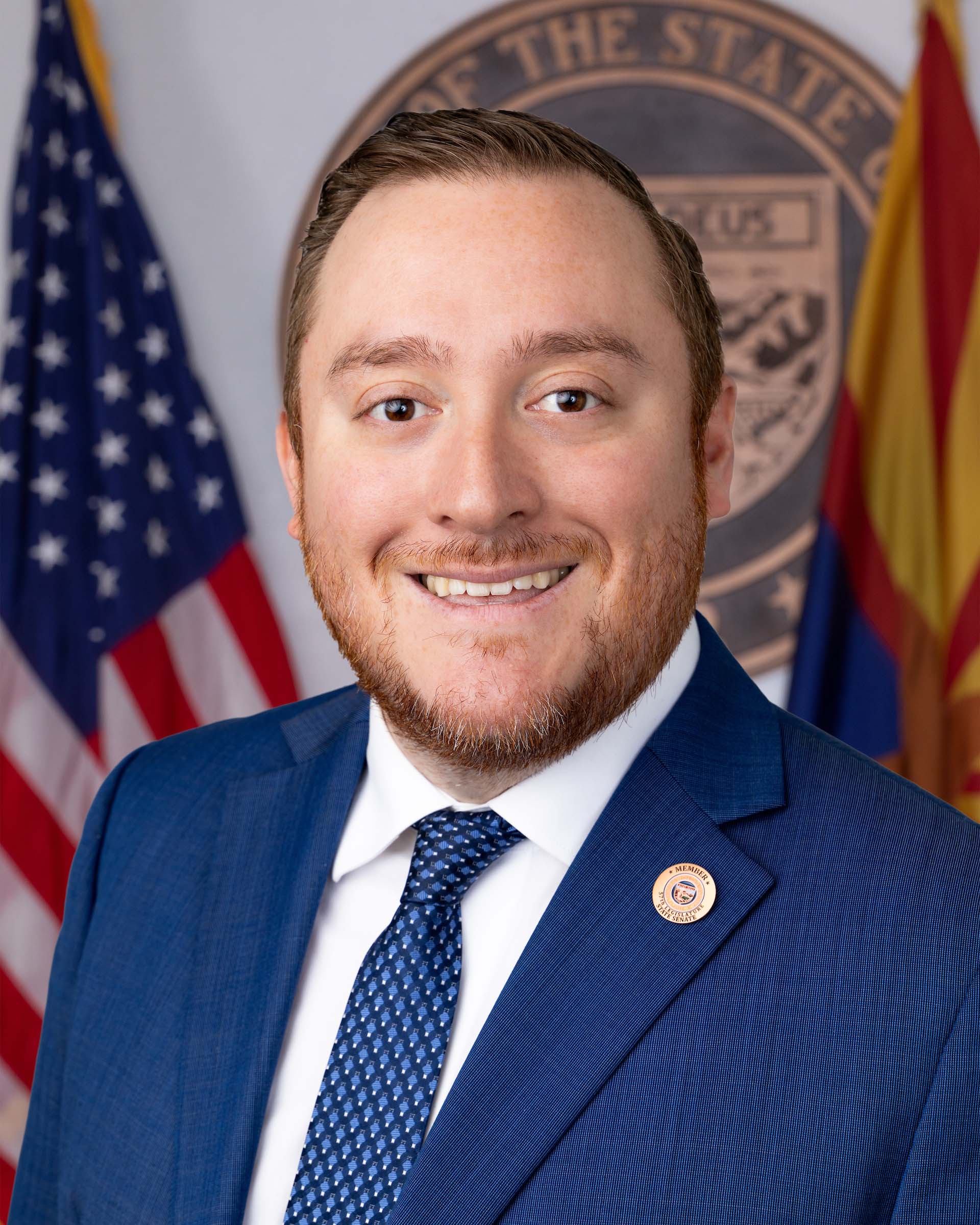
Sen. Flavio Bravo
Sponsored bills
Maddy summarySB 1612 repeals Arizona's current law requiring school sports teams to be designated based on biological sex, which was established in 2022. It removes specific statutory references (Section 15-120.02 and related sections from Laws 2022, Chapter 106) that governed team eligibility rules. This bill does not create new requirements but eliminates the existing legal framework for biological-sex-based team designations. The repeal would allow schools to establish their own team eligibility policies without this state mandate. The bill is currently in the Senate for further consideration.
Maddy summarySB 1600 makes it a crime for adults to negligently leave firearms accessible to minors under 17, specifically when the firearm is "readily dischargeable" (loaded or ready to fire). It requires reasonable storage measures like locked containers or trigger locks, and violations are classified as a class 6 felony (class 4 if injury or death occurs). The bill directly affects parents, guardians, or family members responsible for firearm storage, with specific exceptions for supervised use (e.g., hunting, self-defense). Key provisions include a 7-day arrest delay for family members if injury/death results and clear definitions of "minor" and "family member."
Maddy summarySB 1605 allocates $5 million in state funds for home and community-based services and $5 million for senior housing assistance to area agencies on aging in Arizona. These funds, distributed through the Department of Economic Security, directly support services for seniors in the state, including in-home care and housing support. The bill provides specific funding amounts for existing programs without creating new eligibility rules or altering service requirements. It is a straightforward appropriations measure focused on financing current senior services.
Maddy summarySB 1643 requires commercial firearm dealers in Arizona to obtain a state permit from the Department of Public Safety. Dealers must be at least 21 years old, hold a valid federal firearms license, pass background checks, and meet other eligibility criteria (like no recent firearm-related convictions). The law establishes a $250 permit fee and a dedicated fund to cover administrative costs for issuing permits and conducting inspections. It directly affects businesses selling firearms commercially (defined as selling five or more firearms within 12 months), requiring them to comply with these new licensing and safety standards.
Maddy summarySB 1528 prohibits Arizona state agencies and local governments from requiring contractors on public works projects to pay prevailing wages or include specific labor agreements. The bill bans conditions such as mandatory project labor agreements, neutrality agreements with unions, or participation in federally registered apprenticeship programs as requirements for bidding on or performing public construction work. It directly affects contractors and subcontractors working on public building projects funded by the state or local governments. The law explicitly states it does not interfere with private collective bargaining or federal labor protections, defining key terms like "project labor agreement" and "public works contract" for clarity.
Maddy summarySB 1532 sets a termination date for the governing board of the Arizona State Schools for the Deaf and the Blind (ASDB). The board of directors will end on July 1, 2034, and related statutes will be repealed on January 1, 2035. The bill does not change the schools' operations or services but defines the end of the current governance structure. It ensures the schools' educational mission for sensory-impaired children continues until the board's termination date. The bill is procedural, establishing a sunset for the board's authority without altering the schools' purpose or funding.
Maddy summarySB 1459 establishes Arizona's Public Employee Bargaining Act, creating a legal framework for collective bargaining between public employees and public employers (state/local government agencies). The bill defines key terms like "exclusive representative" (a union certified to negotiate on behalf of employees), "appropriate bargaining unit," and "impasse," while outlining rights for both employees (to form unions and bargain) and employers (to manage operations). It creates a Public Employee Labor Relations Board (appointed by the governor) to oversee certification of unions, resolve disputes, and enforce rules for bargaining. This law directly affects all public employees (excluding elected officials and board members) and public employers across Arizona state and local government.
Maddy summarySB 1467 repeals a provision (Section 41-1519) that previously provided tax relief for data centers in Arizona. This bill directly affects data centers that previously qualified for these tax incentives. The repeal removes the specific tax break program, ending eligibility for this form of tax relief for qualifying data center facilities. The bill does not create new rules but eliminates an existing tax incentive.
Maddy summaryArizona's SCR 1035 proposes repealing Article XXV of the state constitution, which currently establishes a "right to work" provision. If approved by voters, this repeal would remove the constitutional ban on requiring union membership or dues as a condition of employment. The bill directly affects workers and unions by potentially allowing mandatory union security agreements in workplaces. It is a constitutional amendment requiring voter approval at the next general election, not a new law.