

Maddy summarySB 1652 makes it a crime to threaten, intimidate, or physically obstruct election officials in Arizona while they perform their duties. The bill prohibits verbal, written, or physical threats aimed at impeding election work or retaliating against officials (Section A), using threats of force or economic harm to influence them (Section B), or blocking access to voting locations or election facilities (Section C). Violations are classified as class 1 misdemeanors (Section E), and officials can file civil lawsuits seeking restraining orders or damages without proving the threat was intended to cause fear (Section D). This bill directly affects election workers, including board members, and aims to protect them from harassment during election administration.
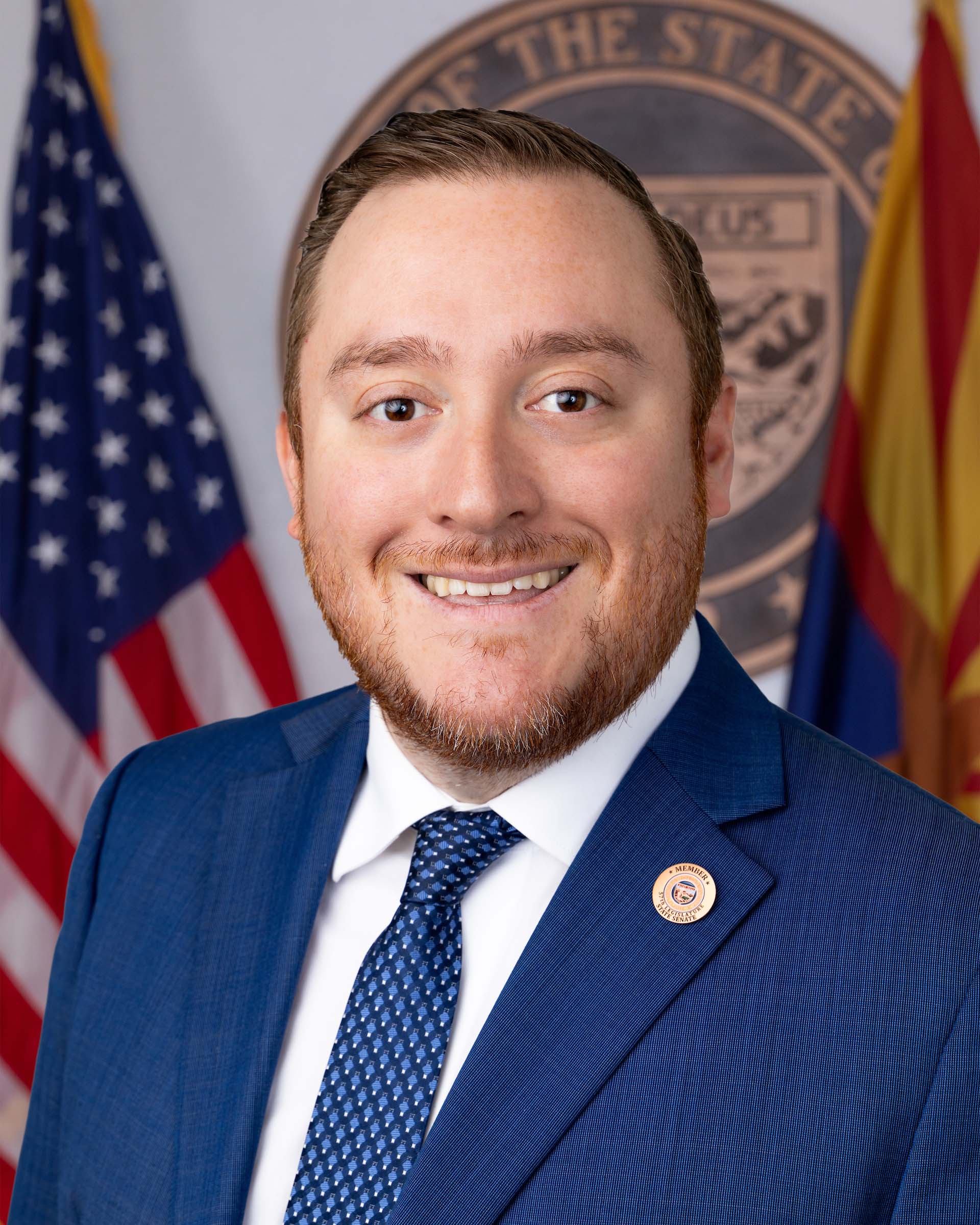
Sen. Flavio Bravo
Sponsored bills
Maddy summaryArizona's SB 1647 establishes specific class size limits for public schools, requiring all schools to adopt policies by the 2030-2031 school year. It sets maximum average class sizes (e.g., 18 students for K-3, 25 for 9-12) and prohibits exceeding these limits, with limited exceptions for specialized classes. The bill creates a dedicated "Classroom Site Fund" to support implementation, requiring schools to use these funds primarily for class size reduction, teacher compensation (including performance-based components), and related programs like teacher development. This directly affects all Arizona public schools, K-12, by mandating smaller class sizes and linking funding to compliance.
Maddy summarySB 1638 establishes standards for Arizona public and charter schools offering online instruction. It requires new online schools to operate on probation for up to three years, demonstrating improved student academic performance before becoming permanent. The bill mandates annual reporting on key metrics like course completions, end-of-course test participation, pass rates in English and math, and student enrollment patterns. Additionally, participating schools must maintain daily logs tracking students' time spent on academic tasks for attendance calculations. These provisions directly affect Arizona online schools, their students, and school districts managing these programs.
Maddy summarySB 1570 establishes clear standards for validating mental health care powers of attorney in Arizona. It requires inpatient behavioral health facilities to presume such documents are valid if notarized/witnessed (with proper witness rules) or if using the state's official form from the attorney general's website. Starting October 1, 2026, facility staff must complete annual training on these requirements, developed by the attorney general's office. The bill directly affects patients in behavioral health facilities, their designated agents, and the facilities themselves by standardizing document acceptance and staff knowledge.
Maddy summaryThis constitutional amendment establishes permanent funds for revenue from Arizona's land grants, requiring strict separation of funds based on the original land grant purpose. It mandates that funds be invested in safe securities (capping equities at 60% and single-company holdings at 5%) and sets specific annual distribution rates: 2.5% until 2024-2025, 6.9% from 2025-2026 through 2034-2035, then returning to 2.5%. Distributions fund basic state aid and school funding, with automatic reductions during market downturns to preserve capital. The bill directly affects how Arizona manages and distributes long-term land trust revenue to public education and state aid programs.
Maddy summarySCR 1034 proposes a constitutional amendment to establish a yearly spending limit for Arizona school districts on local revenues. The limit would be calculated by adjusting the 1979-1980 local revenue expenditures for all districts, accounting for changes in student population and cost of living, then multiplied by 1.10 (a 10% factor). School districts must stay under this limit unless the legislature passes a two-thirds vote in both chambers to authorize an exception for a single fiscal year. This amendment requires voter approval to take effect and would affect all public school districts in Arizona.
Maddy summaryThis bill (SB 1648) updates Arizona's online instruction standards and funding rules, primarily affecting online schools, students enrolled in them, and school districts. It requires online schools to meet specific standards (like curriculum depth, internet safety, and teacher qualifications) and mandates probationary status for new providers until they prove academic improvement. Crucially, it changes funding: full-time online students receive 95% of standard funding, while part-time students receive 85%, with daily attendance logs used to calculate these figures. The bill does not address kindergarten specifically, despite its title, focusing instead on statewide online education accountability and financial rules.
Maddy summarySCR 1033 proposes to repeal Arizona's constitutional spending limits for school districts. Currently, these limits tie annual spending to 1979-80 levels adjusted for student population and inflation, with a 10% multiplier for aggregate district spending. The bill would remove these restrictions, allowing school districts greater flexibility in budgeting without the need for special legislative approval to exceed previous spending caps. This change would directly affect all Arizona public school districts by eliminating a long-standing constitutional spending framework. The proposal is a constitutional amendment requiring voter approval after legislative passage.
Maddy summarySCR 1037, if approved by Arizona voters, would revise rules for English language education in public schools. It requires schools to identify students' primary language, assess English proficiency, and enroll non-proficient students in structured English immersion programs (120 minutes daily for K-5, 100 minutes for grades 6-12). Parents would gain the right to sue schools for failing to meet these requirements and recover attorney fees and damages. The State Board of Education would adopt research-based teaching models focused on oral/written skills, grade-level content access, and parental engagement, with annual reviews.
Maddy summarySB 1635 modifies Arizona's school funding rules by exempting certain state funds received by school districts and career technical education districts from budgetary spending limits. Specifically, it clarifies that funds provided under Chapter 15 (related to education) are not counted as "local revenues" for constitutional spending limits and cannot be restricted by budgetary controls. This change directly affects school districts, allowing them to spend these designated state funds without triggering existing expenditure caps. The bill also repeals Section 15-911 and makes minor technical adjustments to other statutes (like probation funding and justice of the peace compensation), but its primary focus is on school district budget flexibility.