

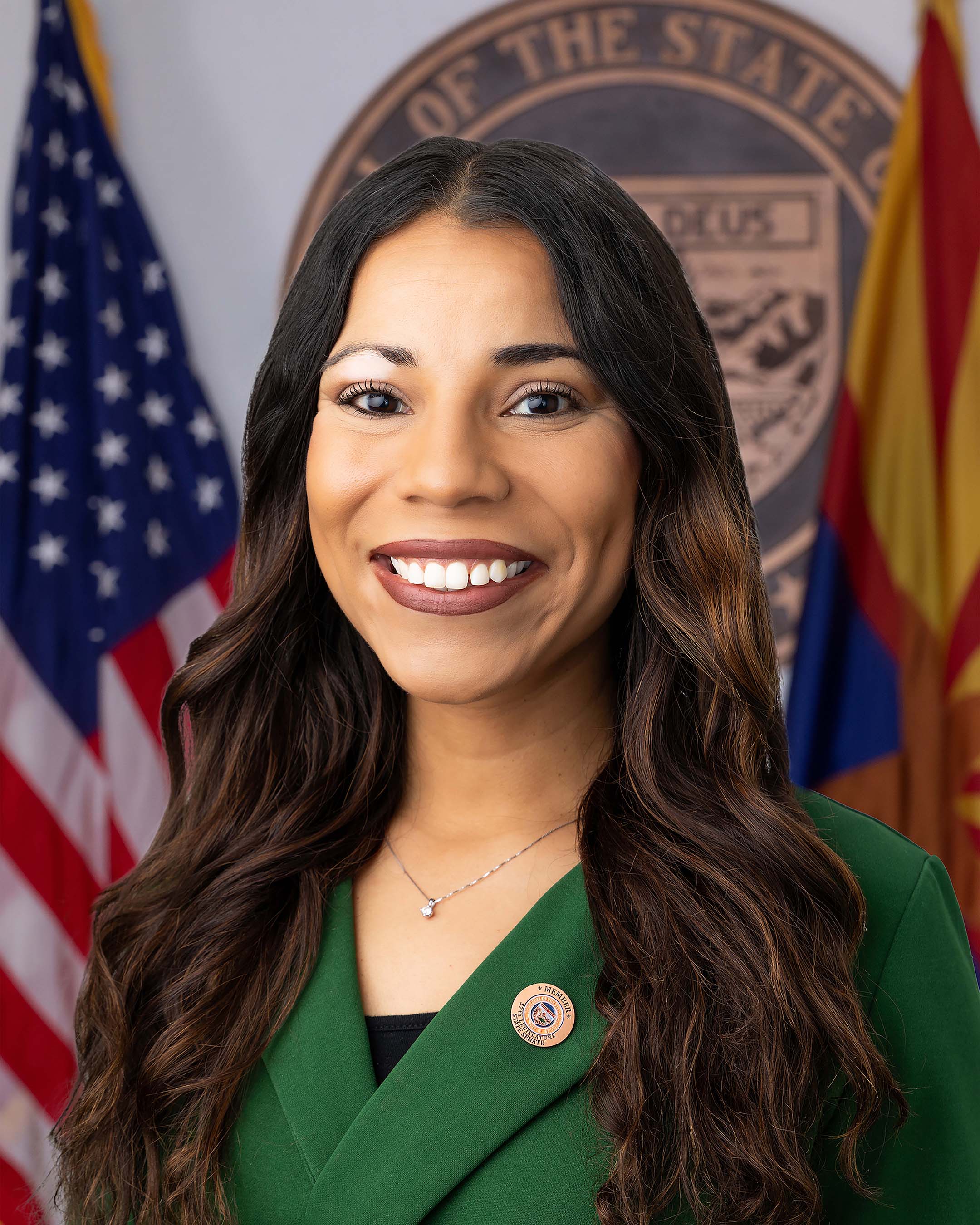
Photo of Analise Ortiz
D Arizona Senate · District 24 On the 2026 ballot

Sen. Analise Ortiz

Compare
Total votes
2,857
all sessions
Attendance
97%
76 missed
Near the chamber average
With party
92%
of cast votes
Lower than 84% of chamber peers
Bipartisan score
6%
crosses aisle rarely
Higher than 80% of chamber peers
Sponsored
640
bills & resolutions
Higher than 96% of chamber peers
Committees
5
assignments
640 bills and resolutions

Sponsored bills

Total
640
Primary
105
Co-sponsor
535
This page
640
matching current filters
Co-sponsor SB 1461
Failed · Arizona Senate · Co-sponsor
allied health care workforce; appropriation

Maddy summarySB 1461 allocates $15 million from Arizona's general fund for a new allied health workforce development program targeting roles like medical technicians and therapists (requiring specialized training beyond high school but less than a bachelor's degree). The program will fund a nonprofit meeting strict criteria, including prior training of 7,000+ students, partnerships with employers and schools, and operating in at least eight states. The nonprofit must commit to graduating 1,000 students annually through this initiative. This direct funding aims to expand training capacity for non-physician, non-nurse healthcare roles across Arizona.

Failed Mar 31, 2026 1 co-sponsor
Co-sponsor SB 1776
Passed · Arizona Senate · Co-sponsor
traditional healing services; AHCCCS

Maddy summarySB 1776 adds "traditional healing services" to the list of covered health services under Arizona's AHCCCS (Medicaid) program. It specifically covers these services only for AHCCCS members who qualify through the Indian Health Service or tribal facilities, as defined by federal regulations. The services must be delivered by or through an Indian Health Service, urban Indian organization, or tribal facility. This is a targeted addition to existing coverage, not a broad expansion, and does not change funding or eligibility outside these specific tribal partnerships.

Passed Mar 25, 2026 1 co-sponsor
Co-sponsor HB 2825
Passed · Arizona House · Co-sponsor
fines; fees; assessments; restitution; nonpayment

Maddy summaryHB 2825 amends Arizona law to change how courts handle cases where defendants fail to pay court-ordered fines, fees, restitution, or incarceration costs. It requires courts to hold hearings to determine if nonpayment is willful (intentional refusal to pay) before imposing penalties like jail time, explicitly prohibiting incarceration solely due to inability to pay. The bill mandates clear written notices in plain language for defendants about their hearing rights and financial hardship evidence, and allows courts to enter a civil default judgment if defendants skip hearings without valid reason. This directly affects individuals owing court-ordered payments, prosecutors, victims seeking restitution, and courts managing these cases.

Passed Mar 25, 2026 1 co-sponsor
Co-sponsor HCR 2064
Passed · Arizona House · Co-sponsor
Barbara Leff; death resolution

Maddy summaryThis is a ceremonial resolution (HCR 2064) expressing the Arizona Legislature's condolences upon the passing of former state legislator Barbara Leff. It honors her 1996-2006 service representing Paradise Valley, her work on HMO reform and economic development, and her contributions to voter information systems. The resolution extends sympathy to her surviving family members (husband, children, grandchildren) and acknowledges her community leadership. It has no policy impact or legislative effect beyond this expression of respect.

Passed Mar 9, 2026 1 co-sponsor
Co-sponsor SB 1487
Passed · Arizona Senate · Co-sponsor
Hopi Tribe; special plates; extension

Maddy summarySB 1487 extends the deadline for implementing Hopi Tribe special license plates in Arizona from December 31, 2025, to December 31, 2026. It requires individuals to pay $32,000 to the state for these plates, with the payer designing the plates (subject to state approval). The bill specifies that $17 of the $25 plate fee goes directly to the Hopi Tribe’s public safety department for road maintenance and traffic control on tribal reservation roads. This program affects drivers purchasing Hopi plates and directs funds to tribal infrastructure, with retroactive application starting December 30, 2025.

Passed Mar 3, 2026 1 co-sponsor
Co-sponsor HB 2593
In committee · Arizona House · Co-sponsor
appropriation; psychiatry access lines

Maddy summaryHB 2593 allocates $1.5 million from Arizona's state general fund for the University of Arizona to operate perinatal and pediatric psychiatry access lines during fiscal year 2026-2027. This funding directly supports the University of Arizona's program providing mental health support for pregnant individuals, new mothers, and children. The bill establishes a dedicated funding stream to cover direct operational costs of these specialized access lines. The appropriation is exempt from standard budget lapse rules, ensuring the funds remain available for the intended purpose.

In committee Feb 23, 2026 1 co-sponsor
Co-sponsor SB 1376
In committee · Arizona Senate · Co-sponsor
special plate; civic leadership development

Maddy summarySB 1376 creates a new "civic leadership development" special license plate program in Arizona. To obtain these plates, an individual must pay $32,000 to the state department, design the plate (subject to approval), and may combine it with personalized plate requests. For each plate issued, $17 of the $25 annual fee is directed to a new "civic leadership development special plate fund" instead of the highway fund, while $8 covers administration. This fund will support civic leadership development programs, with the plates intended for owners who contribute the required fee.

In committee Feb 11, 2026 1 co-sponsor
Co-sponsor SB 1685
Introduced · Arizona Senate · Co-sponsor
Arizona Latino affairs; commission.

Maddy summarySB 1685 establishes the Arizona Commission on Latino Affairs, a body tasked with advising state leadership and supporting Latino communities. The commission includes nine voting members (seven Latino, two non-Latino, appointed by the governor) and eight advisory members with expertise in education, health, civil rights, social services, and small business. Its key duties include advising the governor on policies affecting Latinos, developing recommendations for health, education, and economic programs, and producing an annual report to the legislature. The bill also creates a dedicated fund for the commission’s operations and mandates an annual "Latino Legislative Day" to honor community contributions and discuss issues.

Introduced Feb 10, 2026 1 co-sponsor
Co-sponsor HB 2937
Introduced · Arizona House · Co-sponsor
nuclear power plant; employees; requirements

Maddy summaryHB 2937 requires nuclear power plant contractors and subcontractors in Arizona to use a skilled workforce, mandating that skilled journeymen (experienced workers who completed approved training programs) make up 30% of the workforce by 2027, 45% by 2028, and 60% by 2029. It also requires contractors to pay skilled journeymen at least the prevailing wage for their occupation, which must meet or exceed the minimum wage. The Arizona Industrial Commission will create rules to verify worker qualifications and handle workplace violations. This bill directly affects contractors performing maintenance, repair, or installation work at licensed nuclear power plants in Arizona.

Introduced Feb 10, 2026 1 co-sponsor
Co-sponsor SB 1608
Introduced · Arizona Senate · Co-sponsor
landlords; habitable conditions; temperatures

Maddy summarySB 1608 sets specific indoor temperature requirements for rental properties in Arizona, mandating that landlords maintain rooms at no more than 82°F in warm weather and no lower than 68°F during extreme cold, measured mid-room at 3 feet above ground. It shortens tenant notice periods for heating/cooling failures affecting health to 2 days (from 10 days) and prohibits evictions during weeks with two or more days exceeding 90°F outdoor temperatures. The bill directly affects landlords (requiring compliance with temperature standards and maintenance) and tenants (providing stronger remedies for unsafe conditions and eviction protection). Key provisions include precise temperature measurements, accelerated tenant remedies for critical failures, and a heat-related eviction ban.

Introduced Feb 10, 2026 1 co-sponsor
Showing 11 to 20 of 640 bills