

Maddy summaryArizona's HB 2466 requires most Arizona employers to provide employees with specific break and pay protections. It mandates a 30-minute unpaid meal break after 5 hours of work (and an additional break after 12 hours), a paid 10-minute rest break every 4 hours, and extra pay rates: 1.5 times the regular wage for hours worked beyond 8 but not exceeding 12 in a day or for the first 8 hours on the seventh consecutive workday, and double the regular wage for hours beyond 12 in a day or beyond 8 hours on the seventh consecutive workday. The law applies to employers with annual sales of $100,000 or more or those engaged in interstate commerce, aligning with federal labor standards. This directly affects hourly workers and employers across Arizona who fall under these thresholds.
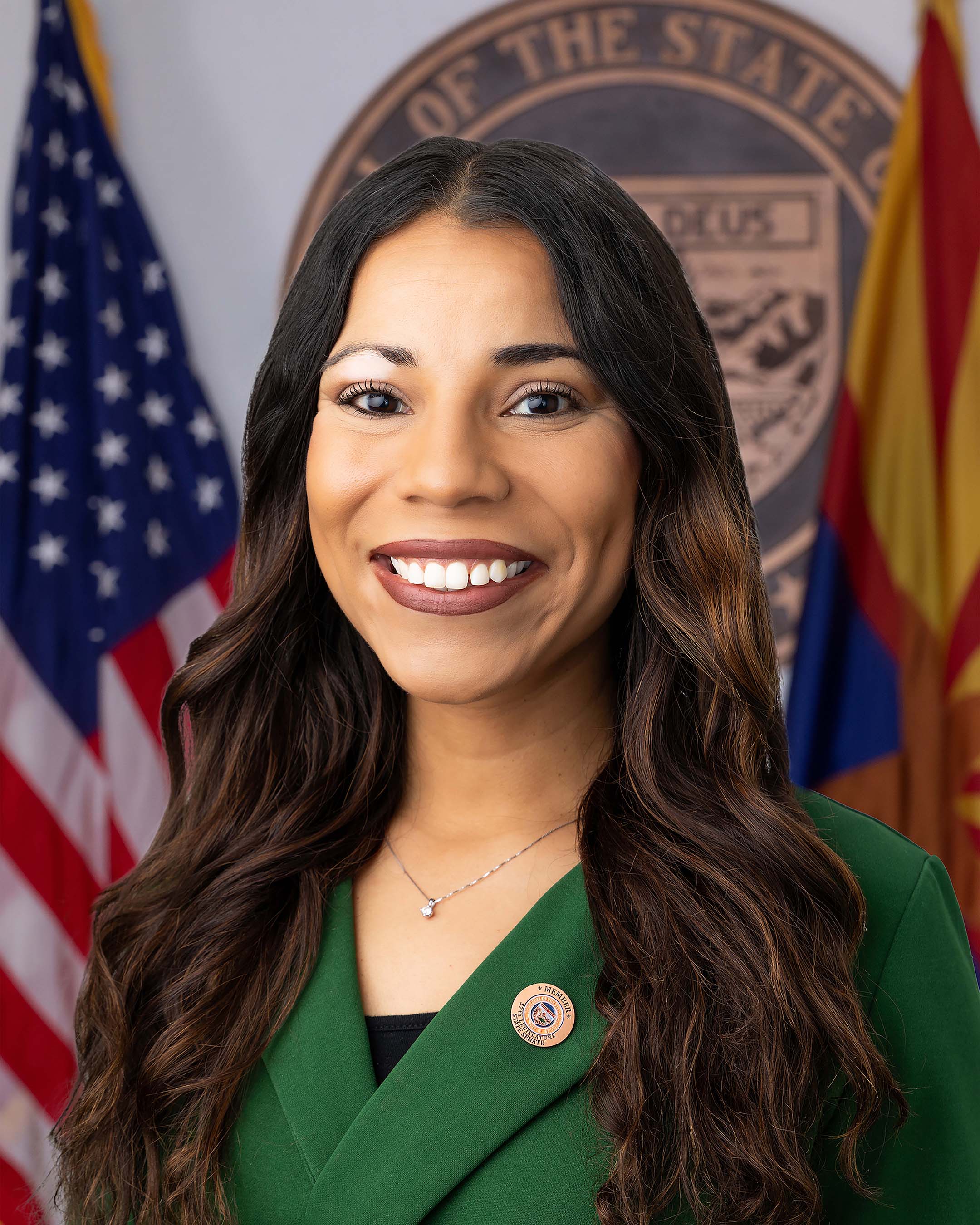
Sen. Analise Ortiz
Sponsored bills
Maddy summaryHB 2530 amends Arizona's nursing board statute to clarify that the board cannot regulate the scope of practice for abortion services (as defined in ARS §36-2151). The bill primarily updates the board's authority to adopt rules for nursing education, licensing, disciplinary actions, and administrative functions. It does not include any provisions requiring waiting periods or ultrasounds for abortion procedures. This bill focuses on defining the nursing board's regulatory boundaries, not on changing abortion access policies.
Maddy summaryHB 2475 prohibits Arizona law enforcement officers from wearing face coverings that conceal their face while on duty, directly affecting all police departments, sheriff's offices, and state law enforcement agencies. It requires each agency to create and publicly post a policy restricting face coverings to specific exceptions: active undercover work (with authorization), tactical operations requiring protective gear, or special weapons teams during active duties. The bill explicitly excludes clear masks, medical masks, safety gear for hazardous conditions, and motorcycle helmets from the prohibition. This law aims to increase officer visibility and public trust during routine interactions.
Maddy summarySB 1219 repeals Section 1-219 of the Arizona Revised Statutes, which established a specific rule for interpreting state laws. This change removes a procedural guideline that courts previously used when applying statutes, but it does not alter any substantive rights or obligations for citizens. The bill has no direct effect on unborn children, rights, or privileges, as it only addresses how laws are interpreted by courts. It is a procedural repeal with no policy changes for individuals or groups.
Maddy summaryHB 2521 amends Arizona's children's health insurance program (CHIP) eligibility rules by adjusting income thresholds for children under 19. It increases the income limit from 200% of the federal poverty level (FPL) to 225% for fiscal years 2024-2026, then to 300% for all subsequent years. This change directly affects low-income families whose children qualify for CHIP coverage based on household income. The bill updates the legal definition of "member" in the program without altering its structure or administration.
Maddy summaryHB 2565 requires Arizona landlords to provide tenants in writing, at the start of a lease, with details about property management, ownership, and the state's landlord-tenant laws (available on the Arizona Department of Housing website). It also mandates that landlords include eviction prevention resources - such as the website azcourthelp.org or local assistance services from the Department of Economic Security - in any written notice of lease violations or nonpayment. These requirements apply directly to all residential landlords and tenants in Arizona, aiming to improve transparency and access to support. The bill does not change existing tenant or landlord obligations but adds specific disclosure rules to existing law.
Maddy summaryThis bill updates Arizona's child care assistance program rules to expand eligibility and clarify income thresholds. It directly affects low-income families transitioning from cash aid, foster care children, families facing crises (like domestic violence or homelessness), and parents pursuing education or job training. Key changes include setting income limits (assistance ends if income exceeds 165% of the federal poverty level or 85% of state median income), prioritizing families at or below 100% of the federal poverty level, and allowing child care support while parents complete education programs related to employment. The department manages funding through waiting lists and priority categories based on income levels.
Maddy summaryHB 2469 establishes a temporary committee to study how to train retail and lodging employees to identify and respond to human trafficking victims in both urban and rural areas. The committee, composed of 16 members including legislators, state agency representatives, chamber of commerce leaders, academic experts, healthcare providers, and tribal community members, must evaluate training methods and submit a report to state leaders by June 30, 2028. The committee expires December 31, 2028, with no immediate policy changes enacted.
Maddy summaryHB 2463 creates a task force to study employee misclassification and payroll tax fraud specifically in Arizona's construction industry. The task force, composed of state agency representatives (including the Industrial Commission, Department of Insurance, and Contractor Registrar), will examine revenue losses, enforcement gaps, and prevention strategies. It must report annually to state lawmakers starting in 2028, including recommendations on improving investigations, public awareness, and interagency cooperation. The bill does not change current laws but aims to inform future policy based on the task force's findings.
Maddy summaryThis resolution proposes repealing Arizona's constitutional "right to work" provision (Article XXV), which currently prohibits requiring union membership as a condition of employment. If approved by voters, it would remove this constitutional protection, altering Arizona's labor law framework. The measure will be submitted to voters at the next general election as required by state law.