

Maddy summarySCR 1018 proposes amending Arizona's constitution to protect marriage equality. It would repeal the current constitutional section defining marriage as between one man and one woman and replace it with a new section stating that marriage cannot be prohibited based on sex, race, ethnicity, or national origin. This constitutional change would directly affect all Arizona residents by guaranteeing marriage rights regardless of sexual orientation. The amendment requires voter approval at the next general election, as specified by the Secretary of State.
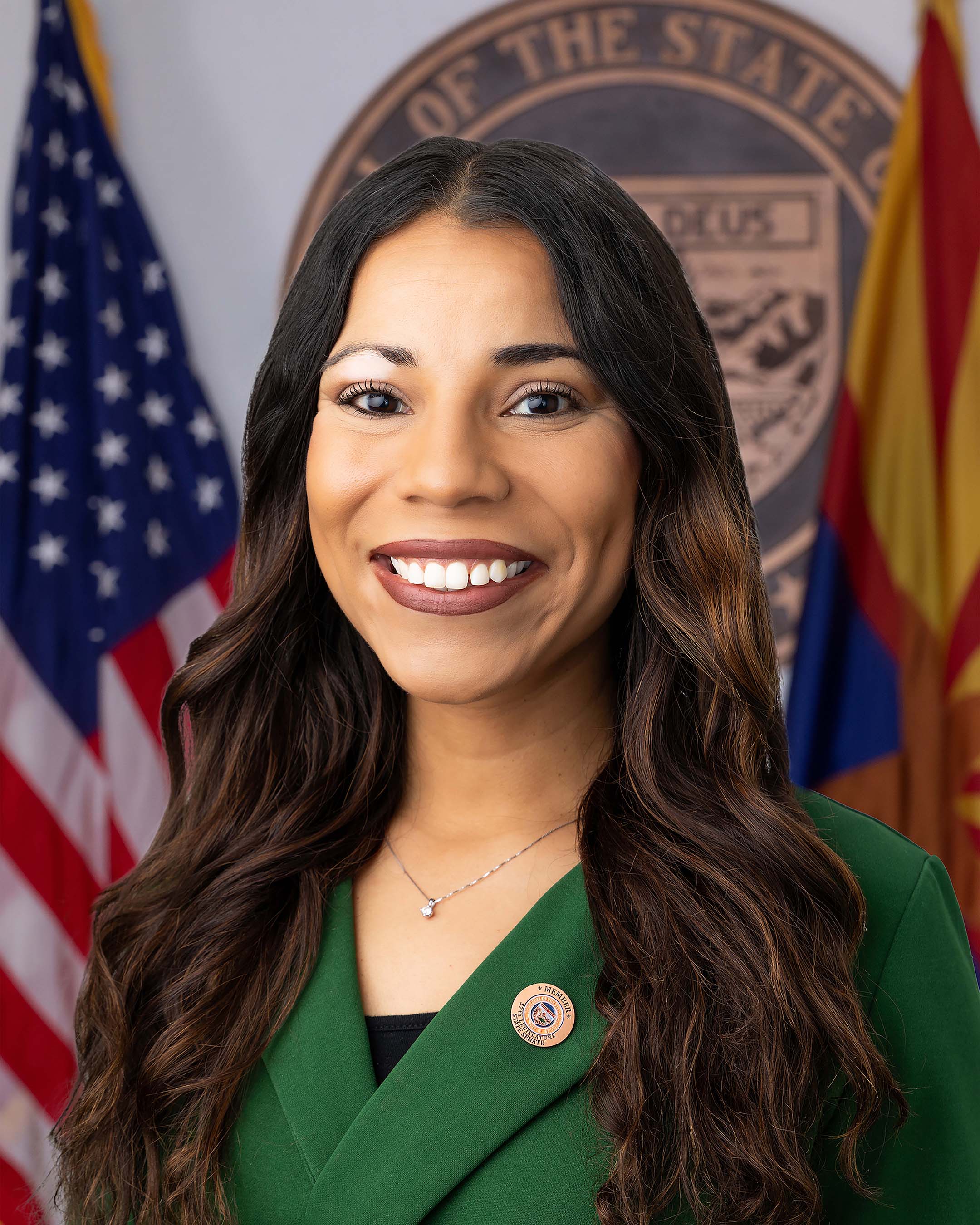
Sen. Analise Ortiz
Sponsored bills
Maddy summarySCR 1016 is a constitutional amendment proposal that would rename Arizona's "Corporation Commission" to the "Arizona Public Utility Commission" and make several structural changes. It establishes term limits (max two consecutive terms) for commissioners, specifies a five-member elected body serving four-year terms (with staggered initial terms), and clarifies the commission's regulatory authority over utility rates, classifications, and licensing. The amendment also revises constitutional language about business licensing fees and reporting requirements for corporations. This proposal requires voter approval after legislative passage and does not change the commission's current regulatory responsibilities.
Maddy summarySCR 1015 proposes a constitutional amendment in Arizona to protect civilian police review boards in charter cities. It prohibits cities from banning such boards or requiring board members to complete police academy training. The amendment would prevent charter cities from restricting the formation of civilian review boards that examine law enforcement conduct, and also stop cities from mandating specific training for board members. This change would require voter approval at the next general election. If adopted, it would ensure cities cannot block or overcomplicate these oversight bodies.
Maddy summaryHB 2851 extends the effective date for repealing Section 38-673 of Arizona law, which relates to traumatic event counseling services. The bill delays the repeal of this existing provision from December 31, 2026, to December 31, 2031. This change directly affects the continuation of current counseling program funding and operations under Section 38-673 until 2031, without creating new services or altering eligibility. The bill is procedural, focusing solely on extending the implementation timeline for an existing law.
Maddy summaryHB 2583 primarily updates fingerprinting requirements for education professionals in Arizona. It mandates that teachers, student teachers, charter school staff, and tutoring contractors submit identity-verified fingerprints through the Department of Public Safety for background checks. Key provisions include standardizing the fingerprint submission process, allowing school districts to contract with third parties for fingerprinting services, and creating a digital archive to avoid duplicate submissions for renewals. The bill also includes a separate section (Section 2) about Arizona empowerment scholarship accounts, which is unrelated to the fingerprinting requirements.
Maddy summaryHB 2852 regulates utility billing in Arizona mobile home parks. It requires landlords to provide separate meters for gas, water, and electricity with clear billing showing meter readings, and prohibits charging more than standard single-family residential rates for utilities or waste removal. Tenants can file written complaints if landlords violate these rules, and if they win a court case or administrative hearing, they may recover attorney fees and receive penalties up to $500 per violation. The law directly affects mobile home park landlords and tenants by standardizing billing practices and strengthening enforcement mechanisms under Arizona's mobile home park tenant protections.
Maddy summaryHB 2511 modifies Arizona's election laws to restrict ballot handling and strengthen signature requirements for early voting. It amends Section 16-513 to clarify that only voters, family members, household members, or caregivers may handle ballots, and Section 16-547 requires early ballots to include a signed mail affidavit with specific return instructions. Starting in 2026, voters must return ballots with their signature to a county recorder’s office, polling place, or by presenting ID at a polling place by 7:00 p.m. on election day. The bill also amends Section 16-1005 to increase penalties for improper ballot collection, making it a class 5 felony to collect ballots unlawfully or fail to turn them over to election officials. These changes directly affect voters, election officials, and anyone involved in ballot handling.
Maddy summaryArizona's SB 1300 would adopt the National Popular Vote Interstate Compact, requiring the state to award all presidential electors to the candidate winning the national popular vote *if* participating states collectively hold 270+ electoral votes. The bill amends Arizona law to align with the compact's rules: when in effect, Arizona's electors would cast votes for the national popular vote winner, not the state's winner. This directly affects Arizona's electoral process and presidential election outcomes, shifting from winner-takes-all state results to a national vote tally. The change would take effect only after enough states join the compact to control a majority of electoral votes (270+), as specified in the compact's Article I.
Maddy summarySB 1262 amends Arizona voter registration procedures to improve address verification and citizenship documentation. County recorders must send follow-up notices if mail is returned, giving voters 35 days to update addresses or citizenship proof before registration becomes inactive. It specifies acceptable citizenship evidence (e.g., driver’s licenses showing citizenship, birth certificates, passports) and requires counties to participate in a multistate voter registration database. The bill directly affects voters with changed addresses or those needing to verify citizenship, streamlining registration maintenance while requiring counties to update records using postal service data and electronic systems.
Maddy summaryHB 2803 repeals Arizona Revised Statute 15-911 and amends ARS 15-1285 to exempt school districts and career technical education districts from state budgetary spending limits. Specifically, funds received by these districts under the relevant chapter are not counted as local revenue for constitutional budget calculations and cannot be restricted by existing expenditure caps. This allows school districts to use state-provided funds without being constrained by the usual spending limits that apply to local revenue. The bill also includes related adjustments to expenditure limitation calculations for counties but focuses primarily on increasing school district financial flexibility.